
You got through another day. The meeting went well. Your manager nodded at the right moments. And now you’re stuck in traffic on I-95, earbuds in, watching the brake lights blur ahead of you. You’re wondering why none of it feels like enough. If you’ve been searching for cognitive behavioral therapy in South Florida, that gap between how you present and how you feel is probably what brought you here.
The performance review said “exceeds expectations.” The 2 a.m. thought spiral tells a different story. You’ve read the books, downloaded the apps, and could probably out-talk half the wellness influencers on your feed. The flatness underneath still doesn’t lift.
Key Takeaways
Cognitive behavioral therapy (CBT) is a structured, goal-focused treatment approach that helps you identify and shift unhelpful thinking patterns and behaviors, typically in 12 to 20 sessions.
Schema Therapy evolved directly from CBT to address the deeper behavioral patterns that standard cognitive therapy can spot but cannot fully resolve on its own.
At Travis Atkinson’s practice, CBT is integrated with Schema Therapy, Emotionally Focused Therapy (EFT), and Gottman Method. Travis Atkinson’s original practice was called Advanced Cognitive Therapy, a name that described the same clinical evolution this article explores.
CBT-based work here is provided by Travis Atkinson, LCSW, bringing advanced training and a specialized clinical focus for high-achieving individuals, couples, and families.
Whether cognitive behavioral therapy (CBT) is the right starting point for your mental health, or whether you need the kind of advanced cognitive work that goes beneath the surface, is something you can sort out in an initial consultation.
If you live in South Florida, you can schedule a consultation for CBT-based individual, couples, or men’s group work through SouthFloridaMarriageTherapy.com and explore evidence-based online therapy for individuals, couples, and groups.

What is cognitive behavioral therapy in South Florida and how does this approach work?
Cognitive behavioral therapy (CBT) is a structured, time-limited form of psychotherapy. It helps you see the connection between your thoughts, your feelings, and your behaviors. Then it gives you practical tools to shift the patterns keeping you stuck. Unlike open-ended talk therapy, every session has an agenda. You work toward clear goals. And you practice new skills between sessions so the gains carry into the rest of your week instead of staying in the therapist’s office.
In a city like this, unhelpful thinking patterns don’t stay abstract. Your harsh inner critic follows you from the morning standup to the evening commute. Racing negative thoughts on a packed train won’t quiet down even after you’re home. That reflexive “I’m fine” you give your partner when nothing feels fine. Negative emotions building through the day with no outlet. Winding down after a 12-hour day feels impossible, even though your body gave up hours ago.
CBT in South Florida often serves people who look successful on the outside but feel anxious, flat, or disconnected inside. You’re crushing it at work. Then you’re sitting in your apartment at 10 p.m. wondering why none of it registers. That gap between achievement and internal experience is one of the most common mental health problems high-achieving South Florida professionals face. It’s also one of the least talked about.
CBT can be a standalone treatment or combined with other treatments, including psychiatric medications and other forms of psychotherapy. Therapy sessions are typically weekly and focused on agreed-upon goals. At Travis Atkinson’s practice, cognitive behavioral therapy (CBT) is woven into work with individuals and couples. Treatment addresses both surface-level symptoms and the deeper behavioral patterns underneath. That’s where the real change tends to happen, and where the work often shifts into Schema Therapy.
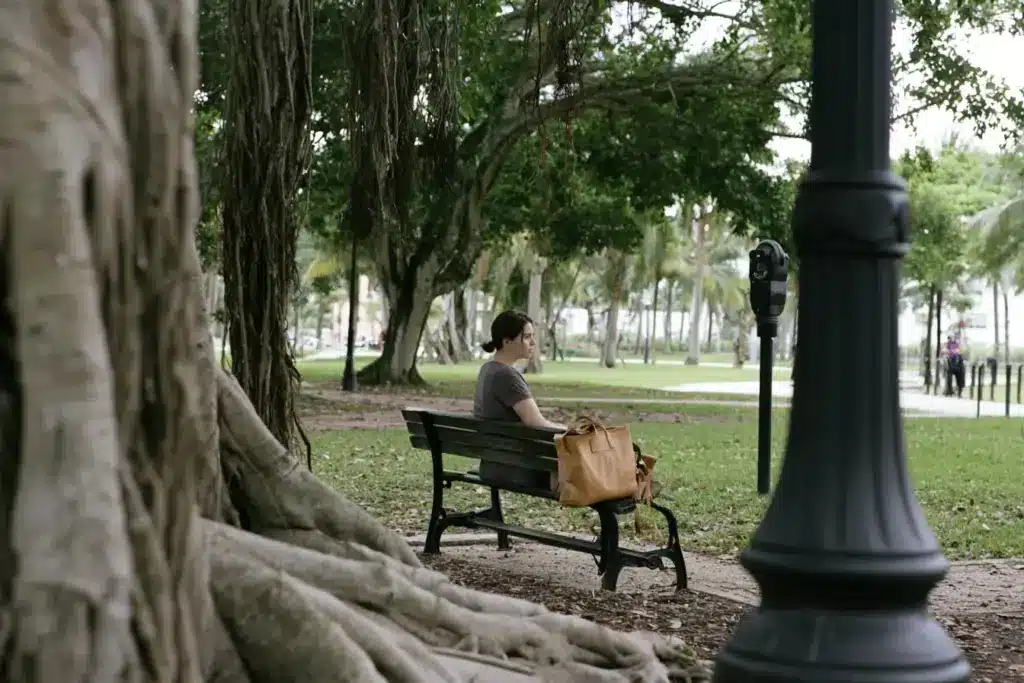
Why do high-achieving South Florida professionals struggle to ask for help with their mental health?
Believing that struggling means something is fundamentally wrong with you. Feeling the identity conflict between being competent everywhere else and needing support for your inner life. The assumption that your mental health problems aren’t severe enough to qualify as mental illness. And the quiet fear that if you slow down long enough to look at what’s going on underneath, you might not like what you find.
Many clients at Travis Atkinson’s practice arrive after months or years of managing on their own. They’ve read the books, listened to the podcasts, tried mindfulness meditation apps. Recognizing the cost of that delay is often what finally shifts the decision. The accumulating distance in a relationship. A flattening of things that used to matter. The creeping suspicion that the apps aren’t working because the problem runs deeper than a breathing exercise can reach. Seeking treatment for emotional challenges is not an admission of failure. It’s an investment in the emotional health and healthy life you’ve been performing but not feeling.

Which mental health conditions, from anxiety and panic attacks to depression, does cognitive behavioral therapy (CBT) treat?
Few approaches in psychotherapy have been studied as thoroughly as cognitive behavioral therapy (CBT). Even fewer have performed this consistently across this many disorders. CBT treatment is as effective as medication for depression and anxiety disorders. And the coping skills you learn tend to stay with you long after sessions end, which medication alone can’t promise.
CBT is an effective, evidence-based treatment for:
Generalized anxiety and the kind of worry that masquerades as productivity
Panic attacks, including in crowded or enclosed spaces like elevators and crowded venues
Depression and persistent low mood that doesn’t match your external circumstances
Obsessive compulsive disorder (OCD) and intrusive thought patterns
Eating disorders, including helping people normalize eating behaviors and challenge problematic thoughts about body image
Post-traumatic stress disorder (PTSD)
Social anxiety disorders and performance anxiety
Insomnia and sleep disturbances
Chronic pain management and other medical conditions where psychological therapy improves outcomes
Perfectionism and burnout disguised as ambition
Relationship stress and repeating conflict patterns
These mental health conditions rarely show up one at a time. The person battling work anxiety is often also carrying a relentless inner critic, a strained connection with a partner, and sleep that won’t come. CBT works on the whole system: the unhelpful thoughts, the negative feelings, the unhelpful behavior feeding them. It doesn’t chase one symptom while the others keep spinning. And because this treatment approach sharpens problem-solving and communication skills, relationships tend to improve alongside individual mental health.
CBT coping skills support people moving through the kind of transitions South Florida specializes in: career pivots, new parenthood, difficult situations like relocations across the region, or the disorientation of achieving everything you set out to accomplish and still feeling empty. These stressful and challenging situations often activate deeper learned patterns that standard CBT alone can’t reach. When they do, the integrative treatment approach at this practice goes further.
For men who tend to keep everything inside, Travis also leads a CBT-informed men’s group. These groups give men a structured, therapist-led place to work on anxiety, mood, relationships, and work stress alongside peers, so you can practice CBT tools in real conversations instead of only in your head. All of this work, individual and group, happens through online sessions for clients across South Florida. Cognitive behavioral therapy (CBT) works well in this format, especially for professionals who travel frequently or keep unpredictable hours.

How does a cognitive behavioral therapy (CBT) session work at Travis Atkinson’s practice?
You think something. You feel something. Then you do something. Then you think something about what you did. Cognitive behavior therapy interrupts that loop. Treatment sessions use specific exercises to slow the cycle down, helping you gain insight into your own patterns and build new behaviors where the old ones used to run on autopilot.
What are the core principles of cognitive therapy and CBT treatment?
CBT rests on several core principles, and they’re simpler than they sound. Your thoughts, emotions, and behaviors influence each other constantly, so effective psychological treatment targets all three together. People learn unhelpful thinking patterns over time, which means those patterns can be unlearned and replaced with more accurate responses. And new behaviors, practiced consistently, reshape emotional responses. These three components form the foundation of all CBT treatment and clinical work.
In practice, sessions with Travis include:
Collaborative goal setting so you know what you’re working toward
Tracking thought patterns to identify what’s automatic versus what’s accurate
Identifying cognitive distortions: all-or-nothing thinking, catastrophizing, mind reading, personalization
Learning to challenge negative thought patterns with strategies that hold up under scrutiny
Behavioral experiments that test whether your worst-case assumptions match reality
Gradual exposure tasks, particularly effective for panic attacks, social anxiety disorders, obsessive compulsive disorder, and eating disorders
Homework assignments and between-session practice designed to fit your existing schedule
Sessions at Travis Atkinson’s practice run 45 to 60 minutes, once a week, held online for clients across South Florida. As you progress in treatment and gain confidence in your skills, you may move to every other week. An initial consultation involves mapping what brought you in, clarifying what you want to change, and explaining the CBT model in plain language. No jargon. No guessing what your therapist is thinking. You agree on initial goals together.
CBT work with Travis Atkinson is active and collaborative. You will not spend the whole session recounting your week while your mental health professional nods. No one will rush you through a workbook, either. You guide the pace and emotional safety of treatment. This is psychotherapy with structure and direction.
How does CBT homework fit into a packed South Florida schedule?
CBT involves homework, but it adapts to your present moment. A 5-minute thought log jotted on your phone between meetings. Noticing a cognitive distortion during your commute without needing to fix it yet. A small behavioral experiment like saying no to one non-essential obligation that week. Testing whether your catastrophic prediction about a conversation with your boss matches what happens when you have it.
The goal is not to give you a second job as your own therapist. It’s to slip tiny experiments into a life that already feels double-booked. These homework assignments help you practice CBT in real-life situations, building coping skills that transfer beyond sessions and into the rest of your week.

How does cognitive behavioral therapy (CBT) compare to other treatments for mental health?
If you’ve been weighing your options, you’re not alone. Many people exploring help for anxiety, depression, or other mental health conditions want to understand how CBT differs from other therapies and other treatments before committing.
The short answer: CBT is more structured and goal-oriented than most other forms of psychotherapy. Where psychodynamic approaches may explore your past experiences without a defined endpoint, cognitive behavioral therapy focuses on what you’re thinking now, how those negative thoughts shape your feelings, and what behaviors follow. This makes CBT particularly efficient for symptom reduction.
For depression and anxiety disorders, CBT treatment proves as effective as medication. The benefits tend to outlast medication because the coping skills you develop stay with you. For mental health conditions like obsessive compulsive disorder, combining CBT with psychiatric medications sometimes produces the strongest outcomes. But many clients find that cognitive behavioral work alone gets them where they need to be.
Some South Floridians choose group therapy instead. Group CBT treatments can work well for social anxiety disorders, depression, and eating disorders, with the added benefit of learning from others facing similar emotional challenges. At Travis Atkinson’s practice, individual psychotherapy is the primary format, though Travis can discuss whether group therapy or other complementary approaches might strengthen your CBT treatment.
CBT also shows up in places you might not expect. Chronic pain. Irritable bowel syndrome. Chronic headaches. When a medical condition has a psychological toll, and it always does, cognitive behavioral therapy gives people strategies to manage the mental load alongside the physical one. That ability to bridge mental health and physical wellbeing makes CBT unusually versatile, and it’s part of what supports a genuinely healthy life rather than a managed one.
Short-term therapy through CBT is often enough for specific, well-defined concerns. For deeper or more entrenched patterns, the work may evolve into Schema Therapy, which is the subject of the next section.
What happens when cognitive behavioral therapy in South Florida uncovers something deeper?
CBT works well for surface-level thinking patterns and acute symptoms of anxiety, depression, and other disorders. Many clients experience meaningful relief within a few sessions. But sometimes, as you start catching your problematic thoughts, a question surfaces: why does this particular thought have so much power over me?
You can identify the distortion. Label it accurately. Challenge negative thought patterns logically. And still feel the grip. That gap between knowing and feeling is where standard cognitive therapy reaches its limit.
Jeffrey Young developed Schema Therapy to close that gap. Young trained under Aaron Beck, the founder of cognitive therapy, at the University of Pennsylvania. He noticed something his mentor’s model couldn’t fully explain: Some clients did everything right. They completed thought records. Identified distortions. Practiced the skills. And then, the following week, they cycled right back to the same negative emotions and problematic thoughts. Traditional CBT treatment produced strong results for acute symptoms of depression and anxiety disorders, but it fell short for this specific kind of client. Schema Therapy emerged as the next evolution of cognitive therapy, a form of psychological therapy designed to reach the layers that standard CBT treatment could spot but not shift.
Early maladaptive schemas are deeply ingrained beliefs and emotional patterns formed in childhood and reinforced over decades of past experiences. They operate beneath conscious awareness. These schemas shape how you interpret stressful situations, choose partners, respond to conflict, and evaluate yourself. Where CBT asks “What are you thinking right now?”, Schema Therapy asks “Where did that thought learn to be so loud?”

How do negative thoughts and behavioral patterns from early life show up in your career and relationships?
Specific schemas relevant to high-achieving South Florida professionals include:
Unrelenting standards: the belief that nothing you do is ever good enough, driving perfectionism even when you outperform everyone around you
Emotional deprivation: the persistent sense that your emotional needs will not be met, leading to withdrawal or choosing partners who confirm the pattern
Defectiveness: the hidden conviction that something is fundamentally wrong with you underneath the accomplishments
Abandonment: the expectation that people you depend on will eventually disappear, creating hypervigilance in relationships
The client who receives praise from every manager but dismisses it internally because of an unrelenting standards schema. The partner who interprets a delayed text as evidence of abandonment. The mental health professional who avoids conflict because expressing needs once led to punishment or withdrawal. These behavioral patterns are not character flaws. They are learned patterns from past experiences that made sense in childhood but create suffering in adult life.
Emotional patterns carve neural pathways like tracks in snow. Each time a response repeats, the pathway deepens. A harsh self-critical thought after a minor mistake may feel rational, but it’s running on a track laid decades ago. CBT helps you notice the track. Schema Therapy helps you understand why it was laid, how the negative thoughts got their power from early life, and how to build new pathways that match who you are now.
At Travis Atkinson’s practice, CBT and Schema Therapy integrate rather than run on separate tracks. Many clients begin with CBT treatments for immediate relief and gradually move into schema-level work when they’re ready. This integration is one of the practice’s core differentiators from standard CBT-only providers.

How do Schema Therapy modes affect your daily life without you realizing it?
Modes are the emotional states that activate when a schema fires. You might shift from a high-performing, demanding mode at work (the overcompensator) to a withdrawn, emotionally flat mode at home (the detached protector) to a sudden flood of vulnerability when your partner says the wrong thing (the vulnerable child mode). These shifts produce negative emotions that feel confusing and contradictory.
Recognizing your modes is one of the most immediately useful things clients take from this work. It explains why you can command a boardroom and shut down in a kitchen conversation. The modes are not contradictions. They are different strategies your nervous system learned at different points in your life. Understanding them helps you gain insight into your own reactions and changes how you relate to yourself and the people closest to you.

How long does cognitive behavioral therapy (CBT) usually take and what does short-term treatment mean?
Most people ask this in the first consultation. Standard CBT typically runs 12 to 20 weekly sessions, tailored to your goals and the severity of symptoms. Short-term treatment in a clinical context means structured and goal-oriented. Not rushed.
Length depends on several factors: the complexity of what you’re dealing with, whether co-occurring disorders are involved (anxiety plus depression, or anxiety plus relationship distress), and whether the work stays at the CBT level or moves into Schema Therapy territory as deeper behavioral patterns surface. Your motivation for completing homework assignments between sessions matters too.
Some clients prefer a focused course of CBT for a specific concern. Others discover that the unhelpful thoughts they came to fix are connected to deeper schemas and choose to continue with more comprehensive treatment. Your therapist reviews progress regularly. Plans adjust. No one stays longer than the work requires. Effective symptom reduction is the initial treatment goal, and for many clients, that happens within the first few sessions.

How to find the right CBT therapists in South Florida who help you receive CBT at an advanced level
Searching for cognitive behavioral therapy in South Florida can feel overwhelming. Thousands of listings. Every profile sounds similar. Mental health directories can help you locate licensed practitioners based on specialty, location, and accepted insurance. However, they rarely tell you whether a mental health professional can handle the specific pressures of being high-performing and privately overwhelmed.
Where can you search for qualified CBT therapists in South Florida?
You can search for CBT therapists online through local and state psychological associations, making sure they hold current Florida licensure. Most therapists’ websites describe the mental health conditions and disorders they work with, which helps you determine fit. You can also ask for referrals from your primary healthcare provider, friends, or family members who have had positive experiences with cognitive behavioral work.
Many clinics in South Florida offer both in-person and virtual teletherapy for mental health concerns. When evaluating CBT therapists, ask specific questions: How do you structure sessions? What do homework assignments look like? Do you integrate other therapies when standard CBT isn’t enough? How do you measure progress? Finding the right therapist means distinguishing someone who checks the box from someone who practices CBT at an advanced level.
The Office of Travis Atkinson is built around that advanced level: integrating Schema Therapy, EFT, and Gottman Method so you can start with symptom relief and, when needed, move into deeper, lasting change with the same team.
What about insurance coverage and sliding scale fees?
Some CBT providers in South Florida accept major insurance plans, including Aetna, Cigna, and BlueCross BlueShield, though far fewer than other metropolitan areas. Some training centers also provide sliding scale fees based on income, and a few offer free crisis support for individuals in need of mental health services during difficult situations.
The Office of Travis Atkinson is an out-of-network psychotherapy practice. Many clients use out-of-network insurance benefits to receive partial reimbursement. Look for a clinician who won’t be impressed by your job title but also won’t pathologize your ambition. Someone who understands that “I should be grateful” is often the thought keeping you most stuck. A professional trained in CBT who can go deeper when surface-level approaches aren’t resolving the underlying behavioral patterns.
At Travis Atkinson’s practice, Travis is trained in CBT along with Schema Therapy, EFT, and Gottman Method. Travis Atkinson brings this integrative depth to his individual, couples, and group work. Many clients use out-of-network benefits to see senior CBT therapists offering this level of care.

What does CBT-based online work look like for South Floridians?
Online cognitive behavioral therapy (CBT) can be as structured and effective as in-person sessions when delivered through a secure, HIPAA-compliant platform. Many clinics now offer virtual teletherapy for mental health concerns in South Florida, making it easier to receive CBT on a schedule that fits your life.
A typical online session with Travis includes a clear agenda, shared worksheets when relevant, defined between-session practice, and the same collaborative structure you’d find in any office. No commute time lost. Consistent therapy sessions even during work travel. Privacy from your own apartment.
Clients must be located in South Florida (or other states where Travis is licensed) during sessions due to licensing requirements.
What changes when cognitive behavioral therapy works in your life?
Same city. Same job. Same partner. Different internal experience.
Fewer 3 a.m. thought spirals about something you said six hours ago. The ability to notice negative thoughts and let them pass instead of believing them on contact. Less reflexive defensiveness when your partner asks a simple question. More flexibility in how you respond, because you’re choosing a response instead of running the same script you’ve run since you were twelve.
Change is usually incremental. It starts with awareness: catching the distortion mid-spiral instead of after the damage is done. Then it builds through small behavioral experiments that compound over weeks. You don’t wake up one morning fixed. You notice, gradually, that the volume on the inner critic has turned down and the negative emotions don’t spike as hard. Your emotional health shifts before you can pinpoint when it happened.
CBT doesn’t remove stress from your life. South Florida will still be South Florida. Your inbox will fill. But cognitive behavioral work helps you feel less at the mercy of your unhelpful thoughts and more like someone with choices. That’s the difference between coping and living a healthy life.
What does long-term change feel like compared to short-term relief?
Short-term relief feels like turning down the volume on problematic thoughts that have been blaring for years. Long-term change feels like understanding why the volume was turned up in the first place and rewiring the system so it doesn’t default to that setting. CBT gives you the tools. Schema Therapy gives you the understanding of why you needed them.
The practice supports both levels, meeting you where you are.
When individual CBT work reveals patterns that show up in your relationship
Individual cognitive behavioral work often surfaces relational patterns you didn’t come in to address. You start noticing the cognitive distortions you apply specifically to your partner: the mind reading, the catastrophizing, the all-or-nothing interpretations that escalate a Tuesday night disagreement into an existential crisis about whether you should even be together. These negative thought patterns and unhelpful behavior may be part of the same behavioral patterns appearing everywhere else.
Travis Atkinson combines cognitive behavioral approaches with Gottman Method, Emotionally Focused Therapy, and Schema Therapy in couples work. This means you can address relational patterns identified in individual sessions directly within the couple dynamic. South Florida-specific stressful situations surface in this work: mismatched schedules, financial pressure, co-parenting in tight spaces, the mutual exhaustion of two ambitious careers pulling in opposite directions.
Couples sessions run online for partners across South Florida. For readers exploring couples-focused approaches, Loving at Your Best Marriage and Couples Counseling offers deeper resources.

How can you get started with cognitive behavioral therapy in South Florida?
Hesitation makes sense. Not whether treatment works, but whether now is the right time. Whether the mental health problems are significant enough. Whether you can afford to add one more thing to a schedule with no margin.
Something you can do this week: identify one or two things you want to change. Not a comprehensive inventory of everything that’s wrong. One or two patterns that bother you enough to do something about them. Then reach out through SouthFloridaMarriageTherapy.com to schedule an initial consultation with Travis. The opening conversation is a two-way discussion about fit, not a commitment to long-term psychological treatment. You don’t need the answer before you walk in. Figuring out the answer is the point.
If you’re a man who isn’t sure about individual sessions, you can also ask about joining Travis’s men’s group. It can be a more comfortable starting point for working on anxiety, relationships, or feeling emotionally shut down.
A consultation includes a brief discussion of your history and current concerns, an overview of how CBT and Schema Therapy might apply, and a mutual decision about whether the fit feels right. If it does, you agree on goals and a structure. If it doesn’t, your clinician can help you find a better direction.
The practice offers online sessions for individuals, couples, and groups across South Florida, with flexible scheduling for professionals and families.
The traffic will still be there tomorrow. Your inbox will fill again. But cognitive behavioral therapy in South Florida can help you stop being at the mercy of the thoughts and start being someone who has options in how you respond. That gap you noticed on the drive home? It doesn’t have to keep widening. Scheduling a consultation is often the smallest step that starts closing it.

FAQ about cognitive behavioral therapy (CBT) in South Florida
This section answers the practical questions people most often have before starting cognitive behavioral therapy in South Florida, including costs, insurance, and what to expect.
How much does cognitive behavioral therapy cost in South Florida and can I use insurance?
Fees across South Florida vary by clinician experience and specialization. The Office of Travis Atkinson is an out-of-network psychotherapy practice. Many clients use out-of-network insurance benefits to receive partial reimbursement. Contact your insurance provider to ask about deductibles and reimbursement percentages. The practice is straightforward about costs from the initial consultation.
What is the difference between CBT and Schema Therapy, and do I need both?
Cognitive behavioral therapy (CBT) focuses on identifying and shifting unhelpful thinking patterns and unhelpful behavior in the present moment. Schema Therapy goes deeper, addressing the early life experiences and ingrained beliefs that make certain negative thoughts so persistent despite standard cognitive work. Many clients start with CBT for immediate relief and move into schema-level approaches when problematic thoughts keep resurfacing despite the tools. Your clinician will help you assess which direction fits your goals.
Can cognitive behavioral therapy help with ADHD symptoms in high-performing professionals?
CBT is one of the most evidence-based treatment approaches for managing ADHD in adults, particularly for executive function challenges, procrastination, and self-critical self-talk. ADHD frequently co-occurs with anxiety disorders and relationship stress. The integrative approach at this practice addresses these mental health conditions together rather than in separate silos, which matters because ADHD never shows up in isolation.
What if I have been successful but cannot figure out why I still feel stuck?
This is one of the most common reasons high-achieving South Florida professionals contact the practice. The gap between external success and internal satisfaction often points to deeper behavioral patterns like unrelenting standards or emotional deprivation schemas. Your accomplishments are real. The emptiness is also real. These aren’t mental illness in the traditional diagnostic sense, but they cause genuine suffering. Figuring out what drives the stuckness is the work.
Is online cognitive behavioral therapy as effective as in-person CBT?
Research consistently supports online CBT as comparable to in-person sessions for many mental health conditions. The key factors are the quality of the therapeutic relationship, session structure, and engagement with between-session practice and homework assignments. These factors hold regardless of whether you receive CBT on screen or in an office. Most clients at this practice choose online sessions and report that the work feels no different.
Can CBT address anxiety disorders, depression, and obsessive compulsive disorder at the same time?
Cognitive behavioral therapy (CBT) is highly effective for co-occurring disorders. Many clients present with anxiety disorders alongside depression, or obsessive compulsive disorder alongside relationship distress. Because CBT targets the underlying thought patterns and behavioral patterns that cut across multiple disorders, this treatment can address several mental health conditions simultaneously rather than requiring you to work through each one separately.
Is CBT suitable if I tried talk therapy that felt unstructured?
Many South Floridians arrive at cognitive behavioral therapy after previous psychotherapy. Previous treatment may have felt helpful emotionally but didn’t produce enough change in day-to-day behavior or negative thought patterns. CBT tends to be more structured than open-ended talk therapy, with clear goals, structured between-session practice, and measurable progress. Travis Atkinson integrates cognitive behavioral approaches with Schema Therapy and other evidence-based methods. What clients notice is that this work addresses both the unhelpful thoughts at the surface and the deeper emotional roots feeding them.
What is the first session of cognitive behavioral therapy like?
The opening session is a conversation, not an interrogation. You’ll talk about what brought you in, what you’ve tried before (including any previous approaches, self-help strategies, or psychiatric medications), and what you want to change. Your mental health professional will explain how CBT and Schema Therapy apply to your situation. Together you decide whether the fit feels right. There’s no pressure to commit to a long-term plan in that initial meeting.
About the Author
Travis Atkinson, LCSW, is the founder of Travis Atkinson’s practice (SouthFloridaMarriageTherapy.com) and Loving at Your Best Marriage and Couples Counseling. His original private practice was called Advanced Cognitive Therapy, reflecting his commitment to integrating cognitive behavioral therapy with deeper, schema-level approaches from the start of his career. Travis specializes in working with high-achieving individuals and couples across South Florida, combining CBT, Schema Therapy, Emotionally Focused Therapy, and Gottman Method. The practice offers online psychotherapy for individuals and couples across South Florida.