
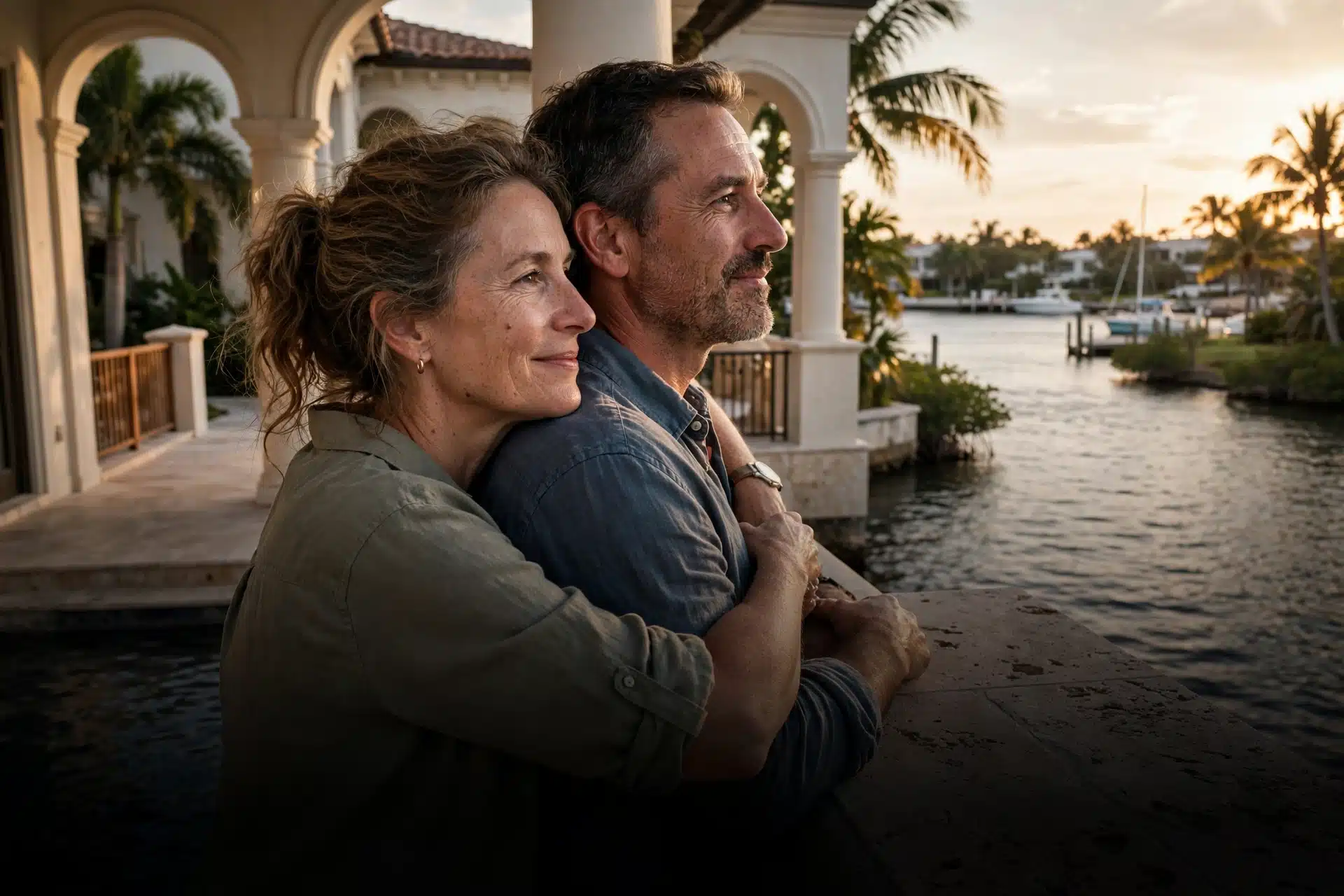
Therapy services in South Florida
Therapy for the pattern, not just the problem.
Individual, couples, and group therapy online throughout Florida with Travis Atkinson, LCSW. Certified Gottman Method Couples Therapist since 2006, trained deeply in three leading couples models.
Book Your First Session →Individual Therapy
For anxiety, depression, life transitions and the patterns that follow you from work to home.
Affair Recovery
A structured path through betrayal: accountability, honest answers and the work of rebuilding trust.
Marriage and Couples Counseling
The Gottman Method, Emotionally Focused Therapy for Couples and Schema Therapy, used together as one approach.
Trainings and Supervision for Therapists
Specialized training and supervision in Schema Therapy for individuals and couples, and supervision in Emotionally Focused Therapy for Couples.
Travis is also a Certified Group Psychotherapist, an ISST Honorary Lifetime Member (2020) and VP of Media for the Jeffrey Young Schema Therapy Association. Read his full bio.
What do people ask about online therapy in Florida?
Common questions about online sessions, licensing and privacy.
Are sessions online or in person?
All sessions are online, and the work keeps its depth on video.
Do I need to be in Florida during sessions?
You need to be in Florida, New York, Connecticut or Vermont at the time of each session. Those are the states where I'm licensed, and the rule applies to each person in the session.
What if I feel overwhelmed during a session?
We slow down. Strong feelings in the moment are information, not failure, and emotional balance matters more than getting through an agenda.
Is online therapy private?
Sessions use a HIPAA-compliant Zoom configuration. You'll need a private location where others cannot overhear you, and headphones may help. We discuss confidentiality and its limits before treatment.
Can therapy help if my partner won't come?
Often, yes. Individual work can change how you respond to relationship issues and relationship difficulties, which tends to shift the whole pattern. Many partners join later.
Do you offer group therapy?
I'm not running a group right now, though I led groups for more than 25 years and may start one again if there's interest.
Do you train other therapists?
Yes. I direct the Schema Therapy Training Center of New York, an ISST-approved advanced certification program. Helping clients keeps my teaching grounded, and teaching keeps my clinical work sharp.
Can premarital therapy help with a Florida marriage license?
Premarital therapy prepares the marriage, while a registered premarital course is what changes the Florida marriage license. Florida residents who complete a registered course of at least four hours skip the three-day waiting period on a Florida marriage license. The course also lowers the fee for the Florida marriage license itself.
Does premarital therapy count as an approved premarital course for the marriage license?
Not automatically. An approved premarital course comes from a provider registered with the clerk of court, who issues a certificate you bring when you apply for the Florida marriage license. Without an approved premarital course, Florida residents wait three days before the marriage license takes effect. Many couples take a registered course for the Florida marriage license, then come to me for the harder conversations about conflict, money and family.
When should couples start premarital therapy?
Ideally before the marriage license, while habits are still forming. Starting with a strong foundation is far easier than repairing one later. Plenty of couples arrive years after their Florida marriage license with relationship concerns they wish they had raised sooner.
How do I choose the right therapist in Florida?
Training in your specific concern matters more than the school. Many local clinicians trained at Florida International University or Nova Southeastern University. Ask about extensive experience in the mental health field, then verify the license, whether licensed mental health counselor or social worker, on the Florida Department of Health site.
What does online therapy with Travis look like?
Online therapy with me is focused work on HIPAA-compliant Zoom, from a private room of your choosing. Without a commute, regular attendance can become more manageable, especially in a season of travel and late meetings.
Meaningful change comes from repetition between sessions as much as insight within them, and you leave each hour with something to practice. After more than 30 years of helping clients, I’ve learned the goal is a change you can feel at home on a weeknight.
Who do I see in online therapy across Florida?
I see adults and couples throughout Miami-Dade, Broward and Palm Beach County, from Coral Gables to Boca Raton and Palm Beach. Clients elsewhere in the state, including Naples, Tampa and Orlando, can work with me online as well.
Many are professionals carrying heavy responsibility, from physicians to founders. Some are young adults; others are older adults facing retirement or the life transitions of a first quiet summer after a loud career.
Many split the year between Florida and the Northeast. Each person must be in Florida, New York, Connecticut or Vermont during sessions, so the work can follow you north.
You don’t need a diagnosis or a tidy goal for life challenges like these. Feeling stuck is reason enough, and anxiety, depression or relationship strain don’t have to reach a crisis first.
Why can a small moment produce such a familiar reaction?
Sometimes the present situation touches an older sensitivity, such as old attachment wounds. Sometimes stress, habits or what is happening now plays a larger role. We look closely at the moment your response changes, then practice what you could do differently there.
Two invented, illustrative examples:
An individual example: one small correction
A partner at a Boca firm gets a two-line note from a senior colleague. It reads: tighten section three. By midnight she has rewritten a document nobody asked her to rewrite.
In our work, we slow that evening down. She learns to catch the moment the note stopped being about section three and started being about whether she’s good enough. Old attachment wounds sit underneath, so she practices coping skills that work at midnight, until the note can stay a note.
Low self esteem often hides behind achievement like hers. Schema Therapy builds self awareness about where a reaction started and offers practical skills for responding differently. See how a reaction learned at seven shows up at the dinner table at fifty-seven.
A couples example: one question at the counter
A husband in Weston asks, “Did you call the contractor?” His wife hears that she has dropped the ball again. She answers sharply, he goes quiet, and the evening is gone.
In session, I slow the exchange down and ask what each heard and was protecting. Then they try again, so both can feel heard.
A fictional hurricane-shutter disagreement shows how an ordinary topic can carry older sensitivities.
What does individual therapy help with?
Individual therapy with me addresses the patterns that keep showing up in your life, at work and in relationships. I draw on Schema Therapy, attachment-focused work, mindfulness-based cognitive behavioral therapy and Dr. Daniel Siegel’s Mindsight approach as one integrated method.
- Anxiety, depression and mood. These are among the most common mental health challenges people bring in, and navigating anxiety alone tends to shrink a life slowly. We start with symptom management and practical coping strategies, while we explore what sustains the anxiety, depression or low mood. Treatment covers both immediate coping skills and recurring patterns, so the mental health symptoms have less to return to.
- Life transitions. Major life transitions unsettle steady people: a business exit, an empty nest, a move from New York or the loss of a parent. Even welcome life transitions can stir anxiety, depression or old attachment wounds. Life transitions nobody planned hit harder. Helping clients manage challenges like these is a large part of my work, and many find personal growth on the other side.
- Anger and emotional regulation. Some clients come for anger management; others come because a partner said they feel afraid to raise anything. We build emotional regulation and coping skills that hold up in daily life, and anger management done well protects your emotional well being.
- ADHD, autism and personality patterns. I see many adults with ADHD and autism spectrum disorders, and ADHD in adults often brings behavioral issues at work as well as at home. Traits linked to personality disorders, including OCPD, get respect rather than labels.
- Women’s issues and men’s issues. Common women’s issues include caregiving strain, career pressure and years of holding everything together. Men often arrive with anxiety, depression or a partner’s ultimatum, and both deserve a supportive space.
The work is active and experiential. If you’ve done psychodynamic therapy before, this will feel different: we rehearse new responses in session, using cognitive behavioral therapy tools, imagery rescripting and chairwork. The counseling process is trauma informed, and being trauma informed means you stay in charge of the pace.
How does online therapy help couples?
Online therapy helps couples change the pattern underneath recurring fights, distance or betrayal. Partners learn to resolve conflict without the damage that usually comes with it.
I’m a Certified Gottman Method Couples Therapist since 2006, certified in Emotionally Focused Therapy for Couples as a therapist and supervisor, and an Advanced Certified Schema Therapist, Supervisor and Trainer. With Dr. Jeffrey Young, I co-developed Schema Therapy for Couples. These models work together as one approach, never as a menu.
Online couples therapy also brings flexible scheduling. Evidence-based methods like cognitive behavioral therapy help partners catch distorted thinking, such as “He’s late because he doesn’t care.” The couples page lays out the full plan.
The Gottman Method
The Gottman Method grew from research Dr. John Gottman began in the 1970s, later developed with Dr. Julie Gottman. It names four negative communication patterns, the Four Horsemen: criticism, contempt, defensiveness and stonewalling.
The work begins with assessments, including a research-based questionnaire whose scores I track against your baseline. Structured interventions then build conflict skills, friendship and shared meaning. How the Gottman Method works covers it in detail.
Rebuilding trust after an affair
After an affair, we address the betrayal directly: its impact, accountability, unanswered questions, and the behaviors needed to rebuild trust. Infidelity recovery follows a structured sequence. I use evidence-based approaches drawn from Gottman affair research. We can also explore the relationship’s broader difficulties without making the betrayed partner responsible for the affair.
Rebuilding trust needs open communication and emotional safety. What recovery asks of each partner is worth reading before you decide anything.
Emotional safety and emotional intimacy
Emotional safety lets each partner say what’s hurting without bracing for an attack. Vulnerability follows, and with it the open communication healthy relationship dynamics depend on. My job is to create that supportive environment, in the room and after a breach.
From there, emotional intimacy grows, and relationship satisfaction tends to rise with it. In my experience, couples with stronger emotional intimacy weather life transitions and parenting challenges with less damage. Anxiety and depression symptoms often ease too.
ADHD, autism and OCPD in relationships
Neurodiverse couples face relationship challenges general advice tends to miss. Behavioral issues like forgetfulness read as not caring. A partner’s need for order reads as control, and before long the behavioral issues matter less than the meaning each partner gives them.
Read about ADHD in couples, neurodiverse relationships, or why the “difficult” partner in an OCPD marriage is often the most exhausted one.
Is online therapy as effective as in-person therapy?
For many people, yes. Research shows online therapy can be as effective as office-based treatment for many mental health conditions, including anxiety disorders and mood disorders. A 2022 randomized trial found similar outcomes for couples seen by video and face to face, though it was a small study.
Virtual therapy also widens access to specialized therapists beyond local options. Specialized directories help you find Florida-licensed telehealth providers.
What should you know about Florida therapists, licensing and mental health care online?
Online therapy in Florida is legal and regulated by state law. Florida therapists who offer telehealth hold an active Florida license, or practice through the state’s registration pathway for out-of-state providers.
In Florida, a licensed clinical social worker, a licensed mental health counselor and a licensed marriage and family therapist can all diagnose mental health conditions. The licensed mental health counselor and the licensed clinical social worker often treat the same problems. Training matters more.
Mine runs through dual graduate degrees from NYU in clinical social work and management, training with Dr. Jeffrey Young since 1994, and clinical experience in private practice since 1995.
When do you need a different kind of mental health care?
You need a different kind of mental health care when close medical or crisis support is required. Some mental health symptoms call for a psychiatrist, more frequent contact or a higher level of care.
I refer out for active eating disorders, unstabilized bipolar disorder and situations that call for dialectical behavior therapy in a full program. When bipolar disorder or eating disorders are well managed with a psychiatrist, individual work alongside that care can still help.
Families facing behavioral issues, a child’s learning disabilities or school trouble are better served by a family therapist. Family therapy treats the household as the client. When teen behavioral issues are the main concern, I’m glad to point you toward family therapy options.
In a crisis, call or text 988, the Suicide and Crisis Lifeline, available 24/7.
How do insurance and private pay work?
My practice is private pay, and I’m not in network with insurance plans. If your plan includes out-of-network benefits, I can provide the documentation needed to file a claim. Coverage for telehealth varies by plan and provider in Florida, so check your policy before starting therapy.
Private pay also means no diagnosis goes to an insurer unless you choose to file. You’ll get a Good Faith Estimate first. Florida also offers pathways for uninsured and underinsured people to reach teletherapy, including community mental health centers.
How do you get started?
You don’t need a perfect explanation to begin. Bring the anxiety, depression or worry that follows you home from work, the reaction you don’t understand, or the conversation you and your partner keep having. The first session shows whether working together makes sense.
Seeking therapy can feel like a big step, especially if earlier therapy didn’t help. Booking takes a few minutes, followed by a short intake and a confirmation with your secure Zoom link.
Book with Travis: Individuals · Book with Travis: Couples
Have a question before booking? Ask a question first.
You don’t need a perfect explanation to begin.
Bring the anxiety, the reaction you don’t understand, or the conversation you and your partner keep having. The first session shows whether working together makes sense.
Individual Therapy
For anxiety, depression, life transitions and the patterns that follow you from work to home.
Explore individual therapy →Affair Recovery
A structured path through betrayal: accountability, honest answers and the work of rebuilding trust.
Explore affair recovery →Marriage and Couples Counseling
The Gottman Method, Emotionally Focused Therapy for Couples and Schema Therapy, used together as one approach.
Explore couples counseling →Trainings and Supervision for Therapists
Specialized training and supervision in Schema Therapy for individuals and couples, and supervision in Emotionally Focused Therapy for Couples.
Ask about training →