
David is standing on a Las Olas rooftop at dusk. The deal that closed an hour ago will fund his daughter’s college tuition twice over. His managing partner is making a toast. Everyone is laughing in that easy way people laugh when they like being alive.
He is laughing too. David has spent roughly thirty years earning a black belt in social laughter.
What he is privately thinking, behind the $280 bottle of Priorat and the linen jacket he had custom-made, is the same thought he has had in more rooms than he can count over twenty years: Everyone here knows something I don’t. A quiet self doubt sits underneath it, the way a hairline crack sits under a marble floor, invisible until you put weight on it.
He’ll take a Lyft home at 11:30. Then he’ll sit at the kitchen island of his Coral Gables condo, surrounded by polished concrete counters and an espresso machine he never has time to use, and feel, despite all of it, alone.
This is not the story of a man who failed. It is the story of a man who succeeded at everything except one thing: belonging. South Florida is full of these guys. You probably nod to one in your elevator.
David represents a population of high-achieving South Florida professionals, individuals struggling with a specific kind of disconnection, who are doing well on paper while quietly losing a war no one can see. What he has, and what a surprising number of men in Midtown, Brickell, Coral Gables, and Boca Raton share without knowing the name of it, is the social exclusion schema. There is a specific, evidence-based path out of it. The path runs through a kind of room most professional men have never been in before.
This article is about that room. It is also about an online men’s therapy group led by Travis Atkinson, LCSW. The practice is based in South Florida and conducts all of its work exclusively online, by design. These groups serve professionals across South Florida who recognize themselves in the scene above.

Key Takeaways
For the high-achieving men across South Florida who felt a small, uncomfortable click of recognition reading the opening, this article delivers the following:
The social exclusion schema is a developmental pattern, not a personality flaw. It produces a persistent sense of being on the outside of every room, even rooms full of people who visibly like you.
This is not shyness, social anxiety, or being an introvert. The pattern is a deeper relational lifetrap, typically installed before age 10, identified by Jeffrey Young in Reinventing Your Life as one of eleven core schemas.
High-achieving men with this schema are usually the most socially polished people in any room. The problem is not performance. It is belonging. Mental health costs compound quietly, year over year.
Schema-informed group therapy provides corrective relational experiences, not insight alone, which is why it works when solo therapy, books, and three years of podcasts have plateaued.
Travis Atkinson, LCSW, runs an online men’s therapy group, with a waitlist for the next cohort forming, through southfloridamarriagetherapy.com, meeting on a set weekly evening, with a waitlist now forming for the next cohort, for professionals across South Florida.
We follow David, a composite case, throughout the article, from rooftop dinners to a quietly transformative coffee with a radiologist from Aventura fourteen months in.
What Social Exclusion Schema Men Look Like From the Inside
The social exclusion schema, as defined by Jeffrey Young, PhD, in Reinventing Your Life, is one of eleven lifetraps that begin in childhood and reverberate across every part of adult life. Young developed schema therapy in the late 1980s at Columbia University, drawing on cognitive, attachment, and experiential traditions. He built it specifically for the long-standing patterns that shorter approaches fail to fully reach.
For men with this pattern, the core experience is a persistent sense of being fundamentally different from other people. They are not shy, nor anxious in any clinical sense. Often the opposite: highly skilled at performing connection while privately feeling like a polite guest at someone else’s birthday party.
This is a developmental relationship pattern, not a diagnosis or character flaw. The schema generally forms before age 10 through repeated experiences of being set apart, separate, or different. Body memory holds it long after the mind has moved on. Reduced quality of social connections is a hallmark: difficulty forming deep, meaningful connection because the system below thought level keeps insisting you don’t belong here.
Two coping strategies hold the pattern in place:
Surrender: quietly withdrawing from depth. Staying at the surface. Never fully arriving at any party, including your own.
Overcompensation: performing belonging so well, through charm, competence, and rehearsed social ease, that nobody notices the disconnect. Including, eventually, you.
If you have spent twenty years being the most interesting person in any conversation while privately wondering whether anyone would care if you ducked out early, this article is for you.

Why Successful South Florida Men Feel Like Strangers in Their Own Lives
The cruel joke of this schema is that the more a man achieves, the more disorienting the outsider feeling becomes. Achievement was supposed to fix it.
His external profile reads like a recruiter’s dream: senior title, six- or seven-figure income, 400+ LinkedIn contacts, a calendar with no white space, a Brickell or Las Olas condo with a view of something. The internal profile contains zero people he would call at 2 a.m. without first rehearsing the opening line.
This is not a small thing. Social rejection activates the same brain regions as physical pain, the same circuits, which is why the experience carries weight even when nothing visible has gone wrong. Over years, that neural pain bill comes due: chronic loneliness is associated with elevated risks for heart disease, stroke, Type 2 diabetes, and dementia. Your nervous system files emotional exclusion in the same drawer as a stubbed toe, then keeps the receipt.
The public persona that high-functioning men adopt to move through professional life can paradoxically increase the same feelings of loneliness and inauthenticity it was designed to prevent. You build a better mask. The mask works. Then the mask becomes the problem. Performing social status as a substitute for actual connection reliably backfires, even though, in South Florida, performing social status is the local language.
Internal commentary, once named, is unmistakable:
Everyone here seems to know each other from before.
I’m at the table, but I’m not at the table.
If they knew the actual version of me, they would politely back away.
I cannot tell if they want me here or are being polite.
The 2023 U.S. Surgeon General advisory called chronic loneliness a public health crisis carrying risks comparable to smoking 15 cigarettes a day. Most of the men we are talking about would never describe themselves as lonely. By any reasonable count, they have too many friends to be lonely. They are nonetheless among the loneliest people in South Florida.
Naming the pattern, the social exclusion schema that high-achieving men carry into every adult room, does not make it more clinical. It makes the pattern workable. A schema with a name can be changed. Plenty of accomplished, articulate men reading this have already invested in self awareness, cognitive insight, and books on attachment. None of that is wasted. On its own, however, it is not sufficient.

David: A Composite Portrait of the Pattern
David is 41, a senior partner at a mid-size private equity firm in Brickell. His annual income would make his immigrant grandfather laugh, then cry, then laugh again. He has a Coral Gables apartment, a getaway place in the Keys, and a contact list of 340 people.
David has been to six of those 340 people’s weddings. He could not tell you one thing that genuinely worries any of them.
He functions smoothly in every meeting and social event. Colleagues describe him as “effortlessly likable,” which is, frankly, a horrifying thing for a person to be. In the cab home, every cab home, he feels as if he was present in the room but inside none of it.
His prior treatment: two years of solid individual therapy. David gained genuine insight into his childhood, his parents, his early social experiences. He could narrate his own psychological formation like a TED talk. The outsider feeling did not move an inch. That is typical for entrenched lifetraps. Insight is necessary. By itself, insight is not enough.
His core flawed belief, the floor under the floor, is this: I can be in a room with people, or I can be myself. Not both.
Hold onto that sentence. We are going to break it before this article ends.

Where the Lifetrap Starts for Social Exclusion Schema Men: Origin Damage Before Age 10
The social exclusion schema typically has its roots in childhood, often before a boy has any language for what he is experiencing. Such a schema does not require overt abuse or a single dramatic trauma. What it requires is repeated experiences of I don’t quite fit here during the years when a child’s model of social belonging is being assembled, brick by brick, mostly underground.
Four common developmental origins in men who become high achievers:
The family with an organizing secret. Debt, a parent’s drinking, a mental illness, hidden shame. The boy learns to build two separate selves, one for home and one for everyone else, and gets so practiced at switching between them that he loses track of which one started out as the truth.
Repeated moves during childhood. Always the new kid. Always executing likeability from scratch. Never staying long enough to accumulate the depth that requires showing up to the same field for three soccer seasons in a row.
The gifted track. Placed in advanced programs, admired by teachers, slightly puzzling to peers. He becomes fluent in adult conversation and a foreigner in his own grade.
The family that quietly saw itself as different. Subtly more cultured, subtly less. Religious, immigrant, professional, regional. Whatever the dimension, the message was: we are not quite the same as the neighbors. The boy carries this everywhere. He files it.
His origin scene plays out at age 9. David’s mother is driving him home from a friend’s birthday party in the family car. She says, almost offhandedly: “Those kids are nice, David. But they’re not our kind.” He doesn’t know what that means. What he knows is that it makes him different. The boy files it. Thirty-two years later, on a Las Olas rooftop, behind a smile, he is still filing it.

Originally, the schema was adaptive. It helped him manage a complex emotional environment as a child. Only later, when it follows him into adult life and applies indiscriminately to colleagues, friends, romantic partners, and his own children, does it become a lifetrap. Like a coat he forgot he was wearing.
When the Schema Activates: The Triggers, the Internal Checklist, the 11 PM Cab Ride
Schema therapy’s second move, after naming the lifetrap, is learning to spot it as it activates in real time.
Reliable trigger situations:
Office happy hours and team off-sites
Dinner parties where everyone seems to know each other better
Networking events where he is, objectively, the most accomplished man in the room
Family gatherings, particularly around holidays
Moments of professional success, which, confusingly, intensify rather than relieve the feeling
Isolation increases emotional distress in ways most men do not trace back to the source: anger (often at traffic, at colleagues, at his partner, at himself), anxiety, depression, sadness that arrives without an invitation. Negative self talk becomes background music: a low FM station playing you don’t quite belong, you don’t quite belong on loop.
The five-item internal checklist that men recognize once it has a name:
Scanning a room for signals about whether he is genuinely wanted there or merely tolerated
Keeping conversations one layer removed, talking about what happened and never about what it meant
Defaulting to work talk because competence is a safer currency than intimacy
Leaving social events more depleted than energized, even when they “went well”
The post-event review loop: Did I say something wrong? Were they bored? Did I talk too much?
In a 2025 session, David said: “I know they like me. That’s what makes it confusing. It feels as if they like a character I play. The real me is somewhere behind the character, watching.”
Even men in long marriages can be in their own living rooms and still feel a quiet sense of being elsewhere. Partners’ most common observation: “You’re here, but you aren’t here.”
Why Successful Men Still Feel Like Outsiders: The South Florida Loneliness Paradox
The paradox stated plainly: the issue is not the number of contacts. Depth of connection is what matters, and the schema systematically prevents it.
National surveys since 2020 show rising rates of loneliness among men ages 30 to 55, particularly those with active social and professional lives. In many Western countries, men die by suicide at roughly four times the rate of women, often linked to the silent buildup of pain from isolation. This is no abstraction. It is a public health emergency that wears a tailored suit and shows up to work on time. Mental health costs land first as irritability, then as sleep problems, then as a quiet erosion of motivation that gets blamed on the wrong things.
Men tend to have smaller social circles that are less intimate, increasing vulnerability to long-term isolation. They often experience exclusion from close emotional friendships because of a social preference for shared activities over deep conversation: fishing trips, fantasy football, golf, gym partners, where the talking happens around something rather than to someone. Cultural norms that valorize being “too busy” then prevent the formation of meaningful peer bonds in the workplace, where men spend the bulk of their waking hours.
The numbers compound. Researchers have tied chronic social isolation to roughly a 25% increase in the likelihood of serious health problems, among them anxiety, depression, and suicidal ideation. Men are also twice as likely as women to misuse alcohol or drugs as coping mechanisms for loneliness or discomfort in social settings, which is why “I want a drink to take the edge off” deserves a more curious follow-up than it tends to get. Chronic exclusion is strongly linked to depression, anxiety, and a reduced sense of self-worth in men.
For many men, connecting with community resources, peer relationships, and the right therapeutic environment provides the additional support that begins to interrupt the cycle. The pattern does not shift through insight alone. Most of these men have insight in surplus. What they are missing is a different kind of experience, one that happens in real time, with other people, when the stakes are real.
A men’s group of this caliber is built to provide that.
Why Insight Alone Doesn't Cut It: The Limits of Solo Individual Therapy
Many high-achieving men reading this have already read the books, worked with a thoughtful therapist, and listened to enough podcasts to credibly host one of their own. The outsider feeling is still there.
Individual therapy is often genuinely good. It builds self awareness, reduces shame, and prepares the ground. The catch is that solo work has a ceiling for entrenched lifetraps. A schema is the kind of thing that needs a room of other humans to shift.
Lifetraps are not stored as beliefs that update through reasoning. They are stored as emotional memory networks, patterns encoded through repeated relational experience, not through intellectual understanding. Knowing why you feel like an outsider does not update the pre-verbal expectation that you will always be one. The schema lives below the level of insight, in a part of the nervous system that does not read.
After two years of individual therapy, David could give a keynote on his own psychology. He understood his parents, his school dynamics, the logic of his childhood adaptation. Every session left him feeling enlightened. Sessions ended; dinner parties began; the feeling never moved.
Research consistently indicates that group therapy can be as effective as individual therapy for many conditions, providing peer support and accountability that enhance the therapeutic process. For schemas formed in groups (playgrounds, classrooms, dinner tables), the group is not optional. It is where the original wound lives, and where the new evidence has to be made.
The key distinction is corrective insight (understanding what happened) versus corrective experience (something different happening, in real time, with real people, in a structured therapeutic relationship). Solo work did not fail David. It prepared the ground. The men’s group is where the roots can finally change. Individual therapy plays a significant role in preparing many men to use the group well, and Travis integrates a brief individual assessment into the onboarding process for that reason. More on that below.
Schema Therapy as the Spine, Cognitive Behavioral Therapy CBT and Other Modalities as Tools
Travis Atkinson, LCSW, uses schema therapy as the primary framework for his men’s group therapy programs at southfloridamarriagetherapy.com.
Schema therapy, one of several evidence-based online therapy approaches offered through the practice, was developed by Jeffrey Young, PhD, in the late 1980s, drawing on cognitive therapy, attachment theory, gestalt, and psychodynamic traditions. He designed it for the long-standing personality-level patterns that shorter-term approaches do not reach. Three core constructs are most relevant:
Early maladaptive schemas: deep, global beliefs about self and relationships, installed through childhood experience, that color how every new social situation is interpreted.
Basic emotional needs: belonging, authentic connection, and unconditional acceptance, the specific needs blocked by the social exclusion schema.
Schema modes: the moment-to-moment emotional states that take over in response to triggers.
The practice’s approach uses schema therapy as the spine and integrates several modalities as appropriate to the moment. Cognitive behavioral therapy is woven in through structured cognitive behavioral exercises and concrete skills that translate directly to next week’s quarterly review or next Saturday’s family dinner. Therapy options also include Emotionally Focused Therapy and Gottman Method couples work for partner-focused issues.
The Reinventing Your Life arc maps cleanly onto how the group operates: identify the lifetrap, understand its origins, monitor emotional triggers, challenge lifetrap-driven thoughts and behaviors, and break the pattern through new relational experience.
Travis Atkinson and the Office of Travis Atkinson, LCSW, PC, are positioned within a practice founded by Travis Atkinson, LCSW, a Certified Schema Therapist, Certified EFT Therapist, and Certified Gottman Method Therapist with 30 years of clinical experience.
How the Schema Plays Out for Social Exclusion Schema Men in Real Time
Schema modes are not moods and not personality types. They are rapid, automatic emotional states that take over in specific relational situations: a circuit breaker tripping in the middle of dinner. Group therapy is uniquely suited to making these modes visible, because the modes show up live, not in a story about last week.
Group therapy provides a powerful platform for emotional exploration, allowing participants to bring forth hidden feelings and previously inaccessible memories in real time. Inside a men’s group, the modes become observable. Other men start to see them before you do, which sounds threatening and turns out to be a relief.
Behavior, before naming the mode, so you recognize it first:
He pivots to work talk exactly when a conversation threatens to go somewhere personal
He becomes intellectually analytical when something emotionally vulnerable surfaces
He makes a mild joke when someone else shares something real
He “checks out,” nods appropriately, and is, by any honest measure, somewhere else
The Detached Protector is the dominant mode for high-functioning men with this schema. It is a protective state that shuts down emotional access to prevent the feared outcome: rejection, exposure, exclusion. The mode worked at age nine. At forty-one, in a marriage, it is the reason your partner says she feels alone in the same bed.
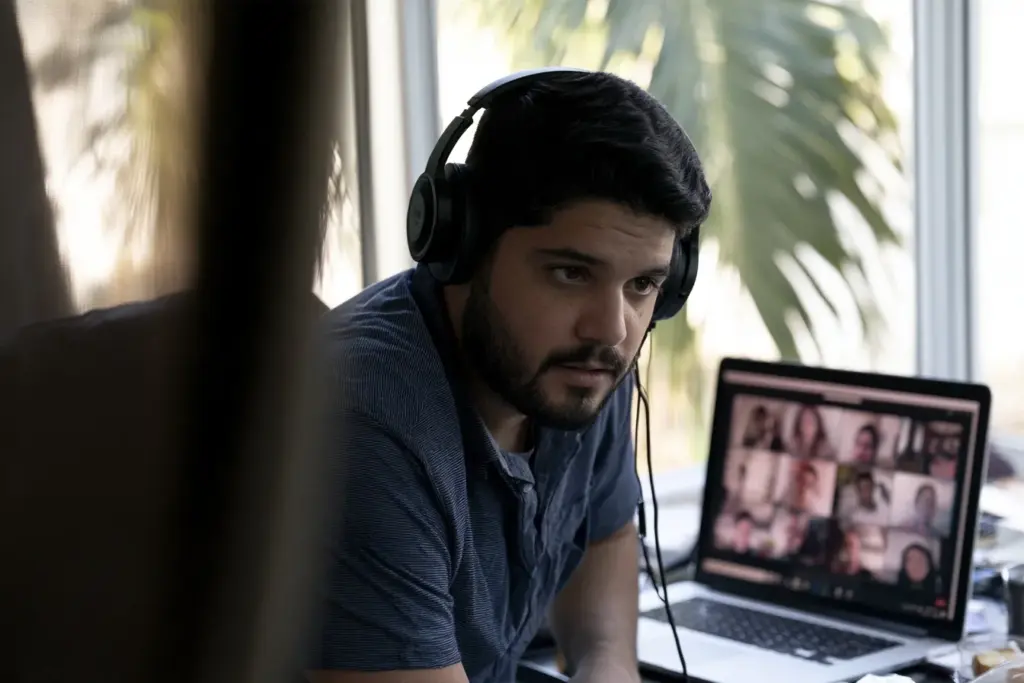
In one of the group therapy sessions, another member shared something genuinely vulnerable. The Zoom screens went quiet. David said: “That’s interesting. It reminds me of something I read about male socialization patterns.” Travis paused, gently. “David, what happened?” A long silence followed. Then he exhaled. “I left,” he said. “Something landed, and I left.”

The Vulnerable Child mode is the part underneath the Detached Protector. The nine-year-old in the back seat of the family car who learned that being fully himself led to some form of subtle exclusion. Still present. Still nine. Rarely seen by anyone, including David.
The Healthy Adult mode is the goal. Not the absence of vulnerability, but the capacity to tolerate it without retreating to a spreadsheet.
Travis’s reframe, delivered repeatedly: “These modes are not who you are. They are strategies you developed when you were nine and had no better options. Now you are forty-one. You have better options.”
Imagery Rescripting: Updating the Schema at Its Source
One of schema therapy’s most distinctive interventions is imagery rescripting, part of the work that prepares men for deeper engagement in group.
Imagery rescripting goes back to the specific early memory where the schema was installed and gives the nervous system a new emotional experience of that moment, with the adult self present as witness and protector. It works at a level that pure cognitive insight does not reach because the schema lives at the level of emotional memory, not belief.
In David’s rescripting scene, Travis guides him to a specific memory: age nine, his parents’ kitchen in a modest inland suburb, the night his father came home and told his mother they were behind on the mortgage. No one screamed. The night was a tightly controlled silence. David sat at the top of the stairs, listening to a conversation he was not supposed to be hearing.
Travis invites the adult David to step into the image and speak to the boy on the stairs.
David says: “You’re not different because you’re broken. You’re different because you’re carrying a secret that isn’t yours to carry.”
The point is not to rewrite the past. What matters is giving the nervous system a new memory in which the boy is seen, protected, and not alone, so the new memory can compete with the old one. Over time, the automatic expectation of exclusion softens. Taking small relational risks in the men’s group begins to feel less like walking off a cliff and more like trying a new restaurant. Still scary. Survivable.
Why a Process Group, Not a Drop-In Support Group
Many high-achieving men hear “group therapy” and quietly file it under not for me. What is offered through southfloridamarriagetherapy.com is categorically different from what those two words usually bring to mind.
A quick taxonomy, because the word “group” gets used carelessly:
Drop-in support groups meet for comfort, normalization, and shared experience. Many support groups are genuinely valuable for grief, addiction recovery, or major medical events. Support groups in the AA, NA, and SMART Recovery traditions exist for exactly this. They are not built to alter a lifelong relational pattern.
Psychoeducational groups teach a skill set or curriculum. Useful for what they are. Not what we are talking about either.
Interpersonal process groups, what Travis runs, meet for change. The therapy group itself becomes the laboratory: what unfolds between men in the room is the work.
Most clients have only ever encountered support groups, and they assume any other therapy group must be a slightly more clinical version of the same. It is not. A good therapy group, run as interpersonal process, alters the pattern, instead of describing it. The world of support groups is wide and well-meaning; the practice respects the work other support groups do, but a process group is a different category of work entirely. Process groups go where support groups, by design, do not.
Four structural features that matter for men with this schema:
Closed, consistent membership. The same men, every week. The only condition under which real relational patterns can emerge and be worked with, which is also why weekly attendance is treated as a real commitment.
Schema-informed facilitation. Travis actively uses schema modes and the Reinventing Your Life framework in session, not as decoration.
Present-moment focus. What happens between the men in the room during the session is the primary clinical material. Not stories about the week. The actual exchange happening at 6:43 PM.
Confidentiality structure. What is said in the group stays in the group. Period. The group is a safe container for what most of these men have, until now, kept under tight surveillance.
Each men’s group meets weekly online, providing consistent access for members across South Florida while maintaining the rhythm that real change requires. (When the same men’s group meets at the same time every week, the field becomes its own intervention.) In a group setting like this one, men benefit from things solo work cannot deliver: diverse viewpoints from peers who understand the milieu, real-time accountability, and shared experiences that build empathy and a recalibrated sense of what “normal” looks like inside a high-achieving man’s chest. Members come to recognize themselves in one another, then, quietly and repeatedly, stop performing for one another.
What this looks like in practice: men share what happened in their week, and other men respond in real time, not with advice, not with deflection, but with their own present-tense experience of what was said. The group works as a supportive environment because it is also a working environment; loneliness drops because the men are connecting with other men who are facing similar challenges, not because anyone is reciting a comfort script. Emotional support gets built across the membership the only way it gets built: repetition, week over week. The longer-term effect is what the research on men’s groups predicts: a real sense of community and belonging that gradually combats loneliness rather than naming it. Well being and emotional well being shift gradually, almost without announcement. Many participants discover unique benefits they did not sign up for: looking forward to a weekly session, noticing they have made an actual friend, realizing they have not had this kind of contact since college.
In-session role-play (yes, men do role-play, and yes, it is awkward at first, and yes, it works) improves communication skills and interpersonal effectiveness in ways that show up the next day at work, in marriages, with kids. Therapists facilitate emotional exploration in these sessions by creating a safe environment and a true safe space where men express what they feel rather than what they have been performing for thirty years, encouraging open communication and mutual respect. Practical tools that emerge, for managing reactivity, for staying present in conflict, for naming what is happening inside, start showing up outside the group within weeks.
The schema cannot be healed alone. It formed in relationship. Disconfirming it requires relationship as well, through repeated experiences of being more fully known by other people and not rejected.
What David has not yet let himself hope for, but what Travis has watched happen many times, is the moment a man realizes the group knows him now, the real version, and they stayed.

Inside Travis Atkinson’s Online Men’s Group Program in South Florida
This part matters. The way you enter the group shapes what you get from it, and the practice is intentional about that. Below is exactly how the process works.
Step 1: Book a first session with Travis
Book a first session with Travis. Visit southfloridamarriagetherapy.com, navigate to Travis Atkinson’s page, and tap the scheduling link to book a first session. There is no charge for this initial conversation, no commitment, and no sales pressure. (If you have ever tried to schedule a doctor’s appointment in a big city, the absence of friction will be a small miracle.)
In the consultation, you and Travis talk through your situation: what is pulling you toward group, what is pulling you back, what you want to change. Together, you will determine whether the group looks like a good fit for what you are carrying.
Action: Tap the link at southfloridamarriagetherapy.com to book a first session with Travis.
Step 2: One individual session for tailored assessment (billed at the regular rate)
If a group looks promising, the next step is a single individual session with Travis, scheduled at the practice’s regular rate. This session is not free, and there is a clinical reason it is not.
Step 2 is not a hoop. It is the work that makes the group work.
Before the session, you will complete several questionnaires designed to identify your specific strengths, the schemas active in your life, the modes that take over under stress, your attachment style, and the relational dynamics most relevant to your goals. The individual session is then used to walk through what those instruments surfaced, identify what you want to change, and tailor the group experience to your particular needs.
A brief assessment is essential, not optional. Walking into a process group without one is like joining a marathon without knowing where the finish line is or what your knees can handle. The brief assessment ensures you enter the men’s group with clear goals, an understanding of your own patterns, and a plan for how the group can help meet your needs. It also lets Travis tailor his facilitation specifically to you, and that tailoring is what makes the difference between three months of confusion and three months of measurable change. We make sure the work fits the man, not the other way around.
Step 3: Decide together whether the group is the right move
After the assessment, you and Travis talk again. If the fit looks right (clinically, scheduling-wise, and in terms of group composition), you proceed. Should something else be a better match (more individual work first, a different group, a referral elsewhere), Travis says so directly. The goal is the right work, not any work.
Some men begin with a brief period of individual schema therapy with Travis before joining group. Both paths work, and the assessment helps determine which makes more sense for where you are.
The Mental Health Benefits Most Men Don't Know to Expect
Most men come in hoping the loneliness will lift. It does. Several other mental health benefits accumulate that men typically do not know to ask for.
Increased ability to manage stress without needing to disappear into work, alcohol, or scrolling at 1 AM
A noticeable rise in emotional intelligence, the kind your direct reports, your partner, and your kids feel before you do
Meaningful connection with men who knew the version of you behind the resume first, plus a second close tie that catches you by surprise around month four
A working understanding of your own behavioral patterns, including the ones you have been blaming on other people
Slow, undramatic development of emotional resilience, not the LinkedIn kind, the actual kind
For men struggling with interpersonal patterns in romantic relationships and at work, a vocabulary and a felt sense of what to do differently
A quieter but real bump in self esteem, the difference between thinking you have worth and feeling it on a Wednesday
Sharper coping skills for moments when the schema flares: at family dinners, at promotions, at the anniversary of a quiet old grief
Skills in emotion regulation that work in conference rooms and bedrooms with equal effectiveness
For some men, the surprising experience of friendship that does not require a shared activity to justify it
How the Schema Shows Up in Healthy Relationships and the Romantic Partnerships Trying to Become Them
For many men, this schema is first named not by a therapist but by a partner, usually in the form of a quiet, persistent complaint that something essential is missing.
The classic pattern: the man is attentive, responsible, non-conflictual, and described as a “good partner on paper” while being emotionally unreachable. Partners describe the experience as being alone together. Underlying attachment patterns, self esteem, and the public persona he has been performing for years all play into how the schema manifests in relationships and in long marriages. Healthy relationships require something the schema actively prevents: the ability to be known by the person sleeping next to you.
In David’s relationship scene, his partner, a social worker in Hollywood, says: “You’re more emotionally present in client presentations than you are with me.” He doesn’t argue. He knows she’s right. Until now, he has had no idea what to do about it.
Why group work helps: corrective experiences accumulating in the men’s group, staying present when it is uncomfortable, being known and not rejected, gradually extend outward, including into the most important relationship in his life. This is not automatic and it is not immediate. It is a gradual expansion of capacity. Over time, men report being able to improve relationships at home, with kids, with siblings, and with the increasingly small group of friends who used to wonder where the real version of him went. Improvements show up in interpersonal relationships of every shape, not romantic alone.
For men where couples issues are central, Travis Atkinson, LCSW, offers EFT-based and Gottman Method couples therapy, also conducted exclusively online, that can run concurrently with Travis’s group work. The clinicians coordinate so the work is aligned rather than duplicative.
What Changes When the Schema Quiets: Toward a More Fulfilling Life
The social exclusion schema does not disappear. What changes, with committed group work over time, is that the schema becomes less dominant, less believable, and less in charge. Other men in the group begin to act, in a deeply real sense, as living counter-evidence.
Four concrete shifts that men in Travis’s groups commonly report after 3 to 6 months of engaged participation:
Initiating contact rather than waiting to be invited: texting first, suggesting the plan, reaching out when nothing is wrong
Staying in difficult conversations rather than pivoting to analysis, work talk, or a mild joke when things get real
One or two people they would call in a hard moment, not from obligation, but because it occurs to them as a natural option
Showing up present at gatherings they used to white-knuckle through, not performing presence, simply being there
These are signs that the social exclusion lifetrap is quieting and the Healthy Adult mode is more often in charge. Men also notice an unexpected effect on personal relationships of every kind: the quality of every connection rises slightly when the underlying expectation of exclusion stops calling the shots. Many men find themselves moving toward a more fulfilling life in domains they had not even tagged as related: appetite, sleep, creative interests, the way a Sunday afternoon feels.
In David’s resolution scene, fourteen months in, he texts a man from the group, a radiologist from Aventura, to meet for coffee near Las Olas on a weekday afternoon. The radiologist says yes. They sit for ninety minutes. On the drive home, David notices something: he did not perform anything. He talked. The other man talked. By most reasonable definitions, it was a friendship.
Remember David’s sacred floor: I can be in a room with people, or I can be myself. Not both. That belief did not break in a single session. It eroded across fourteen months, well over a year, of small, repeated experiences of being in a room and being himself and not being asked to leave. By the time he texted the radiologist, the belief had quietly stopped being true.
That evening, David texts Travis. Not because anything is wrong. Because he wants to tell someone, and he has somewhere to send the message. That is not a small thing. In a way, it is the whole thing. The fulfilling life he had been outsourcing to achievement was, all along, available through the more vulnerable and far more ordinary work of being known.
Partners, of course, notice before the men do: less retreating to work email mid-conversation, more eye contact, the occasional question instead of a deployed solution, a quality of presence that was not there before.
Inclusivity: Built In, Not Bolted On, Across Sexual Orientation, Gender Identity, and Cultural Background
South Florida is a region of overlapping identities, and the social exclusion schema does not check a box before it activates. It shows up in straight men, gay men, bisexual men, queer men, men exploring questions of gay identity or who they are coming to understand themselves to be, first-generation professionals, BIPOC men, immigrants, expats, and men working through modern relationship structures.
For many of these men, the schema does not coexist with experiences of actual exclusion (being one of two Black men on a leadership team, the only out gay associate at the firm, the kid of immigrants in rooms that quietly assumed otherwise); it amplifies them. Real-world exclusion can install the schema more deeply, then masquerade as proof that the schema was right all along. Untangling the two is part of the work.
Travis’s groups are explicitly affirming and culturally attuned. The work makes room for the complexity, not around it. You will not be asked to educate the group about your identity, your community, or your background; you will be invited to bring as much or as little of those layers into the work as is useful to you on any given session. Where additional individualized support is helpful, it is coordinated through the assessment process so the group experience is genuinely tailored.
Out-of-Network Therapy for South Florida Professionals: Logistics
The practice operates on a self-pay, out-of-network model. Travis Atkinson’s practice is not in network with insurance providers and does not interact with insurance companies directly. Because the practice is not in network, clients should clarify their own insurance coverage and any out of pocket costs against their plan before starting. (You will want to check what your plan reimburses for out-of-network outpatient mental health care; some PPO plans are surprisingly generous, others are not.)
Clients with PPO plans can submit out-of-network claims using superbills the practice provides. Many recover a meaningful portion of session costs depending on their plan’s out-of-network benefits. The practice can also coordinate with psychiatric providers for medication management when appropriate; medication management itself is handled by an outside psychiatrist, not within the LCSW practice. If a man wants to work with a separate mental health professional for medication, the practice will help coordinate care; for some men, working with a mental health professional for prescribing in parallel with the men’s group is the right combination.
What this model offers: no prior authorizations, no network-driven treatment limits, no insurance company in the room, greater privacy (no diagnosis code transmitted to a payer), and treatment length determined by clinical need rather than managed-care protocol. The men who thrive in this model tend to value the same things in their healthcare that they value in their legal counsel: discretion, autonomy, and quality over cost-minimization.
Other Therapy Options and Adjacent Forms of Mental Health Care
For men who arrive with overlapping concerns, the practice’s wider therapy options come into play. Schema work in group remains the spine; alongside it, men have used cognitive behavioral therapy and exposure-based work for specific fears, structured response prevention strategies for ruminative or compulsive patterns, and brief individual sessions to address discrete relationship challenges as they arise. If a different format would serve better than the men’s group (couples work, individual schema therapy, or a referral for new groups elsewhere in the city), Travis says so. The practice matches therapy options to the man, not to the calendar slot.
Mental health is a domain that suffers from one-size-fits-all thinking. The schema and modes framework lets Travis tailor: practical tools for the man whose mental health concern is mostly reactivity at work, deeper imagery work for the man whose mental health pattern goes back to age six, and group-based corrective experience for the schema itself. Personal growth in this work is not a buzzword. It is the cumulative result of repeatedly tolerating discomfort in good company. Personal growth shows up first in small ways (a less clipped reply to your spouse on a Sunday morning) and later in larger ones (the realization that you have, somewhat against your will, become a kinder man).
Next Steps: Connecting with Travis Atkinson and the Men’s Groups
If this article felt uncomfortably accurate, that recognition is already part of the work.
The lifetrap has a name. It has a developmental origin. It is not a character defect. And it responds to treatment, specifically, to the kind of relational work that Travis Atkinson, LCSW, leads at the practice of Travis Atkinson, LCSW.
Clear next step: Visit southfloridamarriagetherapy.com, navigate to Travis Atkinson’s page, and book a first session using the online booking system.
What the consultation involves: a focused conversation about history, current patterns, and whether Travis’s group, if it fits, matches your schedule, goals, and readiness. No commitment is required.
What Travis is looking for: not a particular diagnosis, not a particular level of distress, but a degree of honesty about the pattern and a willingness to try something different.
Contact: Travis Atkinson, LCSW
Office: the practice of Travis Atkinson, LCSW – online, serving clients across South Florida
David is still in Las Olas sometimes. He’s still good at the rooftop dinners. But on the cab ride home, he has something he didn’t have before: a group of men who know what he means when he says he’s fine, and who would notice if he stopped showing up.
That is not a small thing. In a real sense, it is the entire thing.

What the 2024 Research Says About Online Group Therapy for Men
These questions address practical concerns not fully covered above, focusing on men across South Florida who A quick word for the men who want the evidence base before they commit. Two findings matter here.
First, group therapy for the conditions in question. Decades of research consistently show structured group therapy sessions producing outcomes comparable to individual work for recurrent depression, anxiety, relational distress, and the diffuse “I don’t quite belong” feeling at the heart of this article. For loneliness specifically, group therapy is the rare modality that targets the symptom and the cause at once: the men’s group meets the loneliness and meets the relational pattern that produced it. (A clarifying contrast: peer-led support groups, the 12-step support groups, bereavement support groups, and illness-specific support groups men sometimes try first, are valuable for what they are designed to do: community, normalization, lower shame. Most support groups are not designed to alter long-standing schemas. Clinician-facilitated process groups are. Both have a place. Picking the right one for the problem you are trying to solve is half the battle.)
Second, online versus in-person. For the men still privately wondering whether laptop therapy is “real” therapy, the 2024 evidence is consistent and specific. Krzyżaniak et al. (2024), publishing in the Journal of Telemedicine and Telecare, conducted a meta-analysis of randomized controlled trials comparing telehealth and in-person psychotherapy and reported no significant differences in anxiety reduction, depression symptoms, or functional outcomes. Seuling et al. (2024), in the same journal, found that the therapeutic alliance, historically the variable skeptics worry about most, was statistically equivalent between videoconferencing and in-person psychotherapy as rated by both patients and therapists. A separate meta-analysis by Fernandez and colleagues, of 56 studies of video-delivered psychotherapy, found large pre-post effect sizes overall (Hedges’ g ≈ 0.99) and even larger effects for CBT specifically (g ≈ 1.34), meaning the video-delivered work was not “good enough”; it was robustly clinically meaningful. Fischer-Grote et al. (2024) in JMIR Mental Healthconcluded that online interventions are tangible, effective alternatives to in-person therapeutic interventions.
The story for online group therapy specifically is slightly more nuanced. Some studies have noted that group cohesion can take a few sessions longer to build over video than in person; that is an honest finding worth naming. What the same body of research also shows: once cohesion forms, the work proceeds, and online format substantially expands access for men who would never have made it to a downtown office at 6 PM after a deposition.
Personal growth in this work is not a marketing word. It is the cumulative result of a year’s worth of small, repeated moments in which the schema predicted exclusion and the room delivered something else. The men’s group meets weekly, online, with the same membership, on the same schedule. That structural consistency, boring almost, is what creates the safe space the schema needs in order to change.
Online Men’s Group Therapy in South Florida: Why Virtual Still Works
For men who negotiate face-to-face for a living, doing meaningful emotional work on a laptop screen can read as an obvious non-starter.
If the first thought reading that was I am not getting emotionally real with seven strangers on Zoom, welcome. Travis has heard that sentence, in some variation, from nearly every man who has joined and stayed.
The 2024 evidence cited above is the broader answer to that skepticism: outcomes equivalent to in-person, alliance ratings equivalent to in-person, large effect sizes for video-delivered psychotherapy in well-designed studies. On the ground, the narrower answer is as practical. HIPAA-compliant platform. Stable video. Clear group norms. No commute.
For men in Brickell, downtown Fort Lauderdale, Wall Street South, or the surrounding suburbs, the absence of a commute is a genuine clinical advantage, not a logistical one alone. Men arrive on time, in their own space, having not spent forty-five minutes in traffic compressing themselves into work-presentation mode. For men with this schema specifically, being in a familiar, controlled environment can reduce initial defensiveness enough to make the first real risk possible.
The group functions in a safe space as a full interpersonal environment through a screen: facial expressions, tone shifts, mode changes, pauses, and the specific quality of silence are all visible and clinically usable. Members must be physically across South Florida during each session, consistent with state licensing requirements. The practice is online by design, not by default; a deliberate choice made on clinical and access grounds, not a pandemic concession that has not been undone.
Is This Men's Group Therapy Right for You?
Before reaching out, take a moment to see whether the description matches your experience.
The men who get the most from Travis’s groups share a recognizable cluster:
High-functioning professionally; often described by others as easy to be around
Privately exhausted by being “on,” by the performance of ease nobody else seems to need to perform
Have friends, but not people who know them, the version behind the competence
Have tried understanding the pattern; what they have not tried is experiencing something different
Skeptical about group therapy, which is, counterintuitively, a useful starting point
Who may not be the right fit right now:
Men in acute crisis requiring a higher level of care
Men unable to commit to consistent weekly meetings
Men seeking a drop-in support circle rather than a depth-oriented men’s group
Ambivalence is common and welcome. It can be named directly in the consultation, and is often one of the first useful things to discuss.
Schedule a Consultation with Travis Atkinson
If this article felt uncomfortably accurate, that recognition is already part of the work.
The lifetrap has a name. It has a developmental origin. The schema is not a character defect. And it responds to treatment, specifically, to the kind of relational work Travis Atkinson, LCSW, leads at the practice of Travis Atkinson, LCSW.
One-line next step: Book a first session with Travis at southfloridamarriagetherapy.com, then a single paid assessment session if a group looks like a fit.
The full path:
Visit southfloridamarriagetherapy.com, navigate to Travis Atkinson’s page, and tap the scheduling link
Book a first session with Travis, or use the short form for a brief fit call first
If a group looks promising, schedule one individual assessment session at the regular rate, complete the questionnaires (strengths, schemas, modes, attachment patterns), and walk into your first group with a tailored plan
Contact: Travis Atkinson, LCSW, (646) 681-5584, southfloridamarriagetherapy.com Office (legacy address; sessions conducted exclusively online): Travis Atkinson, LCSW, online, serving clients across South Florida
David is still in Las Olas sometimes. He is still good at the rooftop dinners. On the cab ride home, however, he has something he did not have before: a group of men who know what he means when he says he is fine, and who would notice if he stopped showing up.
That is not a small thing. In a way, it is the whole thing.

Frequently Asked Questions About Group Therapy, Interpersonal Relationships, and Modalities Like Dialectical Behavior Therapy and Acceptance and Commitment Therapy
These address practical concerns not fully covered above. The practice integrates several evidence based interventions alongside schema therapy, including Emotionally Focused Therapy, Gottman Method, mindfulness based stress reduction, DBT skills for emotion regulation, and ACT-informed acceptance work. Relaxation techniques and structured experiential exercises are used when clinically indicated.
Is a men's group too intense if I'm used to keeping things private?
The group expects guardedness. It is practically in the job description for men with this schema. Travis paces the work; the first group sessions are about orientation, not performance. Intensity builds gradually, the way trust does. You retain full agency over what you share and when. The group is a safe and supportive space, not a confessional booth. It is more like a room where, eventually, it becomes possible to stop performing.
What if I don't think I'll relate to the other men?
That worry, “I won’t fit in,” is the schema talking. It is almost definitionally what the social exclusion lifetrap says about every room before you enter it. Travis curates groups so members share overlapping internal experience: professional success paired with quiet disconnection. External differences in career, background, and industry become almost immediately irrelevant when the men start naming similar challenges out loud and recognizing themselves in one another. Most men are surprised, within a few weeks, by how closely others’ inner experience mirrors their own, and by how quickly group members start to register as people, not Zoom tiles.
Can I be in couples therapy and a men's group at the same time?
Yes, and for some men it is the most effective combination the practice offers. The men’s group works on long-standing expectations about belonging and exclusion; couples therapy addresses specific patterns with a partner. Neither piece duplicates the other. When both happen within the practice, Travis and the couples clinician can coordinate so the work is aligned. This combination often helps men improve relationships on multiple fronts simultaneously.
How long do men usually stay?
Most men commit initially to three to six months, enough time for the group to feel familiar, for patterns to emerge, and for the first corrective experiences to accumulate. Many stay over a year as friendships among group members deepen, new relational layers come into view, and gains consolidate. Some stay for life transitions and then graduate. Any decision to leave is discussed openly in the group, so it becomes part of the group process rather than a quiet disappearance.
What if I'm already functioning well, doesn't that mean this doesn't apply to me?
High functioning is not incompatible with the social exclusion schema. For many men, it is the camouflage. The men in Travis’s groups are not, by and large, in crisis. They are accomplished, quietly lonely, and tired of being one step removed from their own lives. The point is not that something is broken. What matters is that you built something impressive and would like to be at home inside it. That is enough to begin.
What about confidentiality with other group members in a virtual format?
Confidentiality is a foundational group norm and is reinforced in every session. Members agree, explicitly, to a clear confidentiality structure before joining. The platform is HIPAA-compliant. Real names, employers, and identifying details are protected as a basic condition of membership.
Do I need to be in a particular city, or anywhere in South Florida?
You need to be physically across South Florida during sessions, per state licensing requirements. Members tune in from across the city and from upstate, Miami-Dade, Broward, and Palm Beach counties. The men’s group meets online to make this geography possible, and to make sure professionals from any corner of the state can access the same level of care.
Does the group address things like emotional reactivity, panic, and anxiety in addition to social exclusion?
Yes. While the central focus is the social exclusion pattern men carry into their professional and romantic lives, related issues, social anxiety, irritability, sleep disruption, and the reactivity that surfaces under work pressure, get addressed in a safe space as they arise, with tools drawn from cognitive behavioral therapy, DBT-informed skills, and acceptance work. Men leave with a usable repertoire, not insight alone.
How does group therapy improve interpersonal relationships and communication skills for high-achieving men?
Group therapy improves interpersonal relationships and communication skills by giving men a place to practice both in real time, with feedback, while the patterns are still warm. The mechanism is specific. Men with the social exclusion schema show a reduced quality of social connections defined by a persistent belief of not belonging, which produces predictable behaviors at work and at home: keeping conversations one layer removed, defaulting to advice when intimacy is what was asked for, going silent when something vulnerable surfaces. Inside the group, those exact moves get named as they happen. A man pivots to work talk; another member notices out loud; the room slows down; the original moment gets returned to. After ten or twelve repetitions, the move stops being automatic. Outside the group, the change shows up first in the smallest places: an actual answer when his wife asks how he is feeling, an open-ended question to a direct report instead of a directive, a willingness to sit through a friend’s grief without trying to fix it. The shared experiences inside group therapy build empathy and understanding among group members, which are foundational to every healthy relationship that man has, at home, at work, and with the people he calls friends. Communication skills improve because the men are practicing, not theorizing. By month four, partners notice. Colleagues catch up around month nine.
How can a men's group support men dealing with the same kinds of challenges and combat loneliness that has real health consequences?
A men’s group supports men facing similar challenges by closing the distance between I am the only one and several other men in this room have lived a version of this, which is the precise moment a schema starts to lose its grip. Combating loneliness matters more than most men realize. Loneliness in men is associated with elevated risks of depression, substance use, cardiovascular disease, cognitive decline, and premature death; the U.S. Surgeon General has called chronic loneliness a public health crisis. What makes a clinician-facilitated men’s group different from a casual friend circle is structural. Membership is consistent; the same men show up every week. Confidentiality is enforced. A trained clinician notices what the men cannot yet see in themselves. The work goes deeper than venting and stays steadier than talk among friends, who, with the best intentions, often pivot to advice or distraction the moment something hard surfaces. Connection forms because the room is built for it, not in spite of being built for something else.
Why do men rely so heavily on romantic partners for emotional support, and what happens when that single channel breaks?
Most men route most of their emotional life through one person. Research consistently finds that men rely heavily on romantic partners for emotional support and social facilitation, often because the other channels, close male friendships, family, community, were never built or were quietly let go around age 30 in service of the career. The arrangement works until it does not. Divorce, separation, bereavement, or a partner’s burnout from carrying an entire emotional infrastructure can take a high-functioning man from “I am fine” to a crisis he has no language for, sometimes within weeks. Men’s groups widen the channels before the single channel breaks. Inside a structured men’s group, members build connection with other men, which redistributes the load and, somewhat unexpectedly, tends to strengthen the romantic relationship rather than compete with it. A partner who has been the sole emotional witness for a decade often experiences a man’s deepening ties with other men as relief, not threat. The relationship gets to be a relationship again, not an emotional utility.
If a question above named something you have been carrying privately, that recognition is worth taking somewhere. A first session with Travis is the next move.
Travis Atkinson, LCSW | the practice of Travis Atkinson, LCSW | online, serving clients across South Florida | All sessions conducted exclusively online; members must be across South Florida at the time of group therapy sessions.