Gottman Method Therapy for High-Achieving Couples in New York
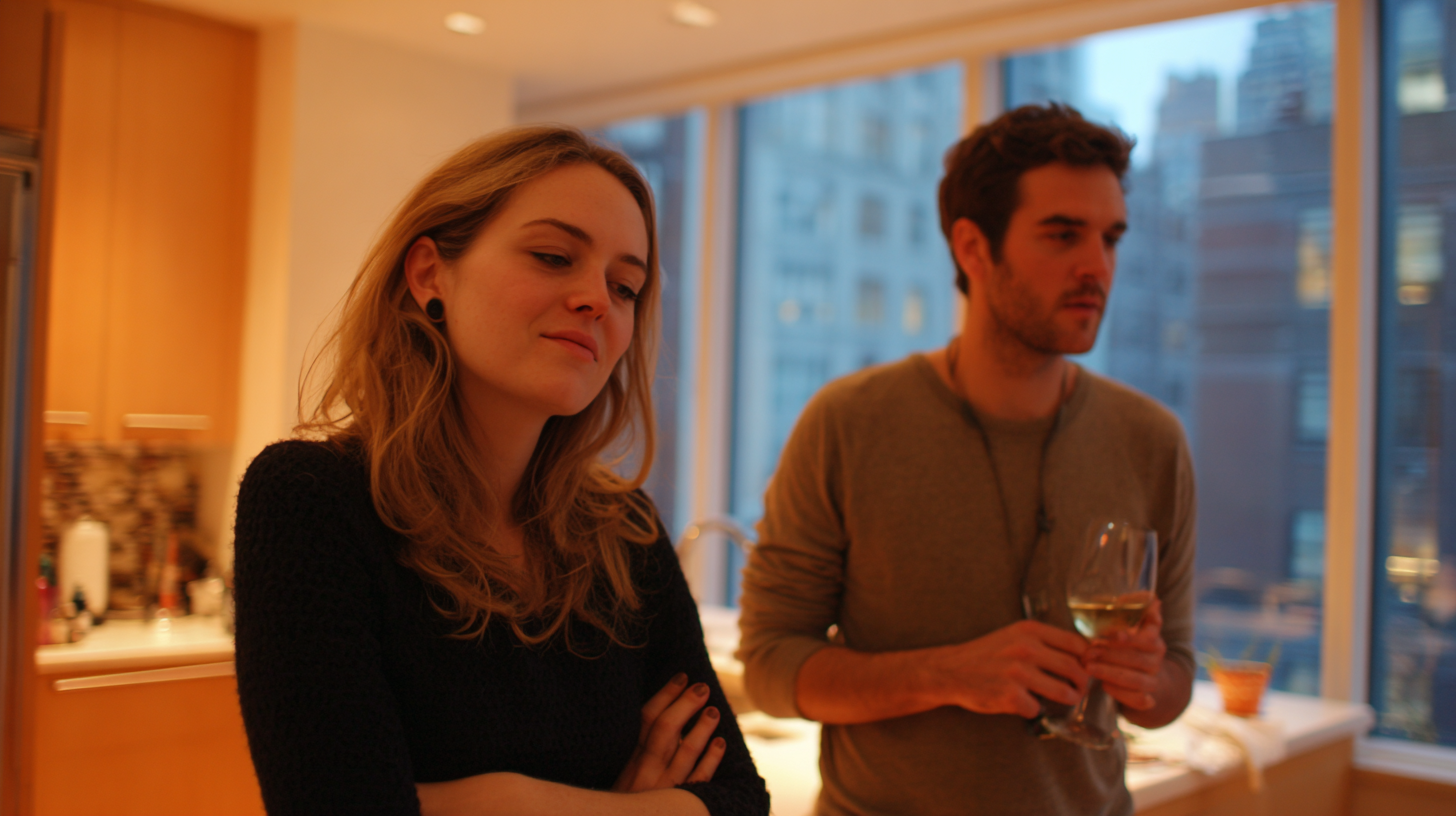
It is Sunday night. The week ahead is already pressing against you. Tomorrow morning you have a board call, a pitch, a difficult patient, a deposition, a deadline that has been moving for weeks. You are in the kitchen putting away the last of the dishes when your partner says something that lands wrong. You hear yourself respond in a tone you did not plan. They get quiet. You both feel the temperature drop. Within minutes, you are in the same fight you had two weeks ago, three weeks before that, and three months before that.
You both know the choreography. You can predict the next move before either of you makes it.
You have solved problems that would stump most people. You have built a career, led teams, navigated high-stakes negotiations. Yet the same argument keeps circling back every few weeks. One of you says something that lands wrong, the other gets defensive, and within minutes you are both in familiar corners, wondering how two capable people keep ending up here.
Relationship patterns operate on a different system than professional problem-solving. Breaking them requires Gottman Method couples therapy with a certified Gottman therapist who understands how high-performing couples interact and where their particular vulnerabilities lie.
New York Therapy offers Gottman Method therapy online throughout New York State, led by Travis Atkinson, LCSW, one of the first Certified Gottman Method Couples Therapists in New York, certified since 2006. Our clinicians have received training at the advanced clinical level in Gottman Method, Emotionally Focused Therapy, Schema Therapy, CBT, and Mindfulness. All Gottman Method therapy sessions are conducted exclusively online, designed for executives, entrepreneurs, physicians, and partners seeking professional help for their relationship at the highest standard of care.

How the Gottman Method Helps Couples Manage Conflict and Build Healthy Relationships
John Gottman and Julie Gottman spent over 40 years at the Gottman Institute studying what makes relationships succeed or fail. Gottman found through decades of research that certain patterns of interaction predict relationship health with remarkable precision. The work was unusual in psychology: instead of asking couples to self-report what was happening, the Gottmans recorded thousands of couples in a research apartment dubbed the Love Lab, watched the footage frame by frame, and discovered they could predict with over 90% accuracy which couples would still be together a decade later, often within the first three minutes of an argument. Their work with thousands of couples, including gay and lesbian couples, produced a map of relationship dynamics and a set of research-based interventions designed to improve how couples interact.
Central to this work is the identification of four destructive behaviors known as the Four Horsemen of the Apocalypse: criticism, contempt, defensiveness, and stonewalling. Of the four, contempt is the single strongest predictor of relationship dissolution. These negative conflict patterns predict relationship dissolution with striking accuracy. High-achieving couples often recognize these patterns in their own arguments but cannot interrupt them without outside guidance. The pattern is faster than the thought. By the time you notice you are mid-eye-roll, the damage is already in the room. Learning to replace negative conflict patterns with constructive alternatives is one of the primary areas where Gottman Method therapy produces measurable change.
The Sound Relationship House theory provides the structural framework, with its nine components organized across seven levels that couples can strengthen, anchored by two weight-bearing walls: trust and commitment. John Gottman designed this model to give therapists and couples a shared language for understanding where a relationship is strong and where it needs attention. Without that language, couples talk in circles about “communication” without ever agreeing on what is broken. With it, the work becomes specific.
Love Maps form the foundation, representing each partner’s detailed knowledge of the other’s inner world, including life dreams, fears, and history. When careers consume most of your bandwidth, Love Maps erode. You stop asking questions you used to ask. You assume you already know the answers. The person sitting across from you at dinner has been changing for ten years, and you have been answering questions about them based on who they were at thirty-two. Partners learn over time that staying curious about each other’s inner world prevents the slow drift that turns small disconnections into major ruptures.
Bids for connection are the small moments when one partner reaches for the other. A glance up from a book. A hand brushed against a shoulder while passing in the kitchen. A casual mention of something that happened at work. Most bids are tiny and easy to miss. Responding to these bids builds emotional connection and trust over time. Missing them, especially when you are distracted by work, creates distance that compounds quietly. Gottman found that couples who consistently turn toward each other’s bids build an emotional bank account of positive interactions. Couples who later divorced had turned toward each other’s bids only 33% of the time. Couples who stayed together had turned toward each other 86% of the time. These daily deposits help couples weather major stresses because there is enough goodwill stored to absorb occasional conflict.
Couples who share fondness and admiration for each other maintain a positive perspective on the relationship even during disagreements. This positive perspective acts as a buffer; partners who genuinely like each other give each other the benefit of the doubt during stressful moments rather than assuming the worst. The research shows that couples who stay together maintain at least five positive interactions for every negative one during conflict, replacing negative interactions with positive ones through deliberate practice. This is not a vague aspiration. It is a measurable ratio that predicts whether a relationship survives.
Emotional attunement develops through a heightened sense of awareness of each other’s emotional states. Repair attempts are the efforts couples make to de-escalate during conflict, and the Gottman Repair Checklist provides couples with specific phrases to express feelings, apologize effectively, and show appreciation in heated moments. The clinical insight is that successful couples are not couples who fight less. They are couples whose repair attempts land. Constructive conflict management includes using techniques like soft startups, making repair attempts, and accepting influence from your partner to disarm conflicting verbal communication before it escalates.
The Gottman Method also distinguishes between two categories of relationship problems: solvable conflicts and perpetual ones. Approximately 69% of problems between partners are never fully resolved because they stem from differences in personality or values. The same fight you have been having about money, or sex, or in-laws, or how to spend a Saturday, is statistically more likely to be a perpetual problem than a solvable one. Learning to manage conflict around perpetual problems rather than trying to win them is one of the most practical shifts Gottman Method therapy offers. Gottman Method interventions focus on improving three primary areas of a relationship: enhancing friendship, managing conflict, and creating shared meaning. Creating shared meaning involves developing joint rituals, values, and a sense of purpose that gives the relationship direction and depth beyond daily logistics.
For ambitious professionals in New York, these Gottman relationship building techniques translate directly to the pressures you carry. When both partners run demanding careers, the margin for missed bids shrinks. Small disconnections accumulate faster. The four horsemen ride into a high-pressure household more easily than into a quieter one. Understanding these patterns with precision and working with a Gottman therapist who can teach you to improve communication and strengthen your emotional connection is what makes lasting change possible.

Gottman Method Couples Therapy Combined with Schema Therapy, EFT, and CBT
Travis Atkinson is one of the first Certified Gottman Method Couples Therapists in New York, holding certification since 2006. Therapists listed in the Gottman Referral Network have received training in the Gottman Method at various levels. The Gottman Referral Network serves as a primary resource for couples worldwide who are seeking professional help from Gottman trained therapists. What separates certification from basic training is the rigor: the certification track requires completing all training levels, supervised clinical practice, and passing written and oral exams at the advanced clinical level. Many therapists attend a weekend workshop and describe themselves as Gottman trained. Certification represents a different depth of clinical competence entirely.
What further distinguishes this practice is the integration of multiple evidence-based modalities. Most Gottman trained therapists specialize in one approach. Our experienced clinicians hold advanced certifications across Gottman Method, Emotionally Focused Therapy, Schema Therapy, and CBT, using Gottman relationship building techniques alongside complementary methods to address relationship problems at every layer.
This integration matters because couples therapy challenges are rarely one-dimensional. A couple might present with a communication breakdown, which is Gottman Method territory. Underneath that breakdown sits a deeper attachment injury where one partner has stopped trusting that the other will show up emotionally, and that responds to EFT. Beneath that injury lies a childhood schema, something like “My needs don’t matter,” formed decades before the relationship began. Schema Therapy reaches that layer.
A couples therapist trained across all three modalities can move between these levels within a single session rather than spending months on surface-level skills while the deeper pattern keeps pulling the couple back. This is the difference between treating the symptom and treating what is generating the symptom. Addressing mental health concerns such as anxiety, depression, and trauma is an integral part of this work, because individual mental health directly shapes how partners interact.
Paul Chiariello, LMSW, brings advanced training in EFT for couples along with Acceptance and Commitment Therapy, CBT, and Schema Therapy. Tiffany Goldberg, LMSW, rounds out the clinical team. Together, they support couples throughout New York State in strengthening relationships that matter most as part of our evidence-based online therapy services.

Gottman Method Therapy for Couples Who Expect More
High-achieving professionals form the core of this practice. Executives, entrepreneurs, physicians, attorneys, creatives, and tech leaders who hold themselves to high standards tend to expect that same rigor from their couples therapist. Both partners are often intelligent and successful, frustrated that intelligence alone has not fixed what keeps going wrong. Analysis and effort produce results everywhere else; why not here?
The honest answer is that the analytical mind that wins arguments at work tends to lose them at home. The same skills that get you promoted will sabotage you across the dinner table. Healthy relationships require different tools than professional problem-solving, and Gottman Method therapy provides those tools with structure and precision.
LGBTQ+ couples, interracial couples, multicultural couples, blended families, and modern relationship structures are explicitly welcomed. The practice is LGBTQ-affirming and culturally sensitive, with experience across diverse couple configurations including gay and lesbian couples. The Gottman research base specifically includes longitudinal studies of same-sex couples, which is one of the reasons the model translates so cleanly across relationship structures.
Couples at any stage find support here: newly committed partners building a strong foundation, long-term couples navigating life transitions, partners in crisis seeking professional help, or couples working to overcome challenges before small patterns become entrenched.
Anyone located anywhere in New York State during their session qualifies. You do not need to be a New York City resident. For couples therapy, only one partner needs to be in-state. This also serves couples worldwide where one partner is based in New York.
The Gottman Method is not appropriate for couples experiencing active domestic violence; in such cases, specialized domestic violence services should be sought before beginning couples therapy.
Gottman Method Therapy: From Assessment to Measurable Progress
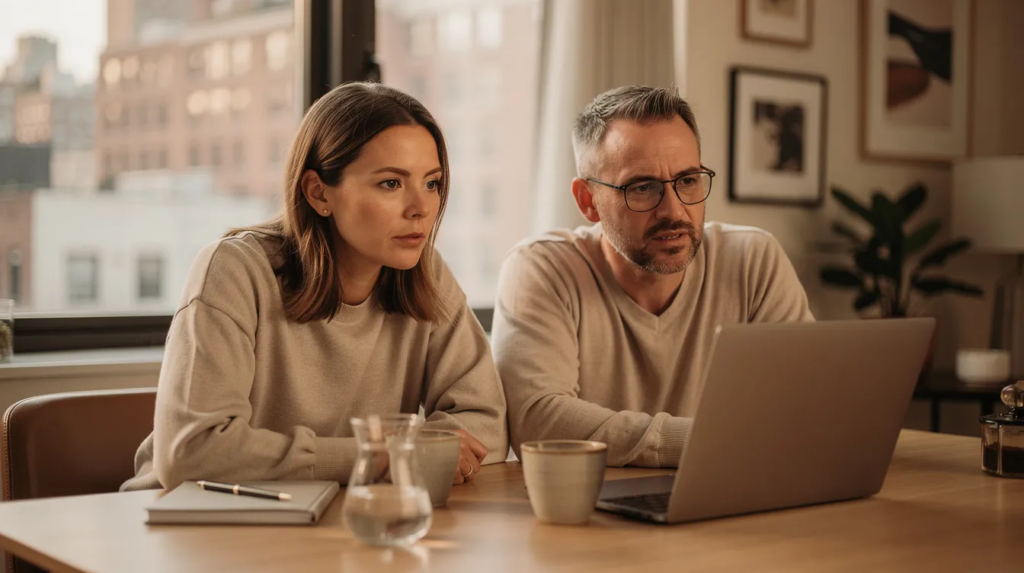
Couples therapy using the Gottman Method starts with an assessment process that includes a joint session between the couple and the Gottman therapist, where individual perspectives are also addressed. The Gottman Relationship Assessment is a structured assessment tool used to identify each couple’s unique strengths and challenges through questionnaires and clinical interviews. This primary resource provides data that guides personalized treatment planning rather than generic interventions.
The structure of the assessment is unusual. Most couples therapy proceeds on the therapist’s intuition. Gottman built a research-driven assessment because he was trying to remove guesswork from couples work. By the end of the assessment phase, your therapist has a written map of where your relationship is strong, where it is strained, and what specific interventions will move the needle for you. This is the difference between starting therapy with a hunch and starting therapy with a plan.
All therapy sessions in the Gottman Method are conducted with both partners together, and therapists do not privilege secrets, ensuring transparency throughout the therapeutic process.
From the assessment, a personalized treatment plan emerges. Research indicates that the Gottman Method is effective for improving relationships, compatibility, and increasing intimacy after approximately ten Gottman Method therapy sessions. A randomized clinical trial found that couples who participated in a two-day workshop followed by nine sessions of Gottman Method therapy experienced the most significant improvements and the least relapse. Sessions run 45 to 75 minutes via secure, HIPAA-compliant video, where couples talk honestly and practice new skills in real time.
The online format is a benefit by design: no commute across Manhattan or the boroughs, no waiting rooms, no rearranging your afternoon around transit. Therapy happens from your home, your office, or wherever you are in New York State. For high-functioning couples whose schedules collapse the moment one variable shifts, this is the difference between therapy that builds momentum and therapy that gets canceled three weeks in.
Ongoing outcome tracking means progress is visible and measurable. You will always know what is changing, what mental health factors may be influencing the dynamic, and what still needs attention. Couples who track outcomes tend to stay engaged because they can see their relationship improving rather than hoping something is working.

Frequently Asked Questions About Gottman Method Couples Therapy
What is the difference between Gottman-trained therapists and a Certified Gottman Therapist?
The gap is much wider than most people realize. Listings of “Gottman-trained therapists” can mean anything from completing one weekend workshop to having attended all three levels of training. Certified Gottman Therapist is something else entirely.
The Gottman Institute structures clinical training in three sequential levels. Level 1 is a two-day introductory training. Most therapists who claim Gottman training have completed only this. Level 2 goes deeper into the clinical application of the Sound Relationship House and conflict management interventions. Level 3 is a consultation-based training that prepares therapists to begin the certification track.
Completing Levels 1, 2, and 3 makes a therapist Gottman-trained. It does not make them Certified.
Certification is a separate track that begins after Level 3 is complete. The structure published by the Gottman Institute requires:
Eligibility prerequisites: an independent clinical license, a graduate degree, a minimum of 1,000 hours of post-graduate therapy practice, current malpractice insurance, and good ethical standing
Two additional comorbidity courses: Treating Affairs and Trauma, and Couples and Addiction Recovery, both completed before applying
A formal application package with letters of recommendation from professional references, submitted by the quarterly deadline
A full couples caseload of at least five couples who have consented to being recorded on video
Ongoing consultation with an approved Gottman Certification Consultant, met with at least monthly across the two-year track. The Institute does not set a hard minimum number of consultation hours, but candidates typically complete around 15 consultation sessions before they are ready for their first video submission
Four specific intervention video segments submitted for formal review, each demonstrating competent in-session work using a designated Gottman intervention: the Art of Compromise, Dreams Within Conflict, Flooding, and helping the couple identify and replace the Four Horsemen
Each segment must pass an approved standard within three submission attempts. The consultant typically screens the work first; segments only go forward for formal review when the consultant believes they meet the standard
A two-year time limit to complete the full track once it begins, with extensions requiring the candidate to retake Level 3
Most therapists who begin the certification track do not finish. The reasons are practical. Certification requires sustained clinical practice with couples over years, the willingness to have your own session footage scrutinized, intervention by intervention, by a senior consultant, and the discipline to keep showing up to that process while running a full caseload. Some clinicians complete Level 3 and never apply. Others apply and never reach the video submission stage. Many submit and need multiple attempts before reaching the standard.
What the certification process actually does, beyond credentialing, is rewire how a therapist sees couples. Watching your own session recordings, frame by frame, with a Gottman Certification Consultant who points out what you missed, teaches a kind of pattern recognition that workshops cannot replicate. You learn to see contempt the moment it enters the room. You learn to track repair attempts in real time. You learn the difference between a couple who looks gridlocked and a couple who is actually gridlocked. The work becomes less about intuition and more about clinical pattern recognition built from hours of observed practice.
This is the gap between a Gottman-trained therapist and a Certified Gottman Therapist. It is not a credentialing distinction. It is a clinical capability distinction.
Travis Atkinson has held certification since 2006, making him one of the longest-practicing Certified Gottman Therapists in New York with nearly two decades of specialized experience at the advanced clinical level. He completed the certification track when the field was still small, and Gottman Method certification in New York was held by very few clinicians. The depth of his integration with EFT and Schema Therapy is built on top of that foundation, not in place of it.

Is Gottman Method therapy effective for serious relationship issues?
Most couples who finally walk into a therapist’s office are not doing tune-up work. They are arriving after years of accumulated damage. A discovered affair. A slow freeze into emotional distance. Or a pattern of conflict so entrenched that they no longer believe change is possible.
Gottman Method therapy was built for exactly those couples. Dr. John Gottman’s four decades of research did not begin in a wellness context. It began in a research apartment dubbed the Love Lab, where distressed couples were observed in high-conflict conversations, their physiology monitored for flooding, their patterns tracked across years and separation. That foundation in crisis is what gives the method its clinical teeth.
The outcome research is now substantial. A 2018 study found that Gottman Method-based treatment significantly improved relationship satisfaction, intimacy, compatibility, and communication in distressed couples. A controlled study of highly distressed couples reported gains in relationship quality, intimacy, and adjustment that held at follow-up, demonstrating that the model’s effects are not laboratory artifacts or short-term morale boosts. The Gottman Institute’s outcome research points to reductions in what they call “emotional divorce,” the affectively cold, parallel-life pattern that precedes physical separation, as one of the most clinically meaningful signals of improvement.
The Trust Revival Method for affair recovery: Atone, Attune, Attach
No clinical challenge in couples therapy is more complex than infidelity recovery, and no area of Gottman’s work has generated more precisely structured treatment than this one. The framework Drs. John and Julie Gottman developed is formally called the Trust Revival Method, built on three sequential phases: Atonement, Attunement, and Attachment, commonly rendered as Atone, Attune, Attach.
The sequence is not a checklist. It is a phase-based protocol, and moving too quickly from one stage to the next is one of the most common clinical errors in affair recovery therapy.
The Atonement phase confronts the single most important clinical reality in infidelity: the hurt partner has sustained a trauma, not merely a disappointment. The betrayed partner frequently meets diagnostic criteria for PTSD, including hypervigilance, intrusive images, nightmares, sleep disturbances, emotional numbing alternating with explosive reactivity, and a collapsed sense of the relationship’s reality. The therapist’s job is to structure sessions so the hurt partner can process the pain without amplifying their symptoms, while guiding the participating partner toward genuine accountability rather than managed apology. Minimization, defensiveness, and partial disclosure are treated as catastrophic in this phase because they re-traumatize the hurt partner and collapse whatever early recovery has taken hold. Complete transparency is the clinical anchor.
The Attunement phase rebuilds the emotional language of the relationship. The work shifts from mourning what was lost to understanding why the relationship arrived at this point. Through structured deep conversations facilitated by the therapist, the couple explores the unmet needs, the accumulated loneliness, the walls that went up, and the bids for connection that went unanswered in the period leading up to the affair. Understanding why an affair happened is not the same as excusing it. It is the prerequisite for building something different. This phase also involves concrete skills work: conflict management tools, empathy training, softened startup practices, and the gradual re-establishment of everyday emotional safety.
The Attachment phase carries a counterintuitive but clinically important premise: the original relationship is over. The couple is not trying to return to what existed before the affair. They are building what Gottman calls Relationship Number 2, a new partnership with renegotiated commitments, new ground rules, and renewed physical and emotional connection constructed from the skills developed in the Attunement phase. This reframe releases both partners from the impossible goal of restoring something that cannot be fully restored.
The Trust Revival Method is not just a clinical framework. It has now been evaluated in a randomized controlled trial published in 2024 in The Family Journal by Irvine, Peluso, Benson, the Gottmans, and colleagues. The study compared Gottman Method Couples Therapy to treatment as usual for couples recovering from infidelity. The results were clear: Gottman Method therapy was globally more effective than treatment as usual across trust, conflict management, relational satisfaction, and quality of sexual intimacy. The structured, phased nature of the Atone-Attune-Attach protocol distinguished it from generic couples therapy.

Why integration with EFT and Schema Therapy matters most here
For many couples, especially those with pre-existing attachment injuries or childhood schema patterns, the Atonement phase alone can be enormously destabilizing. A nervous system primed by early experiences of inconsistent safety, what schema therapists identify as a Mistrust/Abuse or Emotional Deprivation schema, responds to betrayal with exponentially amplified reactivity. Standard Atonement pacing may need to be slowed considerably, with significantly more time spent on stabilization and safety creation before deeper work is possible. EFT’s focus on attachment restructuring and Schema Therapy’s mode work and imagery rescripting give the therapist additional tools precisely when the Gottman protocol needs augmentation. This turns a structured affair recovery framework into a genuinely personalized treatment.
For couples whose previous therapy stalled or made surface progress that did not survive real-world stress, the integration is often what was missing.
Can Gottman Method couples therapy work online?
The question has been answered empirically, and the answer is yes, comparably and measurably so. The Gottman Institute now states flatly that online therapy works and that the clinical evidence has been accumulating for years. For couples therapy specifically, the question is no longer whether video delivery is viable. It is whether the therapist behind the screen has the training and the method to use the session well.
The most directly relevant evidence comes from a 2024 study by Zahl-Olsen, Thuen, and Bertelsen published in the Journal of Marital and Family Therapy, examining the Gottman Seven Principles couple enhancement program delivered in person and online. The trial recruited 490 participants in Norway with a 242-person control group, administered the Revised Dyadic Adjustment Scale before and after program participation, and followed up at six months. The results: the program improved couple relationship quality equally well regardless of delivery format, and gains were maintained at the six-month follow-up. Modality did not predict outcome. The program did.
This finding is consistent with a broader accumulation of evidence. A 2021 meta-analysis of 4,336 clients found video-based therapy was largely equivalent to in-person care across a wide range of outcomes. A 2022 study specifically on couples work found similar gains in relationship satisfaction and mental health across modalities. A 2024 U.S. practice study with over 1,000 married clients found no meaningful differences in couple satisfaction or sexual satisfaction when comparing teletherapy to office-based care. The convergence across methodologies and populations is now strong enough that non-inferiority of online delivery is the empirical baseline assumption, not an open question.
Why the Gottman Method specifically translates well to video
The Gottman Method’s architecture is unusually well-suited to the video medium because its mechanisms of change are primarily linguistic, structured, and skills-based. The core interventions, including the Conflict Blueprint, the Art of Compromise, the Dreams Within Conflict dialogue, the Aftermath of a Regrettable Incident, and the Stress-Reducing Conversation, require careful facilitation of how partners speak to and hear each other, not proximity. The assessment tools, including the Gottman Relationship Checkup, standardized questionnaires, and detailed relationship history interviews, can be administered and scored remotely without any loss of clinical information. What video removes is commuting, childcare friction, and the logistical difficulty of aligning two busy schedules. What it keeps intact is the core of the work.
This matters particularly for two clinical populations that Gottman Method therapy serves well: couples where one or both partners travel frequently or live in different cities, and high-achieving professional couples whose scheduling constraints have historically been a barrier to entering treatment at all. For these couples, the ability to meet weekly on a secure, HIPAA-compliant platform is often the difference between getting help and staying stuck.
The same integration logic holds online. EFT-informed work has also been shown to adapt well to video, with similar gains in satisfaction and attachment security, which means that an integrative Gottman, EFT, and Schema Therapy approach can be delivered effectively via telehealth when the therapist is adept at pacing, attunement, and screen-specific techniques such as explicit turn-taking and more frequent checks for flooding.

How long does Gottman Method therapy take?
There is no single right length of Gottman Method couples therapy. Outcomes depend on severity, chronicity, and whether you are doing stand-alone Gottman work or a full integration with EFT and Schema Therapy. Several studies and practice guidelines converge on the idea that roughly 8 to 10 sessions can produce measurable change for many couples, while more complex presentations require several months or longer.
In Gottman’s own randomized clinical trial, couples who received a two-day workshop plus nine sessions of Gottman Method therapy showed the largest gains and lowest relapse at one-year follow-up compared with workshop-only groups. Another outcome study notes that 10 sessions of Gottman Method couples therapy significantly improved married couples’ relationship satisfaction, compatibility, and intimacy. Around 9 to 10 focused sessions can be a powerful treatment dose for couples who arrive without complicating clinical features.
What this looks like in real clinical timelines
The arc most commonly looks like this: a multi-session assessment process front-loaded into the first weeks of treatment, followed by weekly sessions for the first two to three months, then a shift to bi-weekly or maintenance work as the couple consolidates new patterns. Many couples will spend six to twelve months in treatment, starting weekly and gradually tapering, with some moving into a check-up schedule once their core goals are met.
The Gottman assessment itself is unusually comprehensive. It includes a joint interview, individual interviews with each partner, detailed relationship history, standardized questionnaires including the Gottman Relationship Checkup, and sometimes observation of conflict discussions. This level of assessment allows the therapist to map the couple’s specific Sound Relationship House vulnerabilities, including weak friendship system, chronic gridlock on perpetual problems, or absence of repair attempts, and then tailor dosage and duration to those findings rather than applying a generic timeline.
When integration with EFT and Schema Therapy is needed, timelines naturally expand for high-distress couples. EFT research indicates that full treatment for entrenched withdrawer-pursuer cycles or significant attachment injuries often takes 20 or more sessions. Schema change is even slower, especially when one or both partners are navigating trauma histories, mood disorders, or personality vulnerabilities. In these cases, Gottman tools help restore enough safety and structure for the deeper EFT and Schema interventions to land. Ongoing outcome tracking, including session-by-session rating scales and periodic re-administration of measures, provides clear progress markers that help both partners see where they stand and adjust goals together.
The realistic answer is that ten sessions is the benchmark, not the ceiling. The timeline is shaped collaboratively between you and your Gottman therapist based on your relationship health, your specific clinical presentation, and the depth of work the situation actually requires.
How do Love Maps and Life Dreams strengthen a relationship?
n Gottman’s Sound Relationship House, Love Maps form the entire ground floor, the foundational level on which every other element of relationship health rests. The term refers to the cognitive and emotional map each partner maintains of the other’s inner world: their current worries, private fears, aspirations, sources of joy, childhood history, and the texture of their daily experience. Couples who build and continuously update detailed Love Maps are not just better connected. They are measurably more resilient.
The research finding that gives Love Maps their clinical urgency comes from one of Gottman’s landmark longitudinal studies. Sixty-seven percent of couples experienced a sharp and lasting decline in relationship satisfaction after the birth of their first child. Thirty-three percent did not. The difference was almost entirely explained by how strong each couple’s Love Maps were before the child arrived. Couples who already knew each other’s inner worlds in depth could absorb the disruption of new parenthood, the exhaustion, the identity shift, the lost intimacy, without losing their sense of being known by each other. Couples without rich Love Maps had no buffer when the demands of life crowded out the space for connection.
This finding has significant implications for distressed couples, not just newlyweds. When a couple arrives in therapy having grown apart over years of parallel living, rebuilding detailed Love Maps is often the first active step. Not because it solves conflict, but because conflict cannot be managed, compromised, or healed without the partners first experiencing themselves as genuinely known. Knowing your partner’s current stresses, not the stresses they had five years ago, is a living practice that requires ongoing curiosity. Emotionally intelligent couples are constantly updating their Love Maps as their partners’ worlds change rather than operating on stale assumptions. That deliberate practice of staying current with each other is, in Gottman’s framework, the operational definition of friendship in a long-term relationship.
The documented relationship outcomes of strong Love Maps include enhanced emotional intimacy, more effective and empathic communication, greater resilience during conflict because you understand your partner’s triggers rather than being blindsided by them, and a stronger sense of being a team rather than two individuals sharing an address. When couples who have experienced betrayal or chronic distance rebuild Love Maps in the Attunement phase of affair recovery, they are not just learning facts about each other again. They are rebuilding the felt sense of being emotionally present in each other’s lives.
Life Dreams: the hidden driver of gridlock and of lasting love
Gottman’s research on what he calls perpetual problems, the conflicts that appear over and over in a relationship and never fully resolve, led to one of his most counterintuitive clinical discoveries. Most of those gridlocked conflicts are not really about the surface issue at all. They are about Life Dreams: deeply personal hopes, longings, and aspirations that each partner carries, often connected to identity, meaning, values, and unfinished emotional business from childhood.
A couple who argues endlessly about money is often, at a deeper level, in conflict between one partner’s dream of financial security rooted in childhood scarcity and another’s dream of adventure and spontaneity. A couple who cannot agree on how much time to spend with family may be in a collision between two entirely different Life Dreams about belonging, freedom, and what a good life looks like. Julie Gottman describes this mechanism precisely: a great deal of conflict springs from partners’ inability to see how their lover’s belief system is deeply tied to their innermost dreams. When partners are not compromising in their essential conflicts, it is because they feel as if the compromise means giving up a core part of themselves.
This insight reshaped how Gottman Method therapists work with gridlock. Rather than trying to find a behavioral compromise on the surface issue, the therapeutic goal is to create a space where both partners can articulate the Life Dream underneath their position, the story, the longing, the fear, and to honor those dreams even when full agreement is impossible. Couples who demonstrate competency in the Life Dreams and Shared Meaning levels of the Sound Relationship House are significantly more likely to report lasting happiness and fulfillment across the full lifespan of their relationship, not just in the early years.
Making Life Dreams come true is also the sixth level of the Sound Relationship House, structurally placed above conflict management and below the creation of shared meaning. The placement reflects a clear developmental sequence in Gottman’s data: you cannot build a truly shared life until both partners feel their individual hopes are honored and protected within the relationship. Understanding each other’s dreams, each other’s most deeply felt hopes and desires for the future, is one of the most rewarding experiences available in a long-term partnership.
Creating Shared Meaning: the pinnacle of the model
At the very top of the Sound Relationship House sits Creating Shared Meaning, the level that encompasses shared rituals of connection, shared roles, shared goals, and the overarching narrative the couple constructs together about who they are and what their relationship is for. Gottman’s research found that couples who openly discuss their hopes and dreams with each other are significantly more likely to be happy and significantly less likely to be in distress. This is not a soft observation. It appears in Gottman’s observational data as a reliable predictor of long-term relationship quality.
Shared meaning differs from individual Life Dreams in that it describes the culture a couple builds together: the stories they tell about their relationship, the values they express through how they spend time and money, the rituals such as Sunday dinners, anniversary practices, and inside languages that give the relationship texture and identity. When this level of the house is strong, the inevitable friction of life, illness, financial setbacks, parenting strain, career disruptions, is contextualized within a larger sense of purpose that holds the couple together. When it is absent, couples often describe the feeling of being roommates: organized, functional, but disconnected from any deeper reason to stay engaged.
For distressed couples integrating Gottman work with EFT and Schema Therapy, rebuilding Love Maps and creating shared meaning are often the two clearest signs that the work has reached its deeper goals. Behavioral change in conflict is observable early. The return of genuine curiosity about your partner’s inner world and the emergence of a shared narrative about your future together are the markers that something more fundamental has shifted.

Where can I find a Gottman therapist in New York?
The Gottman Institute maintains a Gottman Referral Network where couples worldwide can search for Gottman-trained therapists and Certified Gottman Therapists. The network is the primary resource for finding clinicians who have completed any level of Gottman Method training, from Level 1 introductory workshops to full certification.
The distinction between Gottman trained and Certified Gottman Therapist matters when the work is serious. Most clinicians listed in the Gottman Referral Network have completed introductory or intermediate training. A smaller number have completed the full multi-year certification track that includes ongoing consultation with an approved Gottman Certification Consultant, video review of session work using designated Gottman interventions, and formal evaluation of clinical competence at the advanced clinical level.
At New York Therapy, Travis Atkinson, LCSW is a Certified Gottman Therapist, holding certification since 2006, making him one of the longest-practicing Certified Gottman Therapists in New York. Travis works directly with couples, bringing the most complex Gottman Method presentations, including infidelity recovery, longstanding gridlock, and cases where the Gottman Method needs to be integrated with EFT and Schema Therapy to reach deeper attachment and schema-level patterns. All Gottman Method couples therapy is conducted online throughout New York State via a secure, HIPAA-compliant video platform.
To find a Gottman therapist who matches what you are bringing in, visit our team page to learn more and book a consultation.
Work with a Certified Gottman Therapist in New York
You can name when this started. Maybe it was after the second child was born and the bandwidth ran out. Maybe it was after the promotion, when one career began taking the oxygen out of the room. Maybe it was after something happened that neither of you has fully recovered from, and both of you have been pretending otherwise.
You have stayed because you love each other. Or because you are not sure you do anymore and cannot tell which is true. Or because the logistics of leaving are unthinkable. Or because some quiet part of you still hopes.
The hope is what brought you to this page. That part of you is not naïve for hoping. That part of you is the part that remembers what the relationship was, and refuses to let go of the possibility of what it could be.
Gottman’s research found that the average couple waits six years between recognizing distress and seeking professional help. By the time most couples arrive, the cycle has automated. The four horsemen have moved in. Repair attempts that used to land have stopped landing.
Travis Atkinson is a Certified Gottman Therapist available for Gottman Method couples therapy across New York State, working with couples on the most complex presentations: infidelity recovery, longstanding gridlock, and cases where the Gottman Method needs to integrate with EFT and Schema Therapy to reach deeper attachment and schema-level patterns. Paul Chiariello and Tiffany Goldberg work alongside him at New York Therapy, bringing advanced training in EFT, Schema Therapy, ACT, and CBT to the practice’s integrative approach. All sessions are conducted online.
The patterns can be interrupted. The bond can be rebuilt. The relationship you both fell in love with is still in there.
A session can show you what the work looks like.