
ADHD Couples Therapy in South Florida
Written and clinically reviewed by Travis Atkinson, LCSW, LICSW, founder of South Florida Marriage Therapy, an online practice based on Las Olas in Fort Lauderdale. Current review: September 2026.
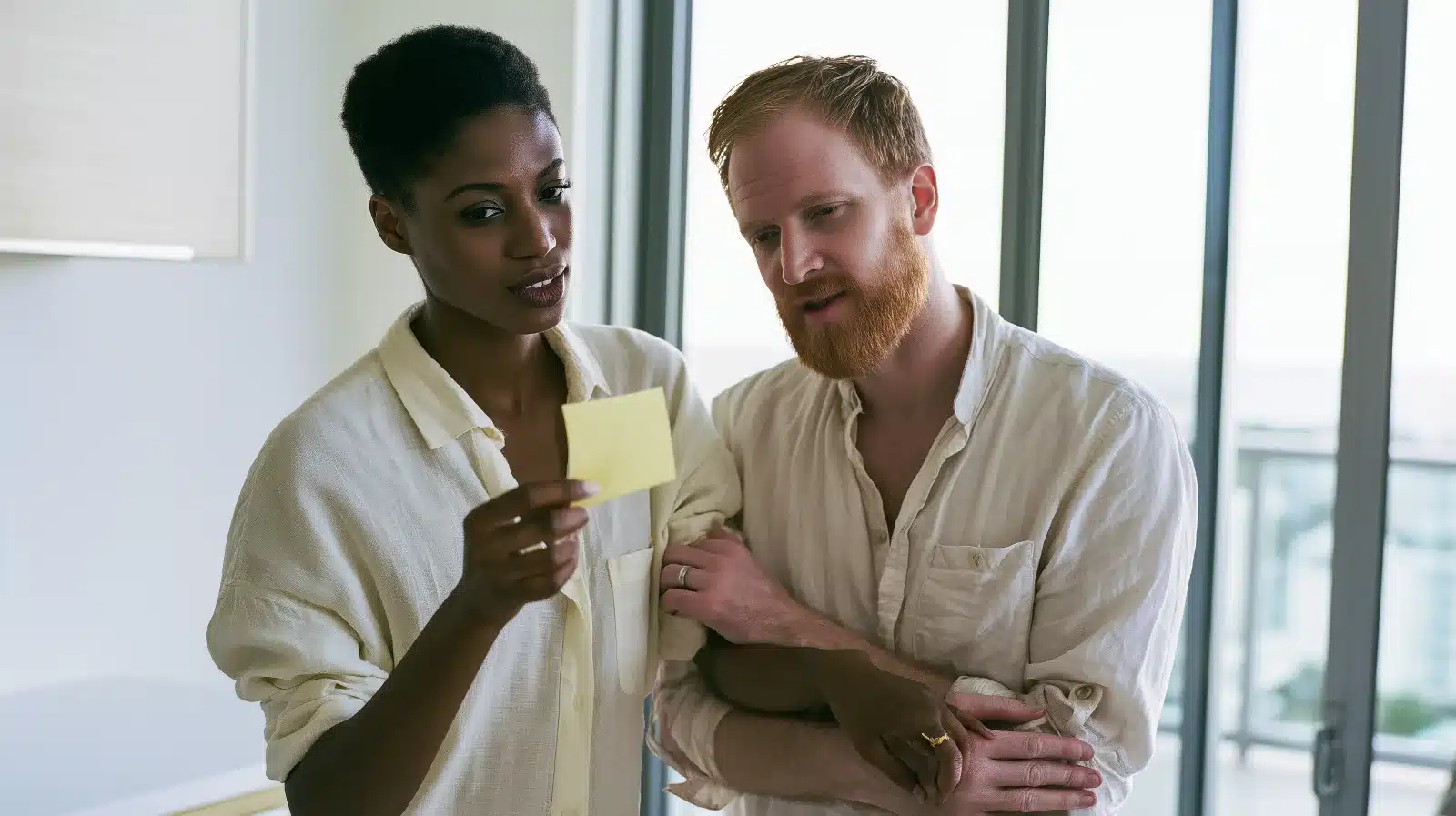
On a Tuesday in March, Nicole decided to stop reminding.
She didn’t announce it. Instead she wrote the pediatrician’s number on a sticky note, stuck it on Sam’s side of the bathroom mirror, and waited to see how long it would take. Their son’s camp physical was due April 1.
The note lasted nine days. On the tenth it had fallen behind the sink, and the camp forms were due Friday.
Sam is a litigator in Coral Gables. He can hold every deadline in a 400-page case file and has never missed a court date. That night Nicole asked him, quietly, whether he had called. He hadn’t. Tomorrow, first thing, he said, and he meant it.
“I know you mean it,” she said. “That’s the part I can’t take anymore.”
Nicole and Sam are a composite of several couples I’ve worked with, with details changed. Neither of them is lying about how much they care. That’s what makes it so hard to fix alone.
The short answer: ADHD couples therapy helps when ADHD has turned a relationship into a manager and the managed. When ADHD is a big part of the strain, general couples therapy is unlikely to fix it. The work has to be built for ADHD, for the uneven load and for the hurt around it.
Below you’ll find what ADHD does to a relationship, what changes in therapy, and what your first appointments with me involve. You’ll also find out what happened with the sticky note.

I’m Travis Atkinson. I see every couple myself, online from a Fort Lauderdale practice. Your exhaustion will be taken seriously, and your partner will be treated with respect.
Or start with an individual session.
Or call (954) 766-0316.
If you’re looking into ADHD couples therapy, you may be tired of being the one who remembers, and tired of what happens when you bring it up.
If you’re the partner with ADHD: you may already know your partner is frustrated, or you may have heard “I’m done” this week. What they may not see is how hard you’re trying, or how discouraging it feels when effort doesn’t turn into follow-through. There is room and support for that here too.
In short
Understanding ADHD doesn’t cancel follow-through. We build agreements that fit how ADHD works and make ownership clear.
General couples therapy often misses ADHD. Its standard exercises assume both partners follow through the same way, so each one becomes a new failure.
You work with me directly. I see every couple myself, and I’ve spent years on the harder cases, including ADHD and OCPD.
Progress is something you can see. Tasks get done without five reminders, and a missed one leads to repair instead of a trial.
What if you’re tired of carrying the reminders?
If you’re tired of carrying the reminders, you’re describing the most common pattern when ADHD affects one or both partners. The everyday work of the relationship drifts onto one person. That partner plans and reminds, while the other keeps meaning to help and keeps missing the moment. You don’t have to accept that as permanent, and you don’t have to become more patient to fix it.

ADHD is a difference in executive functioning, the brain’s system for holding a plan in mind and acting on it at the right time. It is common. In a 2023 CDC survey, about 6 percent of U.S. adults reported a current ADHD diagnosis, and roughly half were diagnosed at 18 or older.
The partner carrying the load isn’t always the non-ADHD partner. Sometimes both partners have ADHD, and one compensates harder, often at the cost of their own sleep and patience. The roles matter more than the labels.
ADHD affects relationships in the smallest daily moments. In romantic relationships, ADHD tends to slip exactly where love gets measured, which is remembering what matters to the other person. Many partners live with this for years before anyone names it.
Melissa Orlov, who writes about ADHD in marriage, calls the result the parent-child dynamic. One of you starts to feel like a supervisor. The other starts to feel criticized when asked and invisible when trying. In Nicole and Sam’s house it started with the pediatrician. Within a year it had spread to the mortgage, the carpool, and his mother’s birthday.
Household tasks are where the imbalance shows first in daily life, because they repeat. You may feel overwhelmed for months before you say so, because saying it starts another fight. Time is the most common challenge I hear about. Small lapses create resentment faster than big ones. You start keeping a quiet ledger of every time you handled it. The ledger never goes missing.
Why can someone succeed at work and struggle with ADHD at home?
Work usually supplies what home doesn’t: deadlines with consequences, assistants, and other people’s calendars. ADHD affects when a plan turns into action, not whether someone cares. In daily life, ADHD symptoms follow interest and urgency more than importance. People with ADHD remember important details when the task feels urgent. Otherwise they may intend to follow through and still lose track of the task.
A court date has a judge attached. Nobody stands behind a sticky note.
Nicole reads the pattern as a ranking, with the family somewhere below the firm. Sam experiences it differently. He thought about the call four times that week, once while parking, and never at a moment when the office was open. The task disappeared anyway, which leaves him confused and ashamed.
Russell Barkley, whose research shaped how clinicians understand adult ADHD, calls it a disorder of performance. People know what to do and struggle to do it when it counts. His term for the time piece is time blindness, a weak internal sense of time passing. Twenty minutes feels like five.
How ADHD affects relationships here often depends on timing, and the gap tends to show at a transition. When Mark sold his company, his assistant and the office calendar went with it. The executive work landed on Diane overnight, in the middle of the season’s houseguests and hurricane prep. She never applied for the job. A sale or a retirement brings unique challenges, because the day loses its structure, and ADHD-related challenges often surface there first. Many ADHD relationships run for decades on support like that, until it leaves.
Does understanding ADHD mean you’ll keep carrying everything?
No. Understanding why something happens doesn’t make its impact disappear. The neurotypical partner shouldn’t have to become more patient while still carrying the same responsibilities. In my work with ADHD couples, understanding ADHD is where we start, and follow-through is still the goal.
We explore how ADHD shows up in this particular brain, which gives the neurotypical partner a deeper understanding of what used to look like indifference. The partner with ADHD, meanwhile, hears what the pattern costs without being cast as the villain. Nicole should feel the load get lighter, not only better explained.
We build agreements that account for ADHD and make ownership clear. That covers who notices a task, who completes it, and who handles it when a commitment slips. Fair Play, Eve Rodsky’s system that gives each household task one owner from start to finish, helps here. If Sam owns the pediatrician, he owns the reminder, the call, and the camp form. Nicole is off duty for that one. Communication improves once ownership is clear.
Each partner also holds a private theory that keeps the fight going. Sam believes that if he cares enough, he’ll remember, so every lapse proves something awful about him. Nicole believes that if he loved her, he’d remember, so every lapse proves something awful about the marriage. Both theories feel like common sense. Much of the work is watching them loosen.
Why do communication breakdowns and heated moments keep repeating?
Each partner’s reaction tends to confirm the other’s worst reading. John Gottman’s research describes small moments he calls bids, a reach for attention or connection. Couples who turn toward bids build trust over years. Missed bids lead the other way, and ADHD misses bids often.
Nicole starts telling Sam about a senior partner who threw a pen across a deposition table. Halfway through, his phone lights up with a client email. He reads it. She stops talking, and he doesn’t notice that she stopped.
The loop takes it from there. “You only care about your clients,” she says later, which Gottman would call criticism. “I work sixty hours a week for this family,” he answers, which is defensiveness. These are two of the patterns Gottman calls the Four Horsemen, because they predict divorce so reliably. After a while, communication breaks down and forgetting looks like indifference.
“You never listen” comes up constantly. In my experience the ADHD partner often did listen, but the detail never made it into memory. Working memory, the mental notepad that holds information long enough to use it, drops things the moment focus shifts elsewhere. Once both of you understand that, the sentence lands differently.
What does emotional regulation have to do with it?
Emotional regulation is the capacity to feel something strongly without acting on it right away, and ADHD often weakens it. People with ADHD tend to feel emotions faster and harder. Emotional reactivity can turn a question about a camp form into a fight within a minute. Gottman calls the next stage flooding, a surge of physical alarm in which nobody listens well. Afterward the ADHD partner may feel shame, and the non-ADHD partner may feel hurt and alone.
Impulse control plays a part too. Impulsive reactions, like a sharp comment or an interruption mid-sentence, arrive before the brakes engage, and the other partner feels unheard again. Interruptions are common in ADHD relationships, and they rarely mean disrespect. Learning to manage impulsivity early helps heated moments cool before they cost the evening.
How does specialized couples therapy help with ADHD in relationships?
Specialized couples therapy helps by working on the pattern while it happens in the room, not only by talking about last week. It separates the person from the ADHD. Instead of arguing about whose fault the missed call was, the two of you look at the pattern together, as a problem you share. For many couples, that shift makes all the difference. Therapy focuses on relationship dynamics and ADHD symptoms at the same time, because treating either one alone tends to stall. When ADHD is a big factor, general couples therapy is unlikely to work, because it treats missed follow-through as a motivation or communication problem. Some therapists coach the ADHD partner to try harder, which adds shame. Others coach the neurotypical partner to lower their standards.
Slow the argument down. When the familiar fight starts in session, I stop it before it turns into a verdict on who’s right.
Make ownership clear. We agree who notices each task, who completes it, and how a miss gets repaired.
Tend the hurt underneath. Loneliness and shame get attention too, so the new tools don’t get used in anger.
Take one exchange. Nicole says, “If I don’t remind you, it doesn’t happen.” Sam says, “Nothing I do is ever enough.” At home that exchange runs for an hour. In session I slow it down before it becomes another argument about who is right.
We look at what was agreed, where it broke down, and what each of you owns next. Then we make room for the hurt underneath, which a new calendar won’t touch. Nicole is lonely. Sam is ashamed. Both of those need attention, or the tools get used in anger.
Many adults with ADHD have heard “you’re so smart, why can’t you get it together” since childhood, and some learned early to keep their emotions offstage. In schema therapy we’d call what that builds a Defectiveness/Shame schema, an early belief that you’re flawed at the core. Criticism from a spouse leads there fast. When I see Sam go quiet and defensive in the same breath, that’s usually where he has gone.
A few sessions into treatment, Sam mentioned almost in passing that he sets three phone alarms for anything that matters. He checks his calendar in bed at night, then again at 5 a.m. Nicole turned and looked at him. She had spent two years believing he didn’t try. He had spent two years trying where she couldn’t see it. Her theory started to loosen that afternoon, and his took a few weeks longer.
Practical tools matter too, because working memory and time management need support outside the head. Shared calendars help. Visual aids help, like a whiteboard by the door where both of you can see the week.
What does improving communication look like between sessions?
Improving communication usually means shorter conversations and faster repair when a detail slips. We practice difficult conversations in session, with support, so fewer of them happen late at night in the kitchen. For active listening I use a Gottman Method structure in which one partner speaks and the other summarizes before answering. It feels awkward for a week or two.
Between sessions, Nicole and Sam hold a fifteen-minute meeting every Sunday at the kitchen island, coffee in hand, both calendars open. It keeps the focus on the week ahead and replaces dozens of scattered reminders and many of the communication breakdowns around them. When partners work from one shared calendar, the reminder service can close. The ADHD partner owns what he agreed to, in writing. Task management stops being a referendum on character.
What does rebuilding trust look like in an ADHD relationship?
Rebuilding trust looks like daily life going differently, week by week. We set goals together at the start and check them as we go. These are treatment goals, not promises, and every couple’s list is a little different:
An agreed task gets done without repeated prompting. The partner who owns it tracks it.
A missed commitment leads to repair. “I dropped it, here’s how I’ll fix it” replaces the old defense.
A hard conversation stays on one issue. It doesn’t turn into a review of the whole marriage.
You enjoy each other again. Some of your time together has nothing to do with household administration.
Emotional distance builds one skipped bid at a time, and the emotional connection ADHD wore down takes deliberate rebuilding. Therapy can help a couple find a deeper connection again, and many couples feel calmer within a couple of months. You spend less time checking whether something happened and more time feeling that you have someone beside you. In a supportive relationship, a shared calendar stops feeling like surveillance.
By summer, the whiteboard by Nicole and Sam’s garage door was in two handwritings. Sam booked the dentist himself. In June Nicole forgot the dry cleaning, Sam reminded her, and they both laughed longer than it deserved. Sam still misses things, and some weeks are worse than others. What changed is what a miss means.

What happens in your first appointments with me?
Your first appointment is the start of an assessment, not a sales call. It runs over four sessions, and you work with me directly in every one. My focus throughout is the loop between you.
Session one, together. I ask about the history of your relationship, from how you met to how things changed. It’s based on the Gottman oral history interview.
Sessions two and three, individually. I meet with each of you alone. Each partner gets room to say what’s hard to say in front of the other.
Session four, together. I share what I see, including the pattern between you and how ADHD shows up in it. We set goals together, and treatment begins from there. You’ll both understand what we’re working on and why.
My background fits this problem. I’ve been a Certified Gottman Method Couples Therapist since 2006, and I spent eight years at The Gottman Institute. I trained directly with Dr. Sue Johnson in emotionally focused therapy (EFT). I co-developed Schema Therapy for Couples with Dr. Jeffrey Young, and schema therapy and chairwork run inside the same work.
I’ve also attended the World Congress on ADHD twice, to learn the newest approaches from the researchers and clinicians leading the field. My practice leans toward harder cases, especially ADHD and OCPD. General couples therapy often stalls with both, because the usual tools assume both brains work the same way.
Every session is online, with no waiting room. I’m licensed in Florida, New York, Connecticut, and Vermont, so the work continues when you go north, as long as you’re in one of those states during the session. Couples therapy can also support individual ADHD treatment, and I’m glad to coordinate with a prescribing physician or an ADHD coach.
You don’t have to resolve the disagreement before you come.
Your first appointment starts a four-session assessment with me. We begin with the history of your relationship, then I meet with each of you alone, and then we set goals together.
Who attends: both partners. If your partner isn’t ready, you can start with an individual session.
Where: online, from any private room with a steady connection and a camera, while you’re in Florida, New York, Connecticut, or Vermont.
After you book: you’ll get an email confirmation with the details.
The booking page: appointments are scheduled through Loving at Your Best, my practice’s scheduling name, so you’ll see that name on the booking page and confirmation.
Online appointments · Work directly with Travis
Couples sessions run 60 minutes. Booking the first session doesn’t commit you to all four. We schedule the rest together as we go.
Considering starting alone? View individual appointments.
What if your partner is reluctant, or you’re the partner with ADHD?
If your partner is reluctant, invite them to help the relationship and leave the diagnosis out of it. Partners with ADHD tend to stay away if they expect to be the problem in the room. “I miss us” usually lands better than “You need help.” Your partner may say no the first time. Therapy can help even when one of you starts alone. Some people send this page and let it speak for them.
What if you have ADHD and your partner is close to giving up?
Arranging an appointment can be one concrete way to show that you take their concern seriously. You don’t need to promise an overnight transformation. Many couples reach me after the partner with ADHD hears “I’m done” out loud. Often it means “I can’t keep carrying this alone,” and sometimes it means exactly what it says.
For Sam it came in the car, driving home from a dinner in Coconut Grove. Nicole said it without raising her voice, which frightened him more than shouting would have. The next morning, between two calls, he booked a first session. It was the first thing he had followed through on in a month, and he told her so.
Resist the urge to promise a new person by next week. Your partner has heard that promise before, and each broken one raises the stakes. What tends to help is steadier and smaller, like showing up and listening without defending. Therapy can’t guarantee the marriage survives. It can give both of you a fair, clear look at whether it can.
What if your partner sent you this page?
If your partner sent you this page, you’ll be understood in the room as someone who cares. Nobody will be keeping score. Your partner will talk about what the pattern costs them, and you’ll talk about what it costs you, including how much effort goes unseen. That second part rarely gets asked about.
How do you choose an ADHD therapist or couples therapist in South Florida?
Look for a couples therapist who specializes in ADHD and understands it as well as couples work. Not all therapists have both, because the two are usually taught in separate trainings. An ADHD therapist or coach works with one person on focus and follow-through. The right couples therapist works on the relationship itself and doesn’t pick a side. That helps the neurotypical partner feel supported instead of told to lower their standards.
Questions worth asking therapists you interview:
How do you work with ADHD in relationships? Listen for specifics about the loop between you, not a general promise of better communication.
How do you keep both partners feeling respected? A good answer addresses the exhausted partner and the discouraged one.
How do you work with shame? Tools tend to go unused when shame is left alone.
Pursue-and-withdraw and the blame cycle are common patterns in ADHD couples, and it helps when a therapist names those common patterns early. This work fits couples who are tired of the same fight and still want each other on the far side of it. It fits less well with active addiction or violence at home, where individual treatment and safety come first.
What do couples ask about couples therapy for ADHD?
What if my partner doesn’t think it’s ADHD?
Many ADHD partners arrive skeptical. Nothing has to be settled first. We start with the pattern you’re both living with, because understanding it matters more than the label. A psychiatrist or psychologist who assesses adults can provide a formal evaluation if one would help.
Why won’t general couples therapy work for us?
When ADHD is a big factor, general couples therapy is unlikely to get far. It tends to assign communication exercises and homework that rely on the executive functions ADHD affects. Each missed assignment becomes more evidence. Specialized ADHD work builds the plan around how the ADHD brain handles time and memory.
Does ADHD medication replace couples therapy?
Medication often helps attention and follow-through, and for many adults it makes the relationship work easier. It doesn’t undo years of resentment. Trust and the feeling of being on the same team belong to the couples work.
Do you work with same-sex and other neurodiverse couples?
Yes. I co-created the first EFT training video for same-sex couples with Dr. Sue Johnson. Neurodiverse couples are part of my work too, including couples where one partner is autistic (ASD Level 1) or has perfectionistic patterns that look like OCPD. You can read more about OCPD relationships and about couples where one partner is autistic.
My partner says they’re done. Is couples therapy still worth trying?
Often, yes, if both of you will come to a first session and the therapist specializes in ADHD. Clarity is a legitimate goal too. Some couples leave with a plan to rebuild, and a few leave with a plan to separate that protects both people and any children.
Can couples therapy for ADHD continue when we’re up north?
Yes, as long as you’re in New York, Connecticut, or Vermont at the time of the session. Many couples keep the same weekly hour all year. If you live in New York year-round, my New York practice is at adhdcouplestherapist.com.
How do you book your first session?
Book online or call (954) 766-0316. If there’s a sticky note behind your sink too, nobody has to fish it out tonight. Your partner doesn’t need to agree with every line of this page first. We’ll start with what has been happening between you and how it feels from each side.
Prefer to begin on your own? Book an individual session.
About the author. Travis Atkinson is the founder of South Florida Marriage Therapy, an online practice based in Fort Lauderdale serving couples across South Florida. His work integrates the Gottman Method, emotionally focused therapy and attachment, schema therapy, and experiential methods into one approach. A Certified Gottman Method Couples Therapist since 2006, he trained directly with Dr. Sue Johnson and with Dr. Jeffrey Young. With Dr. Young he co-developed Schema Therapy for Couples. He is also one of the founding members of the International Society of Schema Therapy, which gave him Honorary Lifetime Membership in 2020. Travis has attended the World Congress on ADHD twice. He sees every couple himself and directs the Schema Therapy Training Center, where he trains other therapists.
Source: Staley, B. S., et al. (2024). ADHD diagnosis, treatment, and telehealth use in adults. CDC Morbidity and Mortality Weekly Report, 73(40). cdc.gov