
Neurodiverse Couples Therapy in South Florida
Online couples counseling with Travis Atkinson for autistic and neurodivergent partners who want more understanding, fairer agreements, and a closer relationship.
Written and clinically reviewed by Travis Atkinson, LCSW, LICSW. Online sessions from a Fort Lauderdale practice on Las Olas. Last reviewed September 2026.
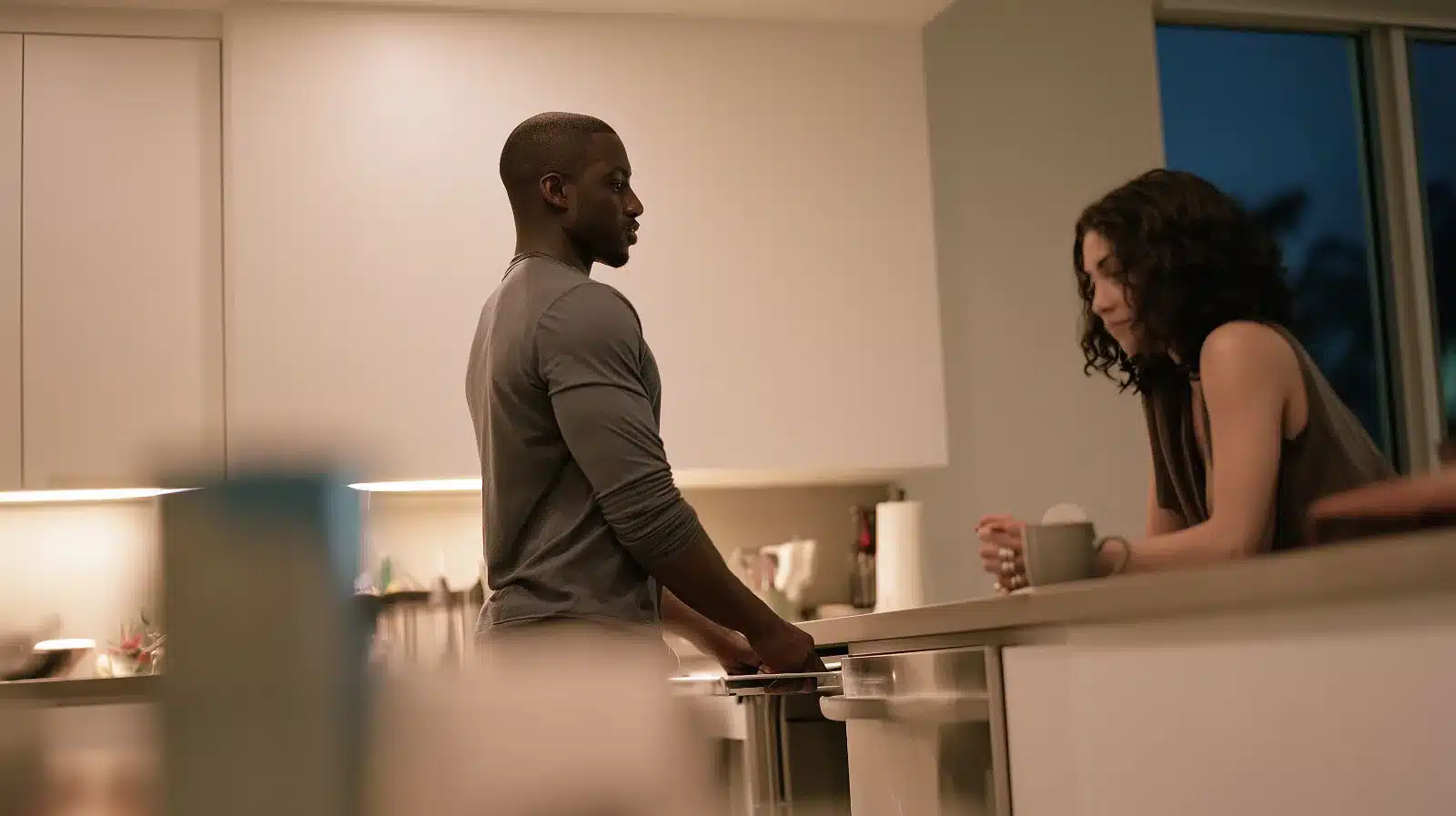
Neurodiverse couples therapy often begins with a night like this one.
Michael wants to talk about a remark that hurt his feelings at the table. His husband, Daniel, needs quiet first, so he loads the dishwasher one glass after another. Twenty minutes pass. Michael sits on the edge of the bed, alone with the hurt, while Daniel dreads a conversation he can’t manage tonight.
Daniel needs room to recover. Michael needs to know the conversation still matters. Without a shared plan for coming back to it, both men end the night feeling let down by the person they chose. (Michael and Daniel are an illustrative example, and the details are invented.)

In short: This is couples counseling adapted for relationships where one or both partners are autistic or otherwise neurodivergent. I’m Travis Atkinson, a Certified Gottman Method Couples Therapist since 2006. My role is guide, not referee. We pair Gottman structure with plain language and written agreements, so two brains that take in the world differently can reach an understanding both of you call fair.
Or start with an individual session.
Online appointments with Travis · (954) 766-0316
What is neurodiverse couples therapy?
Neurodiverse couples therapy is counseling built around the way each of you thinks and senses. These couples face communication challenges that standard advice tends to miss. Often that means one partner is autistic and the other is neurotypical. Both may be autistic, too. Some partners bring ADHD as well, or AuDHD, the term many adults use for having both autism and ADHD at once.
The word neurodiversity came out of the autistic community, and a neurodiversity-affirming approach treats neurological differences as variations in processing without pathologizing them. My approach starts there. It doesn’t stop there, because a neurodiverse relationship also runs on fairness and on comfort that both people can feel.
The format changes more than the goals. Sessions carry more structure and plainer language, and some partners like a written summary afterward. An autistic partner may need longer to respond, and we build that pause in. Sensory needs count too, since the world runs louder for some brains, whether that means lighting, noise, or a break when a conversation gets too loud inside.
Understanding neurodiversity is the starting point, and emotional safety is the aim. I’d define that as the sense that you can say something true without paying for it later.
How does autism spectrum disorder show up in a relationship?
Autism spectrum disorder (ASD) in adults usually shows up in how someone reads a conversation and handles the sensory information around them. A marriage asks for both before breakfast. Before the DSM-5 in 2013, many of these adults heard the name Asperger’s syndrome instead. Today most would receive an ASD diagnosis, and many simply call themselves autistic.
A CDC modeling study published in 2020 estimated that about 2.2 percent of U.S. adults were autistic in 2017. That estimate included roughly 329,000 Florida adults. In couples work I see the recognition arrive late, occasionally after a grandchild’s evaluation, when someone at the table goes quiet and says, “That was me at his age.”
Masking helps explain the delay. It’s the conscious or unconscious habit of hiding autistic traits to fit in, and it can contribute to autism going unrecognized for years, even in a surgeon or a litigator. Masking takes energy. After a full day of it, plus the sensory experience of a crowded party, quiet at home is recovery, and from across the kitchen it can look like coldness.
Language can add its own comedy to daily interactions. When Michael asks whether Daniel wants to go to the Feldmans’ on Saturday, Daniel gives a clean, honest “No.” It answers the question Michael asked. The question he meant was whether Daniel would come for him, and nobody said that part out loud.
These challenges sit beside real strengths. Many autistic adults bring loyalty and a plainspoken honesty that partners come to rely on over many years of marriage.
Why can both people in a neurodiverse relationship feel so lonely?
Either of you may feel lonely in a neurodiverse relationship, and those feelings don’t fall neatly along diagnostic lines. Whoever reaches out first may feel exhausted by unmet needs, misunderstood despite real effort, or both.
For some, loneliness means evenings when you needed someone to ask how the hard day went, and nobody did. Friends see a thoughtful, capable spouse. For others, marriage feels like a test graded on rules nobody wrote down. You try hard and still can’t understand what changed, and one sharp comment can land on decades of being called odd.
Effort is rarely the missing ingredient. The roles don’t always fall where you’d expect. Rachel, from a different illustrative example, is autistic, and she’s the one who makes the first call, the week her husband uses the word “lawyer” at breakfast. She wants more closeness, not less. Her husband speaks in hints, she says, and nobody ever handed her the key.
Old patterns can sharpen all of this. In schema terms, either of you might carry an early expectation that comfort won’t come, or a belief that you’re flawed at the core. I treat those as possibilities to explore, never as assumptions about who you are.
Why do neurodiverse couples keep having the same fight?
One reason neurodiverse couples get stuck is that each of you reads the other through your own wiring, and the misreadings run both ways. The autistic researcher Damian Milton named this the double empathy problem in 2012. People with different kinds of experience can struggle to understand each other. Neither side owns the whole failure.
Michael and Daniel show the loop. Without an agreement about coming back, the pause feels like abandonment to Michael. For Daniel, the request to talk right now feels like an ambush. Each reaction makes the other’s worse, and by midnight both men are privately certain the other one started it.
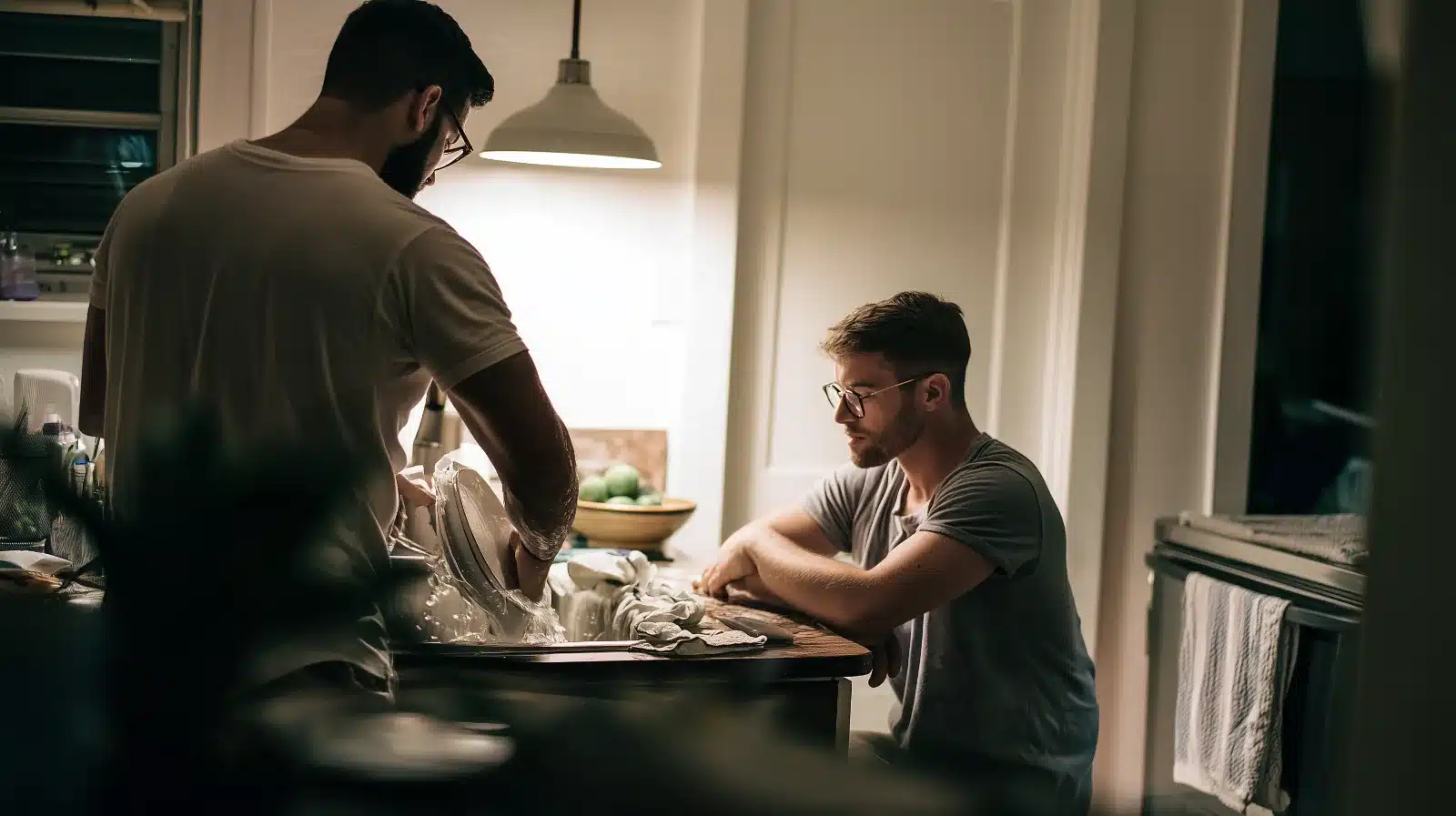
Daniel’s retreat to the dishwasher had a reason behind it. John Gottman’s research found that a flooded partner, meaning someone whose body has tipped into fight-or-flight during conflict, needs at least 20 minutes to settle. Overload can take longer. A silent exit still leaves Michael guessing, though, and guessing is where the hurt grows.
Sensory overload feeds the same cycle. A hard conversation after a loud restaurant on a Saturday in season starts at a disadvantage, because the noise has already spent someone’s reserves. Part of my job is mapping those triggers, so a small disagreement stays small.
Why can traditional counseling backfire for neurodiverse couples?
Traditional counseling can backfire for neurodiverse couples when the clinician misses the neurology underneath the conflict, and the challenges multiply. A literal answer gets read as stonewalling. Exercises built on eye contact go to the partner for whom eye contact is costly. The more fluent speaker wins the session, and the quieter one goes home as the defendant.
Both partners may leave with assignments that don’t fit. Plenty of skilled therapists were never trained to adjust for processing speed or sensory load. Many couples conclude that counseling missed the problem, and I hear some version of that story in most first sessions. If an earlier counselor left one of you feeling blamed, tell me early, so we can talk about what went wrong.
We look at support needs, habits, and responsibilities together. Understanding what contributes to a behavior helps us decide what support and changes are needed. We don’t have to settle why something happens before we look at its impact. When one of you names a hurt clearly and it keeps getting brushed aside, we address that directly and early.
How do I adapt sessions when one or both partners are autistic?
I adjust the format so neither of you has to perform in a style that isn’t yours. The plan belongs to both of you, and I act as a guide who keeps each partner’s experience in the room.
- Pace for two brains. Some brains need longer to find words, so I build pauses into the session instead of filling them.
- Equal weight for the quieter view. The less verbal partner’s account counts as much as the more articulate one’s.
- No performance test. You can look away, write things down, or answer at the next session, because eye contact isn’t proof of caring.
- Written summaries. Some spouses want a few lines after a hard session, so nobody relies on memory of what was agreed.
If one of you needs a pause and the other fears being shut out, we make the pause specific. We agree on the signal for overload, how to ask for space, and when you’ll come back. Each partner’s support needs count. Then we figure out how to meet them while protecting the connection between you.
Effective communication in these marriages usually means saying the thing in plain words, then checking that it landed. A few cognitive behavioral (CBT) tools adapt well here, mostly for catching an automatic reading like “he doesn’t care” before it hardens into the story. Explicit language beats implied meaning almost every time. A short weekly check-in can strengthen trust between sessions.
What happens in your first four sessions with me?
We begin with a four-session assessment, and you meet directly with me throughout. It gives me time to understand your relationship together, hear each of you alone, and then discuss a plan with both of you.
- Session one, together. I ask about the history of your relationship, from how you met to how things changed, based on the Gottman oral history interview.
- Sessions two and three, individually. I meet with each of you alone, and before those meetings I explain how I handle what each of you tells me privately.
- Session four, together. We discuss the patterns I’ve observed, including where neurodivergence fits, and agree on priorities, so both of you leave with clarity about what comes next.
Sessions take place on a secure video link from any private room while you’re in Florida, New York, Connecticut, or Vermont. After you book, you’ll get a confirmation email. Appointments appear under Loving at Your Best, my practice’s scheduling name, so that’s the name you’ll see on the booking page.
Begin with a clearer understanding of your relationship.
Meet directly with Travis for an assessment that hears both of your perspectives, together first and then with each of you individually.
Online appointments · Work directly with Travis
Couples sessions run 60 minutes. Booking the first session doesn’t commit you to all four. We schedule the rest together as we go.
Considering starting alone? View individual appointments.
What do couples aim for in these sessions?
Most couples I see aim for a marriage where asking for comfort no longer turns into a trial about intentions. A request for space comes with a return time. Chores get agreed once instead of renegotiated every Sunday. Each pair sets its own goals, and none of them come with guarantees. The usual targets are clearer communication and more emotional awareness on both sides.
For a couple like Michael and Daniel, the task is making the pause understandable to both of them. That means how Daniel asks for quiet, when they check in again, and what happens if he needs longer. Michael needs a reliable return, not another conversation that disappears. Small agreements kept over weeks tend to strengthen trust.
Emotional connection is something partners rebuild on purpose. Some autistic partners show love through acts rather than words, like spending a week researching cardiologists after a father’s scare. Learning to see those acts counts. The reverse counts equally, as each of you learns what comfort looks like to the other.
Intimacy deserves the same honesty. A light touch may feel uncomfortable to one partner, while firm pressure feels reassuring. Another partner may prefer no touch at all when overwhelmed, and that preference can change from one evening to the next. Intimate life tends to get healthier when both of you can discuss those preferences directly, without embarrassment.
Why work with Travis Atkinson?
It matters because neurodiverse couples need methods that bend without breaking. One model rarely covers it. I’ve been a Certified Gottman Method Couples Therapist since 2006, one of the first in New York City, and spent eight years at The Gottman Institute. I also trained directly with Dr. Sue Johnson in Emotionally Focused Therapy (EFT), an attachment-based model that helps partners reach for each other. With her, I co-created the first EFT training video for same-sex couples.
Schema work goes back further for me. In 1994 I began training with Dr. Jeffrey Young, and together we developed Schema Therapy for Couples. I tailor it to neurodiverse relationship dynamics, where it reaches shame and loneliness that practical tools can leave untouched. Clinicians train with me too. I’m one of the founding members of the International Society of Schema Therapy (ISST), and I direct an ISST-approved training center. Advanced training with Dr. Daniel Siegel in interpersonal neurobiology also shapes how I think about nervous systems under stress.
In sessions, none of this arrives as a menu. Gottman structure, attachment-based methods, schema methods, and experiential techniques such as chairwork run together, and you’ll both know what we’re working on and why. I see gay, lesbian, bisexual, queer, and heterosexual couples, including couples with transgender and nonbinary spouses. We start with your relationship and how each of you experiences it.
How do you tell autism from ADHD or OCPD in a marriage?
From inside a marriage, autism, ADHD, and obsessive compulsive personality disorder (OCPD) can look alike, and assessment helps clarify what may be contributing. A husband who insists the towels be folded in thirds might be autistic and need sameness to feel settled. Or he might have OCPD, where the rule is about getting it right and the dread of getting it wrong. He might have both.
ADHD adds forgetting and impulsivity, and it often travels with autism. Read more on ADHD in marriage and OCPD relationships. In either case, a couples assessment isn’t a formal diagnosis, and when an evaluation would help, I refer you to a psychologist who assesses adults.
Who is this approach for, and who is it not for?
This approach fits partners who keep missing each other and still want to get it right. Many have been married for decades. Others are in second marriages, or newly retired and discovering that a quiet house changes how two people share a day.
Sessions are online only, which suits many autistic clients. You choose the lighting and the chair, and there’s no waiting room where someone from the club might wave. Because I’m licensed in Florida, New York, Connecticut, and Vermont, sessions continue when you go north for the summer, provided you’re in one of those states.
You don’t have to promise to stay before asking for help, and plenty of spouses arrive unsure about their commitment. Uncertainty is a reasonable place to start. Where there is violence at home or active addiction, safety and individual treatment come first.
What questions do couples ask before booking?
How is the Gottman Method adapted for a neurodiverse relationship?
The Gottman structure stays, including the assessment and the focus on repair. Delivery changes, with slower pacing, plainer language, written agreements, and breaks planned before anyone floods.
Does my partner need to be evaluated for autism first?
No. We start with the patterns you’re both living with, and some partners are never interested in a label at all. If a formal evaluation would help either of you, I can suggest where to go.
Is this the same as Asperger’s marriage counseling?
Largely, yes. Many couples still search for Asperger’s marriage counseling because the label was in use until 2013, and everything on this page applies to them.
What is Cassandra syndrome in a neurodiverse marriage?
Cassandra syndrome is an informal term some neurotypical partners use for feeling unheard and disbelieved in a neurodiverse relationship. It isn’t a clinical term. The experience behind it deserves attention without making the autistic partner the cause of everything.
Will I be asked to lower my expectations?
No. Your needs don’t matter less because your partner is neurodivergent. We’ll sort out what’s important and what both of you can live with, depending on what each of you needs.
How do we book the first session?
Book online or call (954) 766-0316 to get started. You don’t need to agree on what’s wrong beforehand, since we begin with what has been happening between you and how it feels from each side.
Start with what has been happening between you.
Book online or call (954) 766-0316. Four-session assessment to start, online, with Travis.
Prefer to begin on your own? Book an individual session.
About the author. Travis Atkinson is the founder of South Florida Marriage Therapy, an online practice based in Fort Lauderdale serving couples across South Florida. His integrated approach combines the Gottman Method, emotionally focused and attachment-based methods, schema methods, and experiential techniques such as imagery rescripting. He co-developed Schema Therapy for Couples with Dr. Jeffrey Young and directs the Schema Therapy Training Center. He is one of the founding members of the ISST, which awarded him Honorary Lifetime Membership in 2020. Licensed in Florida, New York, Connecticut, and Vermont.
Sources: Dietz, P. M., Rose, C. E., McArthur, D., & Maenner, M. (2020). National and state estimates of adults with autism spectrum disorder. Journal of Autism and Developmental Disorders, 50, 4258–4266. Milton, D. (2012). On the ontological status of autism: The “double empathy problem.” Disability & Society, 27(6), 883–887. The Gottman Institute, “The Four Horsemen: Stonewalling.” National Autistic Society, “Autistic masking.” American Psychiatric Association, DSM-5-TR (2022).