Written and clinically reviewed by Travis Atkinson, LCSW, LICSW, founder of South Florida Marriage Therapy, an online practice based in Fort Lauderdale. Checked against the DSM-5-TR. Current review: September 2026.
OCPD relationships, for South Florida couples where one partner’s standards have started to run the marriage. Below: what obsessive compulsive personality disorder (OCPD) is, how its symptoms show up at home, and how treatment helps. It matters because these patterns harden with time, and most couples live with them for years before anyone names them.
The grandchildren left at six. Claire loaded the dishwasher, clipped the leash on the dog, and walked him down to the Intracoastal and back.
When she came in, every plate had been moved. Bowls faced the spray arm. The wine glasses stood by height. Alan was drying his hands, and he honestly believed he had done her a favor.
“I married a man who was wonderful at running things,” Claire told me in our first session. “Somewhere along the way, I became one of the things.”
Alan and Claire are a composite of several couples I’ve worked with, with details changed. Their marriage is one I see often in South Florida. He built a company and sold it. She raised the family and ran the social calendar. For thirty-one years his standards were the reason things went well, until they became the reason nothing felt good.
Neither of them had heard of OCPD. Claire had typed “husband criticizes everything” into her phone at two in the morning, more than once, on the same night. Alan had searched nothing. From where he sat, the house needed more oversight.
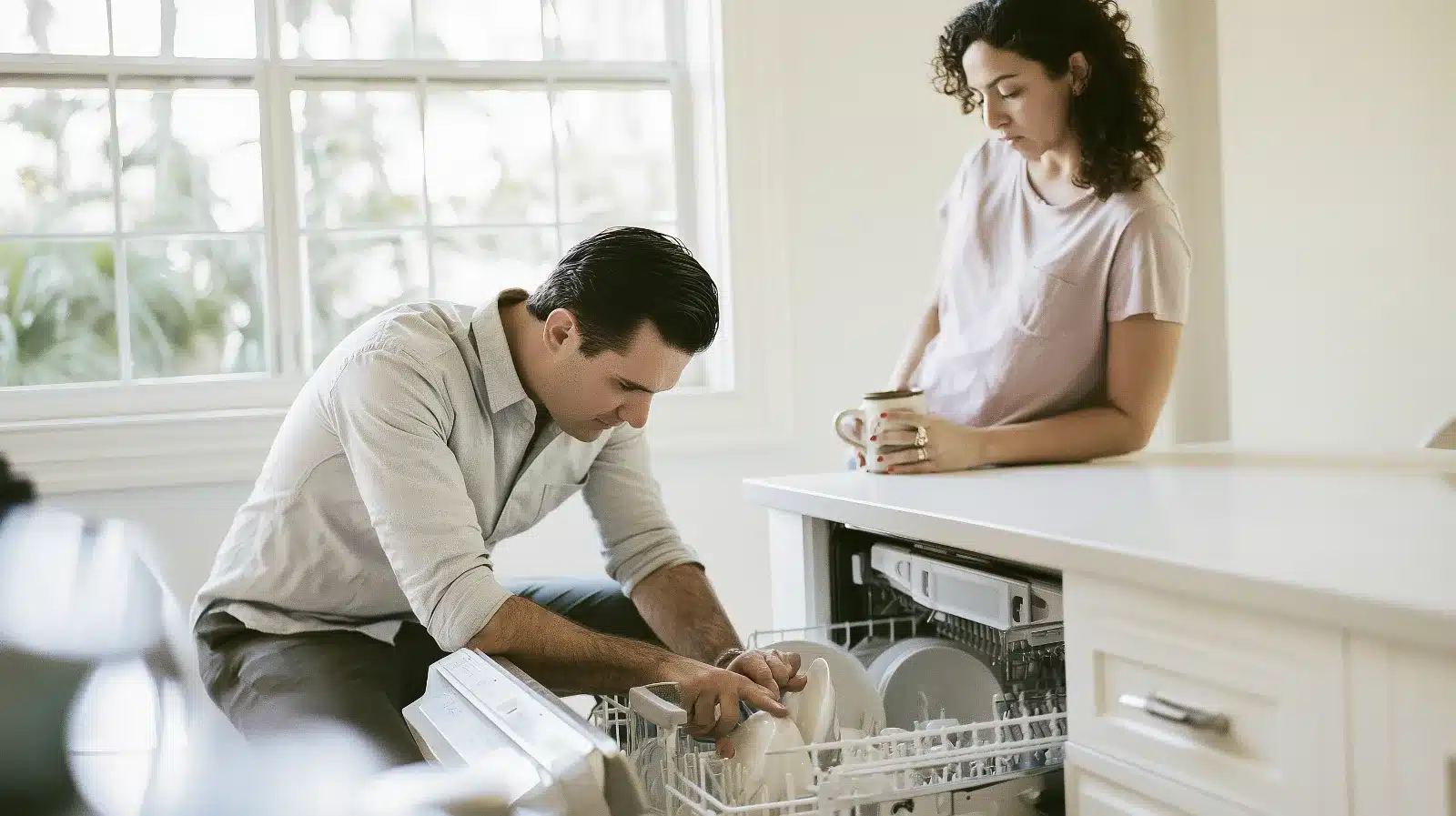
If you’ve done that two a.m. search, you’re in the right place. And if you’re the one who reloads the dishwasher, stay. This page is about you too, and it’s kinder than you might expect.

The short version. Obsessive compulsive personality disorder (OCPD) is a persistent pattern of perfectionism and control. It’s one of the most common personality disorders in adults, and few couples know the name. It tends to turn a marriage into a quality-control system, and it usually loosens when treatment works on the fear the rigidity is protecting.
- OCPD is common. Estimates range from about 1 in 100 adults to 8 percent of the general population, depending on the study.
- Couples rarely name it. They describe criticism, control, workaholism, or a sexless marriage long before anyone says “personality disorder.”
- It isn’t OCD. The traits feel correct to the person who has them, which is why arguing about them goes nowhere.
- The fear is the way in. My integrated approach draws on the Gottman Method, attachment work, and schema therapy together.
Or start with an individual session. Online appointments with Travis · (954) 766-0316
Does this sound like your marriage?
If several of these land, the pattern may be OCPD, or OCPD traits. This isn’t a diagnosis. It’s a mirror, and couples usually see themselves in it within a line or two.
From the spouse’s side:
- You redo tasks before they’re checked. Loading the dishwasher “his way” is easier than the conversation.
- The calendar was set without you. Somehow the season’s plans were locked by October, and nobody voted.
- You’ve started hiding small things. A purchase, a changed reservation, a scratch on the car.
- You feel managed more than loved. And lonely in a life that looks fine from the dock.
From the other side:
- You notice everything. The towel folded wrong, the lane that was slower, the email with a typo.
- Rest feels irresponsible. A Sunday with no plan makes you more tense, though most people would call it a vacation.
- You’re tired of being the only adult. If you don’t watch the details, who will?
- Your spouse seems to resent the help. And you can’t understand why.
Both lists describe the same marriage, and the same OCPD symptoms seen from two chairs. That’s the point.
If you nodded at both lists, you don’t need to read the rest before reaching out. Book a first session, or call (954) 766-0316. The first session starts a short assessment, and each of you is heard before any plan is set. Booking runs through my practice, Loving at Your Best.
What do OCPD relationships look like at home?
In most OCPD relationships, one partner sets the standard and the other keeps failing it, usually over things too small to argue about in public. The fights are about towels and thermostats. What gets damaged is warmth.
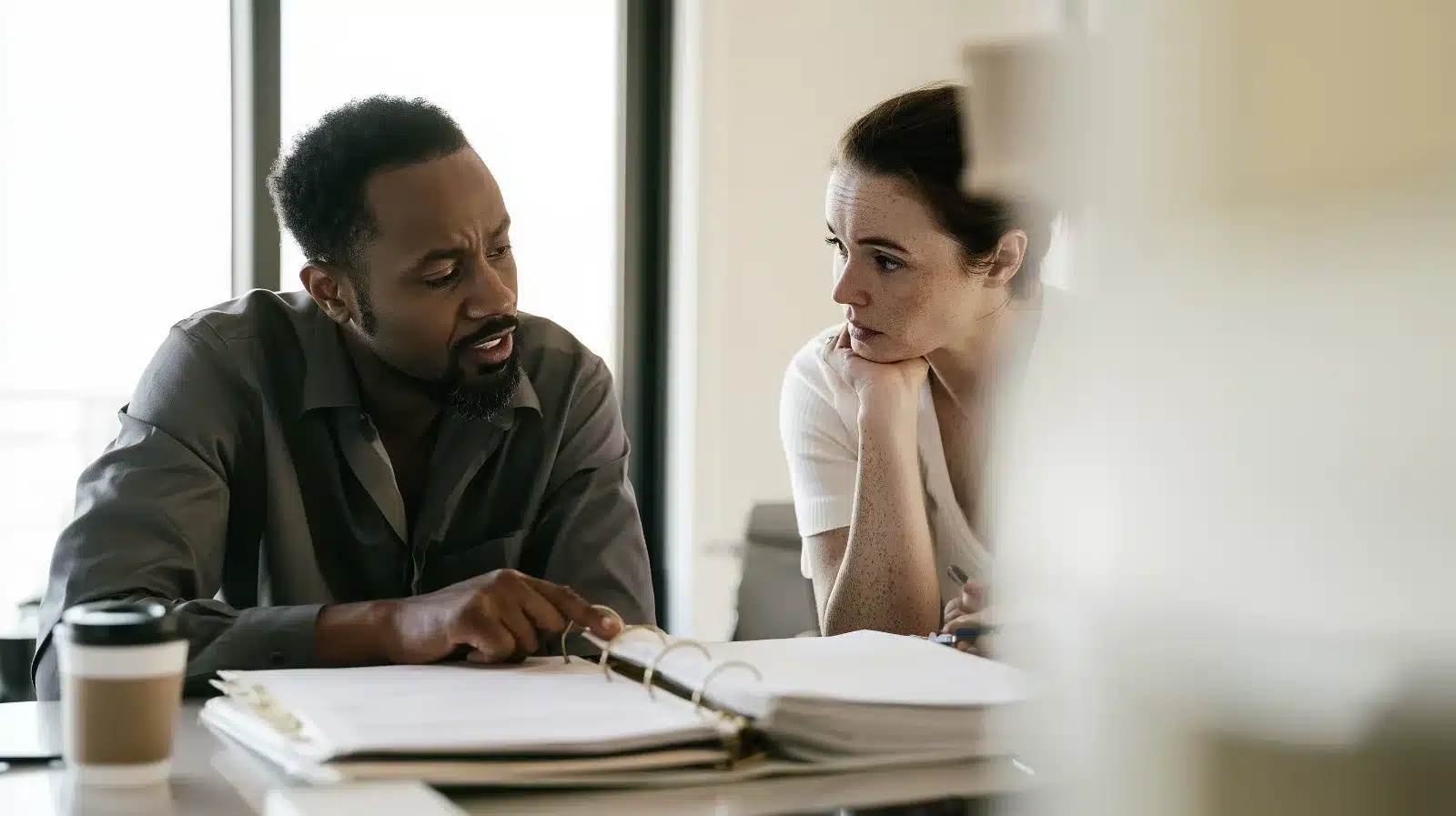
Alan’s hurricane binder has tabbed sections, a laminated shutter diagram, and a revision date on the cover. Claire once moved a tab. She describes the conversation that followed as a board meeting in which she played the part of the quarterly loss.
Before the sale, the pattern had somewhere to go. Alan ran three hundred people, and his standards were a large part of why the company sold as well as it did. Now the company is gone and the standards are still running, with one employee left to supervise.
Claire told me he turned their kitchen remodel into a second company. There were weekly status meetings. She was expected to attend.
What is obsessive compulsive personality disorder (OCPD)?
Obsessive compulsive personality disorder (OCPD) is a persistent pattern of perfectionism, orderliness, and control that begins by early adulthood and reaches nearly every part of life. The American Psychiatric Association’s Diagnostic and Statistical Manual lists eight features. A diagnosis requires four.
In plain language, the person with OCPD:
- Loses the point in the details. Lists and schedules take over until the purpose of the activity disappears.
- Can’t finish because it isn’t perfect. The project stalls at 90 percent, sometimes for years.
- Shows excessive devotion to work. Leisure and friends get squeezed out, and money is rarely the reason.
- Holds rigid moral standards. Conscientious about ethics, and inflexible about how everyone else applies them.
- Can’t discard worn-out objects. Things with no sentimental value stay in the garage because they might be needed.
- Struggles to delegate. Others can help only if they do it exactly his or her way.
- Spends reluctantly. Money is held against a future catastrophe that hasn’t been scheduled yet.
- Stays rigid and stubborn. Even when flexibility would cost nothing.
Most people recognize a few of these symptoms in themselves. With OCPD, the pattern is fixed and shapes the entire personality, and the traits affect work performance and family life. Often the person carrying the distress is the spouse. A person can retire from a job. Retiring from a temperament takes longer.
Obsessive compulsive personality disorder sits in Cluster C, the anxious and fearful group of mental disorders, beside avoidant and dependent personality disorder. Older clinical psychology texts called it the obsessional personality. The old name had a certain honesty to it.
One U.S. community survey of more than 43,000 adults found a rate close to 8 percent, making OCPD the most common personality disorder in that sample. Men are diagnosed about twice as often as women. Many people with OCPD never seek a diagnosis at all.
How does OCPD affect relationships?
Obsessive compulsive personality disorder (OCPD) affects relationships by turning the partnership into a system with one inspector and one employee who keeps failing inspection. After enough years, nobody feels like a teammate.
I tend to see the same arc. Early on, the OCPD partner reads as dependable and serious about commitment, and those strengths are real. Twenty years later, the same behavior looks cold from the other side of the bed. The personality changed less than you’d think. Mostly, the other person moved closer.
People with OCPD often have an excessive need for control and an inability to tolerate uncertainty. From inside that fear and anxiety, the behavior is logical. Seen from across the kitchen island, it looks like someone who can’t let anyone else be right.
Why does the criticism never seem to stop?
The criticism rarely stops because the OCPD partner doesn’t experience it as criticism. People with OCPD are often overly critical while believing they’re offering useful information about the wrong way to fold a towel.
For the spouse, it’s the fortieth correction of the week. John Gottman’s research names criticism as one of the Four Horsemen, the patterns that most reliably predict divorce. OCPD keeps that particular horse well fed.
Who ends up controlling the money and the calendar?
Usually the OCPD partner does, and usually without anyone deciding it. The budget lives in a spreadsheet only one person may edit. Evenings belong to the laptop, and after an exit they belong to a board seat and the family office.
Over time the loved one on the other side learns to ask permission for small purchases, then stops asking and starts hiding them. Her feelings start to register as one more item on his list.
What happens to sex and intimacy?
Intimacy tends to be the first casualty. Desire runs on feelings, and feelings rarely keep a schedule. Excessive planning leaves little room for either.
Many couples I see with this pattern have drifted into a sexless marriage, and neither can say when it started. Emotions feel unpredictable and logic feels safer. The calendar runs smoothly while closeness drains out of the house, and out of their sex life.
Why don’t couples recognize OCPD?
Couples rarely recognize obsessive compulsive personality disorder because the traits look like virtues from the inside. Clinicians call this ego-syntonic. The traits feel like part of who you are, so they don’t register as a problem.
People with OCPD are usually aware that others find them difficult. They’re much less aware of why. The spouse doesn’t have the word either, and a good number decide they must be the problem, because the OCPD partner seems so certain.
When I named the pattern in their feedback session, after the assessment, Alan’s response was to ask for the manual. Claire laughed for the first time in an hour. Once the pattern has a name, a couple can look at it together and stop looking so hard at each other.
Is OCPD the same as obsessive compulsive disorder (OCD)?
No. OCD and OCPD share part of a name and not much else.
Obsessive compulsive disorder (OCD) involves intrusive thoughts and compulsions the person usually wants gone. The symptoms of OCD and OCPD overlap only on the surface. Intrusive thoughts are the hallmark of OCD, and they rarely drive OCPD. Someone with OCD may wash their hands raw and hate every minute of it. A person with OCPD insists the kitchen be cleaned a certain way and feels irritated that nobody else sees why. OCD feels unwanted, and anxiety drives it. OCPD feels reasonable, and insight into how it affects others comes slowly.
The two can co-occur, along with related conditions like anxiety disorders and depression. Plenty of spouses search for OCD when OCPD is the better fit, and some partners have both OCD and OCPD. A careful assessment settles it. If a spouse has OCD, exposure-based individual treatment is usually the first step. With OCPD, the relationship itself often needs to be part of the work.
How do mental health professionals diagnose OCPD?
A licensed mental health professional makes an OCPD diagnosis through a clinical interview and sometimes structured questionnaires. The clinician looks for symptoms and behavior that hold across settings and go back to early development. OCD, ADHD, autism, and depression can all look similar, so other mental health conditions have to be ruled out.
The autism overlap matters in my work. A partner on the autism spectrum may need routine for sensory reasons, which can look like OCPD control and calls for a different approach. People with OCPD, by contrast, usually read nonverbal cues well.
My rule is never to diagnose a partner from the other partner’s description. I assess both people directly. Sometimes the better fit is OCPD traits below the diagnostic line, and traits alone can strain a relationship plenty.
What does it feel like on each side of the marriage?
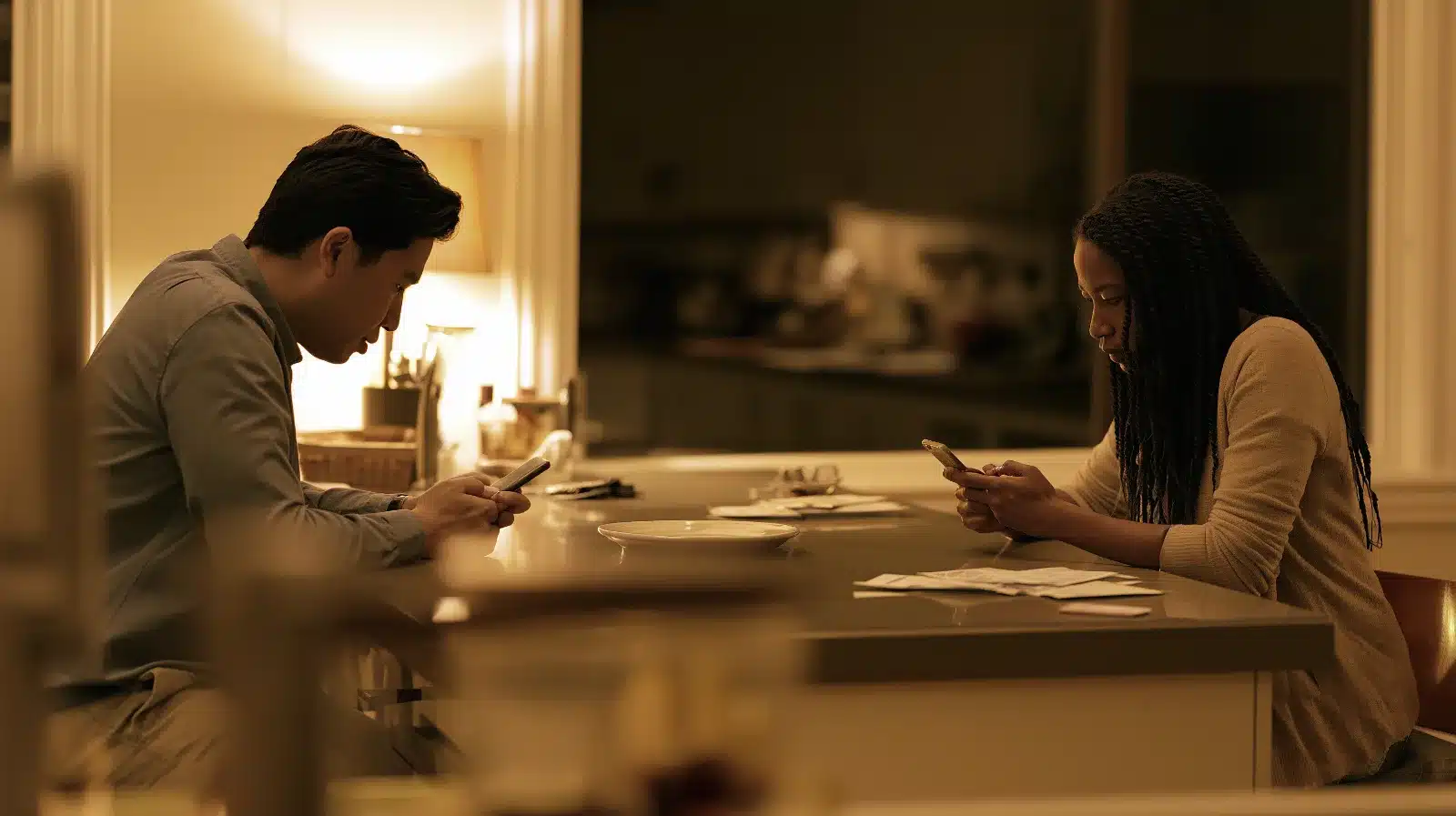
On one side, it feels like being managed instead of loved. From the other chair, it feels like carrying the whole house alone. Both people are lonely, for different reasons, and each one is sure the other has it easier.
For the loved one of an OCPD partner
In session it sounds specific. One wife reloads the dishwasher herself before her husband gets home, so there’s nothing to discuss later. Another spent a week in Portugal with an angry husband because a restaurant changed its hours. “I don’t want to be his project anymore” tends to arrive near the end of a first session.
When one person is always certain, the other person’s confidence wears down. The loved one starts doubting their own judgment and loses touch with their own emotions. In my experience, it affects the loved one’s mental health and well-being more than anyone at dinner would guess. Anxiety and depressive episodes show up on that side of the marriage, and friends rarely notice.
For the partner with obsessive compulsive personality disorder
You notice what others miss. Fixing it seems obvious, so when your spouse resents you for it, the reaction feels unfair and a little baffling.
Most OCPD clients tell me, sooner or later, that they’re exhausted. They can’t stop checking and correcting even when they want to, because rest feels uncomfortably close to negligence. An inability to rest follows them onto the boat. Irritation is one of the few feelings they can name with confidence. Underneath it, usually, is anxiety.
You’re not the villain here. Your way of staying safe has started to cost you the closeness you want. People with OCPD often benefit from seeing the pattern from their partner’s perspective, though self-reflection doesn’t come easily when your standards feel correct.
“If I stop, things fall apart,” Alan told me once. Then, after a long pause: “I’ve been saying that since I was eight.”
Why does obsessive compulsive personality disorder develop?
Obsessive compulsive personality disorder (OCPD) likely develops when an inherited temperament meets a particular kind of childhood. Genetics explains a good share of the risk, and some research links childhood trauma to a higher risk as well. Many adults with OCPD grew up in a family where appreciation came mostly for performance. No single cause explains its development.
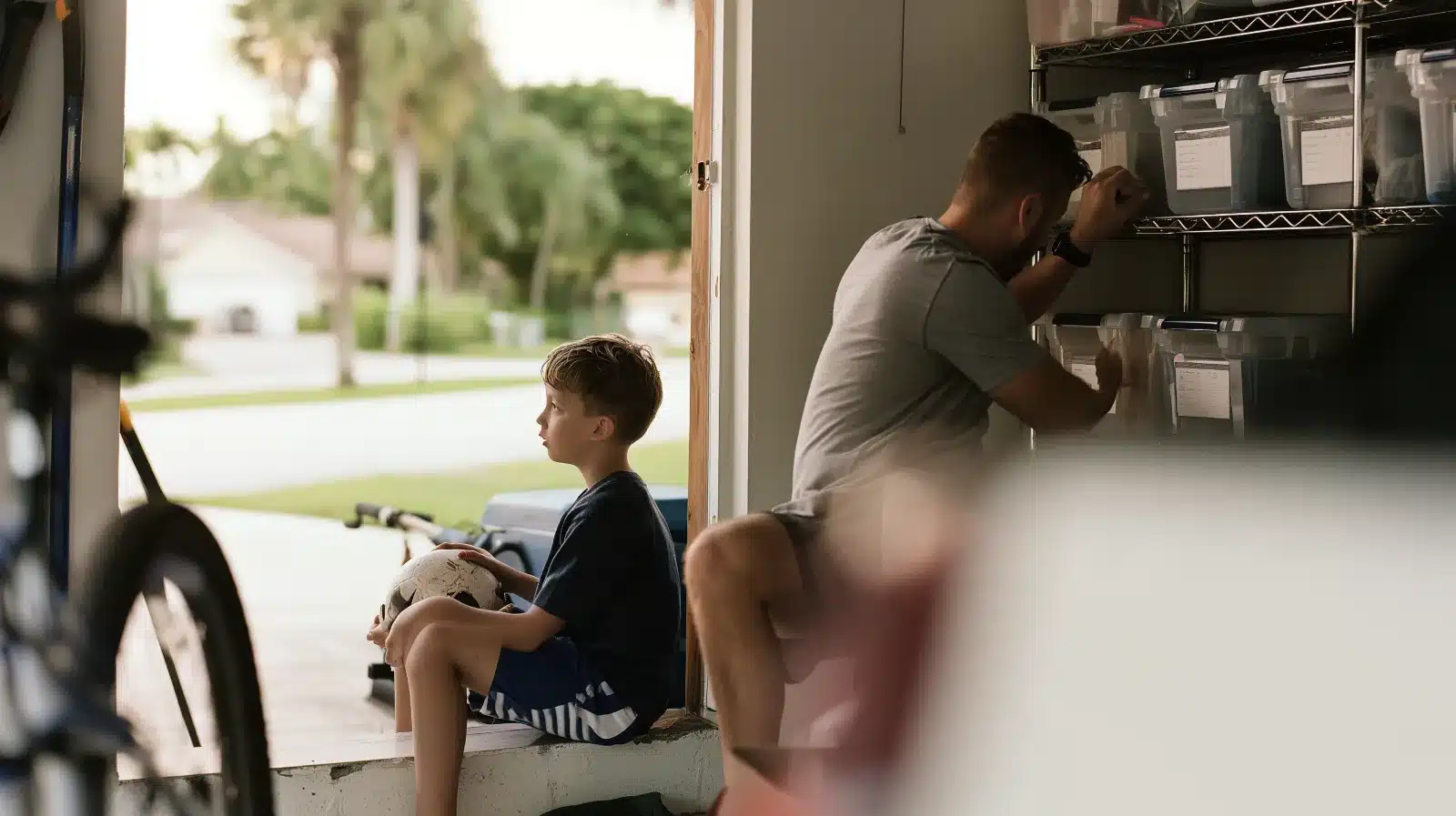
Alan called his childhood fine. His father had a saying, “If a job’s worth doing, it’s worth doing well,” and he lived by it seven days a week. Alan could not recall him ever sitting down to play.
Nobody had to say that rest was forbidden. Children read the message from what parents do, and Alan read it perfectly.
In schema therapy, that lifelong theme is called Unrelenting Standards: the conviction that you must meet exacting standards or something will go badly. None of this excuses hurtful behavior. It does explain why telling someone with OCPD to relax rarely works. The control is guarding something.
Why does couples therapy often stall with OCPD?
Couples therapy often stalls with obsessive compulsive personality disorder (OCPD) because the pattern gets treated as a communication problem. The worn-down spouse is coached to state feelings more clearly, while the OCPD partner hears a new set of instructions to execute perfectly.
Alan and Claire had tried a counselor up north. By the third session, Alan was bringing typed notes on the counselor’s technique, with suggested improvements in the margin. They stopped going in August.
Accommodation is the other trap. The spouse learns to load the dishwasher correctly and plan further ahead. That buys some quiet and teaches both people that the standards always win. Few clinicians are trained to treat OCPD inside a couple.
How does Travis Atkinson’s integrated approach help couples with OCPD?
In my practice, the Gottman Method, emotionally focused therapy, and schema therapy work as one integrated approach aimed at the fear under the rigidity of obsessive compulsive personality disorder. Nobody debates whose standards are right. We map the pattern both partners get caught in, then help each person respond from a steadier place.
The research is encouraging. A Dutch trial published in 2014 followed 323 adults across 12 mental health institutes. Schema therapy outperformed two comparison treatments for several personality disorders, most of them in Cluster C, including OCPD. Most of that evidence comes from individual psychotherapy. Psychodynamic therapy and cognitive behavioral approaches help some people with OCPD as well.
Why do so many high-achieving couples start with Gottman?
Most couples find me through the Gottman Method, and for couples like Alan and Claire that’s no accident. Gottman’s work rests on decades of observational research with thousands of couples. A partner with OCPD tends to trust data long before he trusts feelings.
Gottman gives us a shared map in the first weeks: the Four Horsemen, repair attempts, the gentle start-up. Schema therapy for Cluster C personality disorders explains why that map keeps getting ignored at 10 p.m. in the kitchen. I co-developed Schema Therapy for Couples with Dr. Jeffrey Young, and few couples therapists work with both models at this depth.
For a couple who has already tried one or two therapists, that combination is usually what’s been missing. The structure earns the OCPD partner’s respect. Schema work reaches what the structure alone can’t.
What does schema therapy for Cluster C personality disorders add?
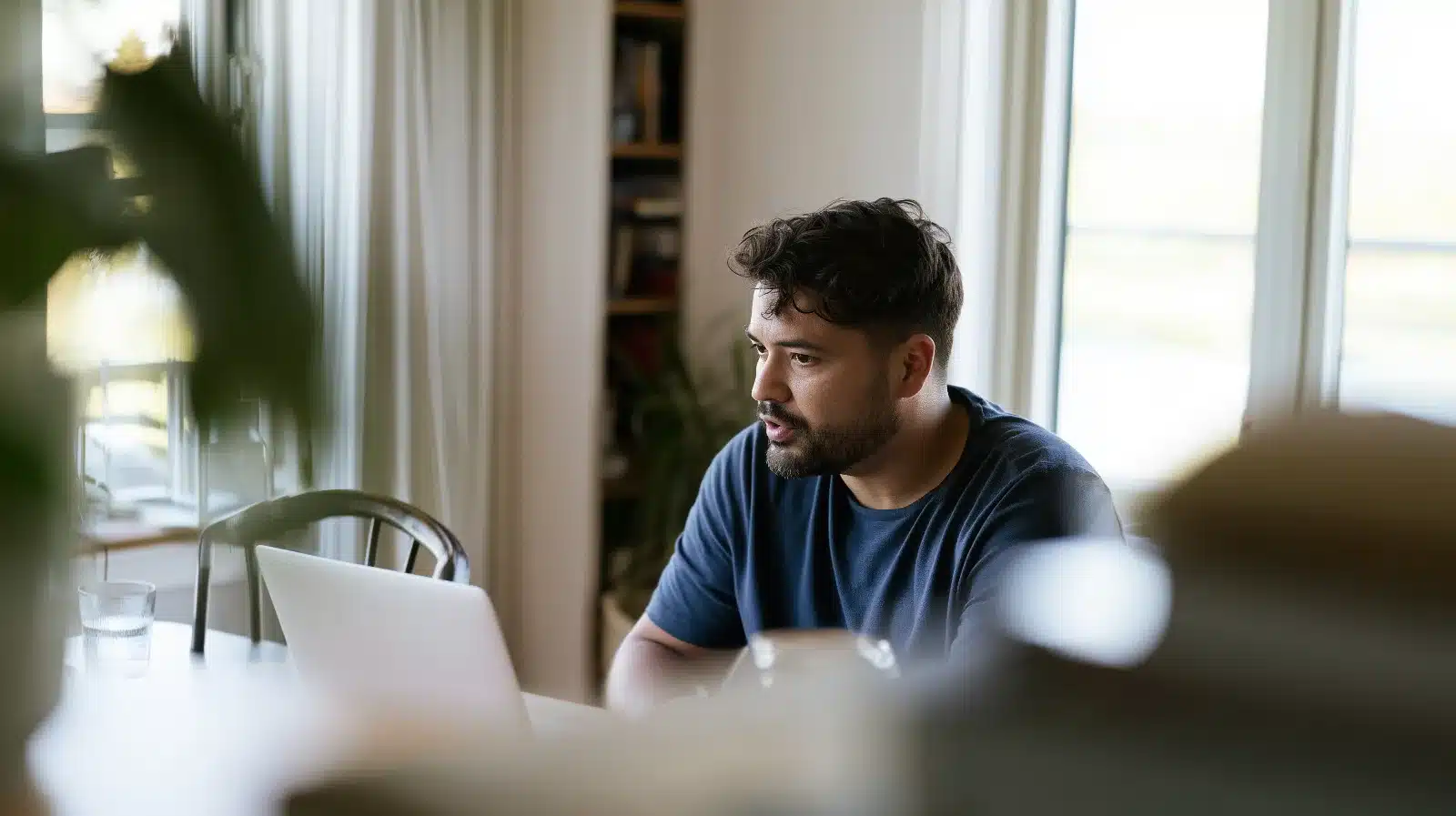
Schema therapy for Cluster C personality disorders starts from a specific idea about what went missing in childhood. For these clients, it’s usually spontaneity and play. Many couples therapists treat an OCPD partner as someone who needs to communicate better. This model treats him as someone who never learned that rest was allowed.
Limited reparenting is the core of it. Within professional limits, I meet some of those early needs so the person has a corrective emotional experience in the session itself.
Alan’s typed notes came to my sessions too. I thanked him for them. Then I said the detail seemed to be keeping him safe from something, and asked what might go wrong if he left a page at home. He looked at me like I’d suggested skipping the survey on a new boat.
Which schema modes show up in OCPD?
Modes are the emotional states a person moves between. With OCPD, a demanding inner voice insists that rest has to be earned. The Perfectionistic Overcontroller is a flat, task-focused state of vigilance in which feelings stay at a distance. For many of these clients it feels like home.
Underneath sits a lonely child state that rarely gets a voice. Reaching it, gently, is often where the change starts.
The spouse has modes too, which is why this belongs in couples work. Claire tended to slide into a Compliant Surrenderer state, where going along felt safer than the next critique. On bad weeks she dropped into a Detached Protector state, polite and far away. The two patterns locked together like gears. Alan mostly noticed the house was quieter.
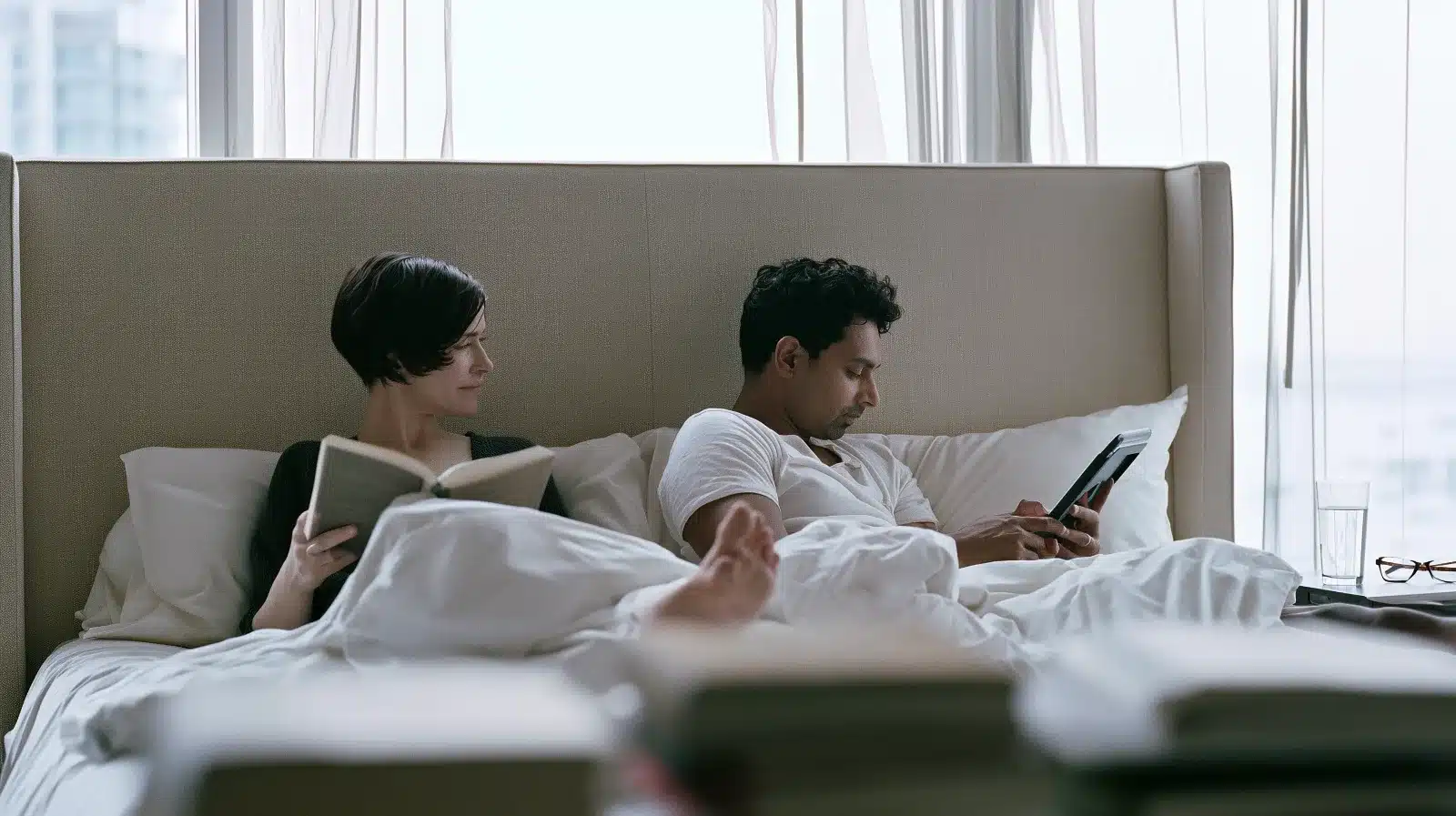
The goal is a stronger Healthy Adult in both people, the part of a person that can hold standards loosely and make room for feelings, including the inconvenient ones. Schema work also aims to wake up the Happy Child, the playful side most people with OCPD misplaced decades ago.
What happens in a session?
About two months in, Alan and Claire fought on the drive home from dinner about which lane he should have been in. I didn’t rule on the lane. Instead, I asked Alan to give the part of him that drives from the passenger seat its own empty chair, and to speak from it.
That’s chairwork, an experiential method that gives different parts of a person their own seat and voice. The Overcontroller had plenty to say. When I asked what it feared would happen if it stopped watching the road, Alan was quiet for a long time.
“Somebody gets hurt, and it’s my fault,” he said.
Claire had never heard him name a feeling like that in thirty-one years. Neither had he.
Later we used imagery rescripting, revisiting an early memory and giving the child what he needed. We went back to a Saturday when eight-year-old Alan wanted to throw a ball while his father reorganized the garage. In the rescripted scene, someone took the ball outside with him. The same month included a Gottman gentle start-up and an attachment conversation about feeling unseen. Insight alone rarely loosens OCPD. Emotional experience in the room does.
You don’t have to agree on what’s wrong before you come.
The first session starts a four-session assessment. We meet together first, then I see each of you once on your own, and we close with a session to set goals. Every session is online, and you work with me directly.
Starting on your own? Book an individual session.
Booking runs through my practice, Loving at Your Best.
What can you do now if your partner has OCPD traits?
Start with behavior, and leave the diagnosis to a professional. “When you reloaded the dishwasher, I felt like nothing I do counts” lands better than “You have OCPD.” Specific, concrete communication and clear examples of behavior reduce defensiveness in people with OCPD, who argue with generalizations and quietly accept good data. Describe the behavior, not the person.
- Protect connection time. Keep one block each week clear of chores, improvement goals, and excessive planning.
- Pick your standards. Decide which ones matter to you, and let the others go without keeping score.
- Practice deliberate compromise. Trade one standard for one flexible choice, and say the trade out loud.
- Hold a boundary. You can decline to redo a task without starting a fight.
- Build a support system. Friends, family, or your own individual work keep you from disappearing into someone else’s standards.
A fulfilling relationship with an OCPD partner is possible. Healthy relationships need mutual respect, flexibility, and accountability on both sides, and both people’s feelings have to count.
If the traits are yours, self-compassion will do more than another self-improvement plan. Relaxation techniques can take the edge off a bad afternoon, though they rarely reach the root. Try “good enough” on the towels first.
If your partner says they’re done, and you might be the one with OCPD, where do you start?
Book the first appointment and let that be the plan for this week. Many couples reach me after the partner with OCPD traits hears an ultimatum. Often it’s the first time the other partner has said it without softening it. In these marriages “I’m done” usually means “I can’t keep living under inspection.” Sometimes it means exactly what it says.
Your instinct will probably be to fix it well. You may read three books by Sunday, draft a list of changes, and present it at breakfast. That effort is sincere. To your partner it can feel like one more project you’re running, with their feelings as the next item to correct.
What tends to help is smaller and harder. Listen to what the years have cost without correcting the details. If Claire says it happened every night and it was most nights, let it stand. Accuracy matters less this week than being reachable.
Underneath the urge to fix is usually fear. In schema therapy we’d often call it an Unrelenting Standards schema, the early belief that anything short of perfect invites disaster. An ultimatum lands right on it. The first step isn’t a better performance. It’s letting someone who knows OCPD help both of you see the pattern from the outside.
Therapy can’t promise the marriage survives. It can give both of you a fair, clear look at whether it can. Book a couples session, or if your partner needs time before joining, book an individual session and start there.
When should a couple seek help for OCPD and co-occurring disorders?
A couple should seek help when obsessive compulsive personality disorder symptoms are costing warmth or trust in daily life and their own efforts haven’t shifted anything. Waiting for a crisis rarely helps. These patterns harden with time, and resentment compounds on the other side like interest.
Depression or anxiety in either partner is another reason to seek help sooner. Co-occurring disorders and other mental health conditions are common with OCPD, and your own well-being counts as much as the marriage does. Sometimes individual therapy for one partner runs alongside couples counseling. Medication can help with related depression or anxiety, though no medication treats OCPD itself. Couples who seek help early tend to benefit sooner.
If there is abuse or fear for your safety, couples sessions aren’t the right starting point, and individual support comes first.
Is couples counseling or individual therapy better for OCPD?
Often both, in sequence or side by side. Individual therapy gives the partner with OCPD room to build insight without an audience. Couples counseling is where the behavior shows up live, which is where it changes. People with OCPD tend to make faster progress when their spouse sees the effort, and the spouse’s mental health improves when the relationship stops running on inspection.
In my experience, most people with OCPD symptoms describe the first shift the same way. Their emotions got louder before their anxiety got quieter. That’s normal, and it passes. Life at home usually feels different before either partner can explain why.
If one of you would rather start on your own, you can book an individual session with me.
Can split-year couples keep working with me when they go north?
Yes, as long as you’re in a state where I’m licensed at the time of each session. I’m licensed in Florida, New York, Connecticut, and Vermont. The work can move from the house east of the Intracoastal to the Hamptons or Greenwich without starting over.
Legally, counseling happens wherever the client is sitting. A counselor licensed only in Florida usually has to pause when you leave in May. The pattern does not take the summer off.
That matters with OCPD, because the Overcontroller gets louder during transitions, when anxiety runs higher. A spring departure comes with movers, a boat to haul, shutters to close, and a house to hand to the property manager. It is, in other words, a transition with a checklist.
What does OCPD couples therapy with Travis Atkinson look like?
Work with me starts with a four-session assessment, not a consultation. In the first session, the three of us meet together and you tell me the story of your relationship. How you met, what drew you to each other, and how things have changed since. Couples usually arrive ready to start with the problem. We get there, and the history tells me a lot about where it came from.
Next, I meet with each of you alone for one session. Each of you gets to describe the marriage in your own words, without a rebuttal from across the couch. It’s also how I keep my rule of assessing both people directly.
In the fourth session we meet together again. I walk you through how I understand your pattern, including schemas and modes and where OCPD traits may or may not fit. Then we set goals together. Treatment starts once you both know what we’re working on and why.
All sessions are online. For many couples here, that’s a relief: no waiting room, and no chance of running into someone you know. You can meet from the study at home, or from the apartment in the city when you’re up north.
South Florida Marriage Therapy is based on Las Olas in Fort Lauderdale, and I work online with couples across South Florida, from Fort Lauderdale to Boca Raton and Coral Gables. You work with me directly, from the first session on.
What happened to Alan and Claire?
Change lasts when new behavior gets practiced outside the room, in the relationship itself. For Alan, that meant a Sunday on the boat with no destination and no fuel log, which he described as reckless.
He lasted forty minutes before checking the weather app. The second Sunday went better.
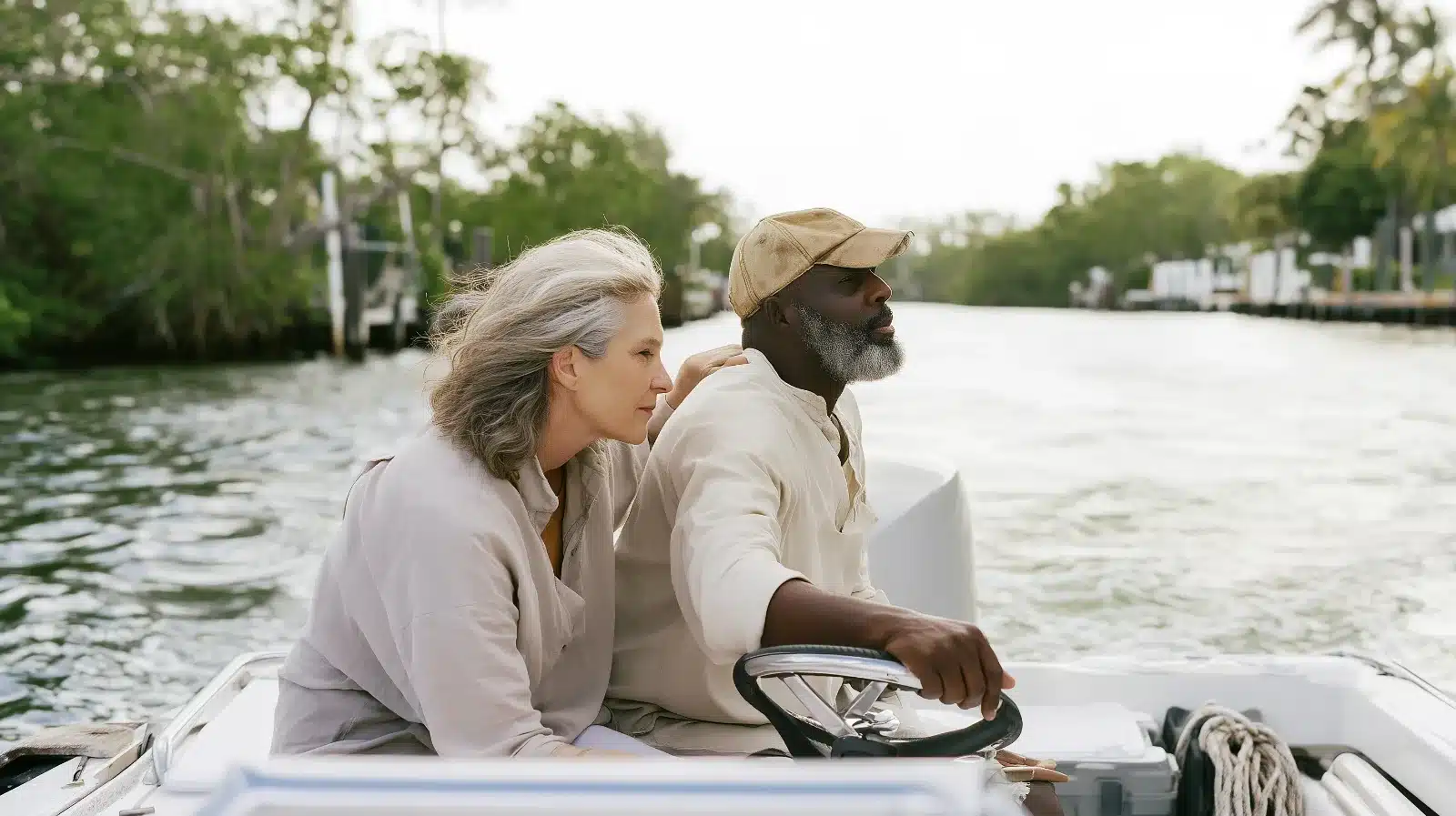
In the Cluster C model, the middle phase asks the OCPD partner to finish a task at eighty percent and allow a mistake on purpose. Early on I take an active role. Later I coach from the sidelines while the couple directs more of the change. Research on this model suggests that growth in the Healthy Adult and the child modes predicts good outcomes, which is why I track both. A marriage that can play together tends to be one that lasts.
A few weeks later, Claire sent me a one-line email before our session. “He left a plate in the sink last night. On purpose.”
Alan still doesn’t love talking about emotions. He talks about them anyway.
The binder is still on the shelf. It’s up to date. Nobody has called a meeting about it since spring.
If the dishwasher sounds familiar, that’s where we start. You can book online or call (954) 766-0316.
Start with what has been happening between you.
You don’t need to agree on what’s wrong before the first appointment. We begin with a four-session assessment: the history of your relationship together, one session with each of you alone, then a plan you both understand.
- Who attends: both partners. If your partner isn’t ready, you can start with an individual session.
- Where: online, from any private room, while you’re in Florida, New York, Connecticut, or Vermont.
- After you book: you’ll get an email confirmation with the details. Appointments are scheduled through Loving at Your Best, my practice’s scheduling name.
Online appointments · Work directly with Travis
Couples sessions run 60 minutes. Booking the first session doesn’t commit you to all four. We schedule the rest together as we go.
Considering starting alone? View individual appointments.
What do couples ask most about OCPD relationships?
Can a Gottman Method therapist help with OCPD?
Yes, usually. Gottman’s research gives couples a clear map for criticism and repair, which OCPD marriages need badly. On its own, though, the method can become one more rulebook for the OCPD partner to master, so I pair it with attachment and schema work.
What are the early signs of OCPD in a relationship?
Early symptoms often look like high standards and firm opinions about how things should be done, and many couples read them as strengths at first. The behavior becomes a problem when it stops flexing. This isn’t the same as OCD, which centers on unwanted fears.
What treatment helps OCPD?
Psychotherapy is the main treatment for obsessive compulsive personality disorder, and schema therapy has good research support for Cluster C personality disorders. Couples work helps when the relationship carries the strain. No medication treats OCPD directly.
Can a relationship with an OCPD partner work?
Yes. Many do, especially when the OCPD partner is willing to look at the pattern. The traits that make OCPD hard also bring loyalty and follow-through, and treatment aims to keep those strengths while loosening the control.
Will my partner with OCPD agree to therapy?
Some resist at first. Framing the work around the relationship, and leaving the diagnosis out of the invitation, usually helps. Many OCPD partners respond well to the structure and decades of research behind the Gottman Method, which suits their love of data.
My partner says they’re done. Is couples therapy still worth trying?
Often, yes, as long as both of you will come to the first appointment and the therapist understands OCPD. An ultimatum can open a conversation the marriage has avoided for years. Some couples rebuild from there. A few decide to separate, and do it in a way that protects both people and any children.
Is OCPD the same as narcissism?
No. Both can look controlling, but narcissistic personality disorder tends to protect a sense of specialness, while obsessive compulsive personality disorder protects against mistakes and chaos. Some people have traits of both, and a careful assessment sorts it out.
Can OCPD be cured?
“Cured” is probably the wrong word. People with OCPD can become far more flexible and relaxed with good treatment. The behavior shifts as new emotions become tolerable, and most couples notice the difference at home before they can explain it.
Can we keep seeing you when we’re up north for the summer?
Yes, whenever you’re physically in New York, Connecticut, or Vermont, since I’m licensed there as well as in Florida. Sessions follow you as long as you’re in one of those four states.
Do you ever meet in person?
No. Every session is online, so there’s no waiting room to sit in and no one from the club to run into.
If the dishwasher sounds familiar, that’s where we start. Book online or call (954) 766-0316.
Prefer to begin on your own? Book an individual session.
About the author
Travis Atkinson is the founder of South Florida Marriage Therapy, an online practice based in Fort Lauderdale serving couples across South Florida. His work integrates the Gottman Method, emotionally focused and attachment-based work, schema therapy, and experiential methods such as chairwork and imagery rescripting. Since 2006 he has been a Certified Gottman Method Couples Therapist, one of the first in New York City, and he spent eight years at The Gottman Institute.
He trained directly with Dr. Sue Johnson and co-created the first EFT training video for same-sex couples with her. With Dr. Jeffrey Young, with whom he began training in 1994, he co-developed Schema Therapy for Couples. Travis is one of the founding members of the International Society of Schema Therapy, which gave him Honorary Lifetime Membership in 2020. As founder and director of the ISST-approved Schema Therapy Training Center, he trains couples therapists nationally and internationally. He completed advanced training with Dr. Daniel Siegel in interpersonal neurobiology. Licensed in Florida, New York, Connecticut, and Vermont.
Sources
- American Psychiatric Association. Diagnostic and Statistical Manual of Mental Disorders, Fifth Edition, Text Revision (DSM-5-TR).
- “History and Epidemiology of OCPD,” American Psychiatric Association Publishing (PsychiatryOnline): psychiatryonline.org
- Bamelis, L. L. M., Evers, S. M. A. A., Spinhoven, P., and Arntz, A. (2014). Results of a multicenter randomized controlled trial of the clinical effectiveness of schema therapy for personality disorders. American Journal of Psychiatry, 171(3), 305–322.
- New York State Office of the Professions, Telepractice Guidance: op.nysed.gov